
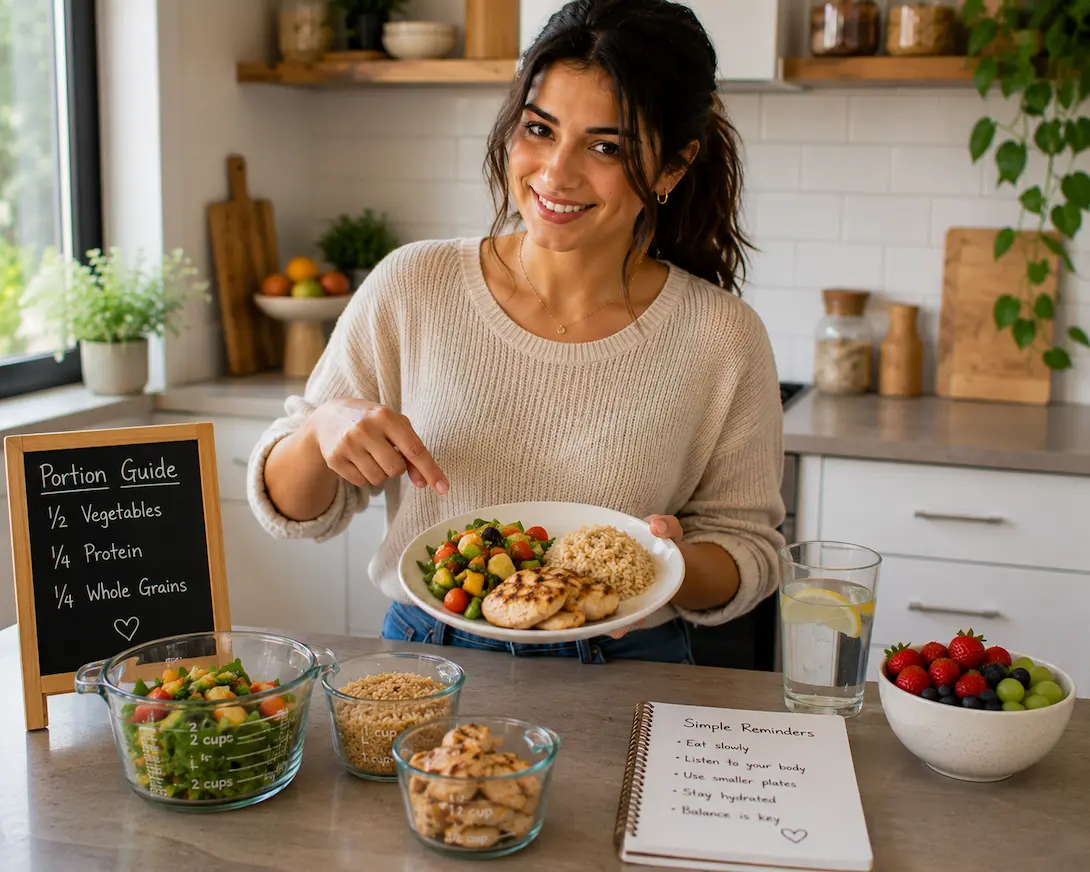
Many people aspire to eat a better balanced diet, but one of the biggest challenges is knowing how much food is adequate. It is easy to overeat without realising it, especially if the food is excellent or life is busy. A beginner’s approach to portion control in your regular meals can be quite useful. Portion management is just learning how to control how much food you are eating so that your meals feel filling but not too much. This is not about tight rules and forsaking your favourite foods. Rather, it is about awareness and making little adjustments to encourage healthier everyday behaviours. In this article, you’ll learn simple, practical strategies to grasp portion sizes, sidestep frequent errors, and build a comfortable eating pattern that fits into your normal life without stress or confusion.
Table of Contents
ToggleThe Reason for this Problem
Large portions and quick eating are typically promoted by modern eating habits, making portion size regulation challenging for many. When food is presented on gigantic plates or in massive packaging, it’s harder to know what a reasonable portion looks like. Another typical cause is eating too rapidly, as the brain may not have enough time to sense fullness. Some people also eat while doing other things, such as watching television or using a phone, which makes it more difficult to detect how much food they have eaten. These practices grow typical over time and cause uncertainty about how big a portion is. Another factor is emotional eating, using food for consolation instead of hunger. These problems are solved with a day-to-day approach to portion control that is accessible to beginners, making food awareness simple and straightforward to follow in real life without confusing rules or limits.
First Quick Fix
One easy method to start learning portion management is to slow down your meals. When you eat fast, you don’t know when you’re full, and you tend to eat more than you need. Eating slowly allows your body the opportunity to respond naturally. Another easy thing to do is pay attention to your plate and pay attention to when it starts to feel full instead of automatically finishing everything. No need to measure meals or follow specific instructions. Rather, listen to your body and eat yourself until you are comfortably content. Smaller plates also make it easy to generate a natural feeling of balance. These are the kind of tiny modifications that don’t require big lifestyle changes but may still make a big difference to your everyday eating habits, and this beginner’s guide to portion control in everyday meals is based on them.
Important Settings or Reasons to Check
Portion control can be tricky, and sometimes it’s because of how meals are cooked or served at home. Large portions, extra snacks and repeated top-ups can increase the amount eaten, unnoticed. Missing meals is another common cause which might lead to eating bigger amounts later in the day. Also, eating habits that are formed over time can come into play, especially if someone gets into the habit of completing everything on their plate no matter how hungry they are. Distractions while eating, such as watching TV or doing other tasks, can also impact your perception of portion size. These patterns evolve over time and interfere with the ability to recognise hunger cues. A beginner’s guide to portion control in regular meals is based on spotting these common habits so you can easily change them. Once you know these causes, it is simpler to make tiny changes that help you to better balance your eating pattern.
Refresh or Upgrade the System
You don’t need to change everything at once to improve portion management. Rather, it’s about making little changes to the way you think about eating each day. One good tip is to develop a simple schedule for meals so you are not making rushed selections when you are starving. Planning meals beforehand, or even just thinking about them, makes serving the right portions easier.” Another way to improve is to ensure each meal has a variety of food types so you feel full on less food all around. Take more of your meals at home so you can get a better feel for how much food you really need. What is recommended here is just an awareness of portion control in your everyday meals, not rigorous restriction. As you gradually change your eating habits, your body will adjust and portion sizes will become less confusing and stressful to manage.
Remove or Clean up Unwanted Stuff
A good strategy to get more control over your portions is to get rid of bad habits that cause you to overeat. Most people eat out of routine, not hunger, and there are always snacks. Also a huge impact is made by stopping the practice of eating while preoccupied, because it enables you to note when you are really full. Another key approach is to reduce huge portions, particularly when food is provided from large containers. “Instead, put food on a plate, and it’s easier to see how much you’re eating.” The right amount of food at each meal keeps everything in balance. Avoiding extra helpings you don’t need also helps. This easy-to-follow guide to portion control in everyday meals is all about simplifying your dining environment so that you naturally eat less without feeling deprived. The idea is to make food awareness something you do routinely, not something you have to worry about all the time.
Some More Tips to Avoid the Problem
Consistency is more crucial than perfection in terms of greater portion control over time. Eating regularly is a good habit to get your body adapted to a constant schedule. This minimises the risk of severe hunger that could lead to overeating. Another suggestion that can help is to listen to how you feel while eating instead of eating on autopilot. Meal simplicity is also helpful, as are avoiding too complicated foods that lead to large servings being served. Staying well-hydrated during the day can also help you be more mindful of hunger cues. A beginner’s approach to portion control in everyday meals works best when these modest behaviours are done routinely. Over time, these behaviours become second nature, and you are better able to stay balanced without feeling boxed in or overwhelmed in your daily life.
Conclusion
Learning portion control is not a rigorous diet or deprivation. It’s about having a healthier relationship with food and understanding your body in a simple and natural way. After reading a beginner’s guide to portion control in everyday meals, you begin to see how simple changes in eating pace, awareness and habits may make a major difference. You don’t need special tools or elaborate systems. Instead, you focus on modest steps that fit into your daily routine. These behaviours will help you feel more in control of your eating over time without pressure or misunderstanding. The aim is to create a balanced approach to diet that seems easy, comfortable and sustainable in the long run.
FAQs
1. What is portion control in layman’s terms?
Portion control involves consuming the proper quantity of food for your body, not too much. It’s about knowing how much food is enough and stopping when you feel comfortably full.
2. Do I have to weigh meals to limit portions?
No, you don’t have to weigh food. A beginner’s guide to portion control in everyday meals is about awareness and basic habits, not about measuring and counting.
3. Can I still eat my favourite foods and regulate my portions?
Yes, you still can eat your favourite meals. Portion control is not about not eating foods but eating the right portions of foods as part of your entire meal.
4. Why is eating slowly crucial for controlling portions?
Eat slowly so that your body can register fullness. This helps you avoid overeating and makes smaller quantities more appealing.
5. What causes people to lose portion control?
Eating too fast. Large portions. Eating while doing something else. Skipping a meal, which can lead to eating more later.
6. How long does it take to learn portion control?
It depends on the person, but if you practise regularly, you should see slight gains in a few weeks. Speed is secondary to consistency.

Olivia Dawson is a food writer and recipe developer focused on creating clear, practical, and family-friendly cooking content. She specializes in approachable recipes made with everyday ingredients and well-explained methods that support confident cooking. Through Recipes With Olivia, Olivia shares thoughtfully crafted meal ideas designed to be reliable, enjoyable, and easy to recreate in everyday kitchens.