
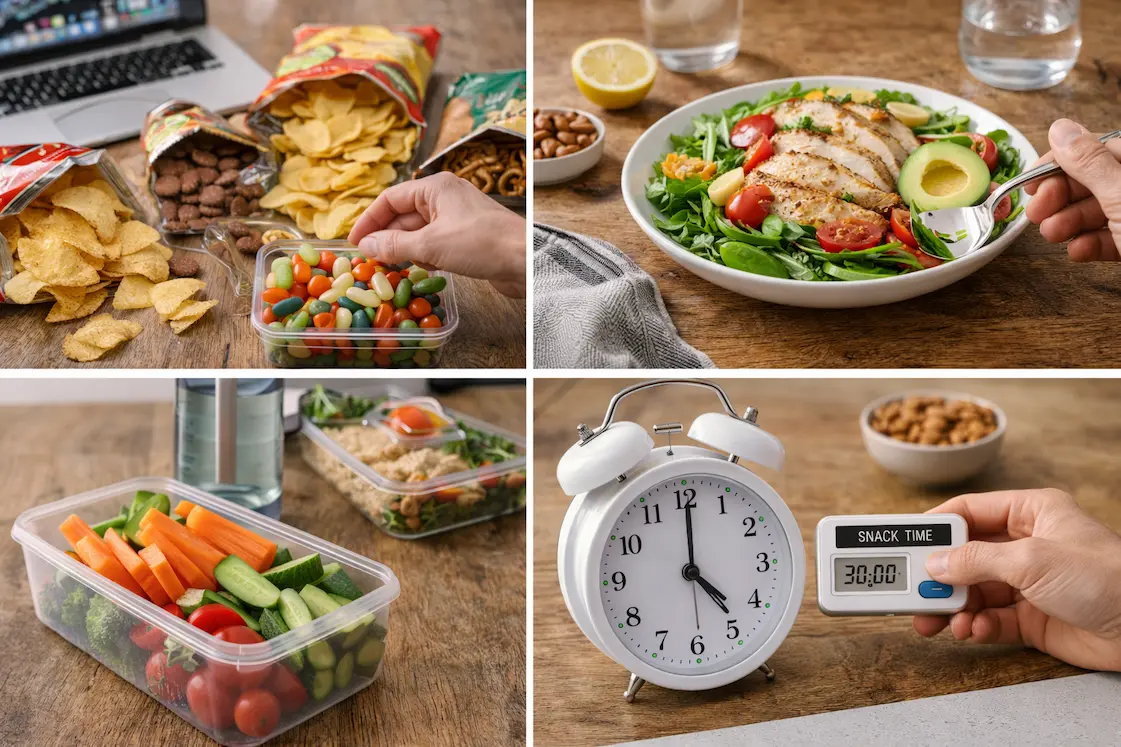
It happens to all of us. You finish breakfast, and a few hours later, you’re reaching for something to nibble on. Lunch passes, and unexpectedly, in the mid-afternoon, you find yourself snacking without any clear reason. By dinner, you feel like you’ve eaten all day and wonder why you’re still hungry—or worse, why the scale won’t budge.
Constant snacking can be frustrating, especially when you’re trying to maintain a balanced diet or manage your weight. But the positive news is that with some awareness, small adjustments, and smarter snack strategies, it’s entirely possible to reduce mindless munching and regain control over your eating habits.
Why We Snack Constantly
Understanding why you snack is the first step toward managing it. Often, the reasons go beyond simple hunger.
Physiological Causes
Blood Sugar Swings
Eating meals that are low in protein, fiber, or healthy fats can lead to blood sugar spikes and crashes. When your blood sugar drops, your body signals that it needs fuel, which often comes across as sudden hunger or cravings.
Meals high in refined carbs like white bread, pastries, or sugary cereals are common culprits. Pairing carbohydrates with protein and fiber can help stabilize blood sugar and reduce the urge to snack.
True Hunger vs. Habitual Hunger
Sometimes, the body’s hunger signals are confused with habitual or emotional triggers. Just because your hand reaches for a snack doesn’t always mean your body needs fuel—it could be stress, boredom, or even seeing a snack lying around. Recognizing the difference is key to managing unnecessary snacking.
Psychological and Emotional Causes
Stress and Emotional Eating
Stress, anxiety, or even fatigue can drive snacking, especially on comfort foods. Emotional eating often involves high-calorie snacks that provide temporary relief but leave you unsatisfied in the long run.
Environmental Triggers
Your environment plays a huge role. Snacks within arm’s reach, colorful packaging, or even just the smell of fresh cookies can trigger cravings. Being aware of these cues is the first step toward controlling them.
Meal Composition and Timing
Skipping Meals or Eating Imbalanced Meals
Skipping breakfast or having meals that lack protein and fiber can leave you hungry sooner. It’s not uncommon for people to snack constantly because their main meals aren’t satisfying enough. For example, a plate full of plain pasta or rice may provide calories, but it doesn’t slow digestion or keep you full.
If you want ideas for building meals that satisfy and support weight management, check out how I build balanced plates for weight management.
Step-by-Step Solutions to Reduce Snacking
Step 1: Eat Balanced Meals
Ensure each main meal contains protein, fiber, and healthy fats. This combination slows digestion, stabilizes blood sugar, and keeps you full longer.
Meal Ideas:
- Breakfast: Greek yogurt with berries and chia seeds
- Lunch: Grilled chicken salad with mixed greens, beans, and avocado
- Dinner: Salmon with roasted vegetables and quinoa
Balanced meals reduce the body’s need for constant snacking between meals.
Step 2: Prepare Satisfying Snacks
When snacks are necessary, make them count. Include protein, fiber, and a bit of healthy fat to turn them into mini-meals rather than empty calories.
Examples:
- Apple slices with almond butter
- Carrot sticks with hummus
- Cottage cheese with berries
For more ideas, simple snack recipes to boost energy fast offer quick options that satisfy cravings without overdoing it.
Step 3: Drink Plenty of Water
Sometimes, thirst is mistaken for hunger. Drinking water throughout the day can prevent unnecessary snacking. Herbal teas or flavored water without added sugar can also help fill the stomach temporarily and reduce cravings.
Step 4: Plan Snacks Instead of Eating Spontaneously
If you know you’re prone to snacking at certain times, plan it intentionally. Pre-portion snacks into small containers rather than eating straight from the package. Planning reduces impulsive eating and helps control portion sizes.
You can explore beginner-friendly snack recipes for any time for ideas that are easy to prep and satisfying to eat.
Step 5: Identify Emotional Eating Triggers
Keep a food diary to track when you snack and how you feel at that time. Are you really hungry, or are you stressed, bored, or tired? Recognizing patterns allows you to address the root cause rather than just the symptoms.
For example, taking a short walk, stretching, or practicing deep breathing may curb emotional snacking.
Step 6: Limit Visual and Environmental Cues
Store snacks out of sight or in a cupboard. Avoid placing them on countertops where they are easy to grab. Out of sight often equals out of mind, and your brain will be less likely to trigger habitual snacking.
Step 7: Keep Healthy Alternatives on Hand
If a craving hits, having healthy alternatives ready can prevent overindulgence. Swap sugary or fried snacks for fruits, nuts, or vegetables. For sweet cravings, healthy dessert swaps for everyday baking can provide satisfying options without derailing your day.
Personal Insights and Lessons Learned
In my own experience, one mistake I made was reaching for snacks immediately when feeling bored or tired. What worked for me was preparing satisfying snacks in advance and focusing on balanced meals. For example, pairing vegetables with protein-rich dips or having pre-portioned nuts and fruit ready reduces mindless snacking.
Another strategy that helped was consciously drinking water before grabbing a snack. Many times, I realized I was actually just thirsty. Planning meals with more fiber and protein also made a huge difference in overall satiety.
Common Mistakes to Avoid
- Skipping breakfast or main meals, which leads to increased snacking
- Choosing snacks high in sugar or refined carbs
- Eating straight from the package without portion control
- Using food to cope with emotions or stress
- Ignoring hydration and mistaking thirst for hunger
- Snacking out of habit rather than actual hunger
- Not planning meals or snacks, leaving choices up to impulse
Pro Tips for Managing Snacking
- Rotate snack options to prevent boredom
- Pre-portion snacks in small containers for easy access
- Pair fiber-rich vegetables or fruits with protein
- Practice mindful eating, focusing on taste, texture, and enjoyment
- Keep a log of snacking patterns to identify triggers
- If short on time, easy-healthy snacks for kids and adults can double as adult snack options too
- Swap indulgent snacks for homemade versions to reduce sugar and refine your snacking habits
FAQs
Q1: How can I stop snacking without feeling deprived?
Focus on balanced meals and planned, nutrient-rich snacks. Include protein, fiber, and healthy fats to keep hunger at bay.
Q2: Is it bad to snack frequently?
Not necessarily. Snacking can be healthy if the snacks are balanced and part of a well-structured diet. Mindless or sugary snacking is what causes issues.
Q3: Can hydration reduce snacking?
Absolutely. Drinking water before reaching for a snack helps determine if your body truly needs food or is just signaling thirst.
Q4: Are there snacks that actually help reduce cravings?
Yes. Snacks that combine protein, fiber, and healthy fats—like nuts with fruit, hummus with vegetables, or Greek yogurt with berries—are very effective.
Q5: How do I handle emotional snacking?
Identify triggers through a food diary, and substitute snacking with stress-relief activities like walking, stretching, or deep breathing exercises.
Conclusion
Constant snacking is often the result of imbalanced meals, emotional triggers, environmental cues, or habitual behaviors. By understanding why you snack and implementing intentional strategies—like balanced meals, prepared snacks, mindful eating, hydration, and smart swaps—you can reduce unnecessary snacking and feel satisfied throughout the day.
Small, consistent changes go a long way. Start by adjusting one meal, preparing snacks in advance, or tracking your snacking habits. Over time, you’ll find that you have more control, feel more energized, and even enjoy food more without the constant urge to nibble between meals. With these strategies, snacking becomes intentional, nourishing, and satisfying—rather than a cycle of mindless munching.
Olivia Dawson is a food writer and recipe developer focused on creating clear, practical, and family-friendly cooking content. She specializes in approachable recipes made with everyday ingredients and well-explained methods that support confident cooking. Through Recipes With Olivia, Olivia shares thoughtfully crafted meal ideas designed to be reliable, enjoyable, and easy to recreate in everyday kitchens.