
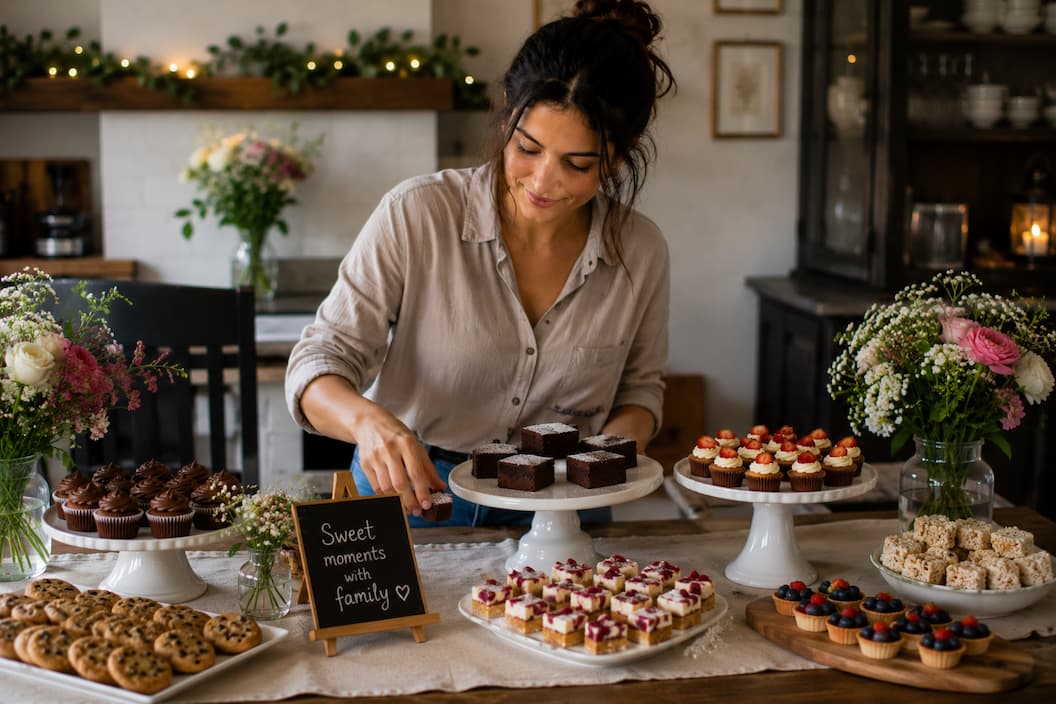
The first time I held a family event, I made the error that many people make: I attempted to do too much. I prepared complex cakes, tried new recipes, and dedicated a whole day to the kitchen, worried about whether everything would turn out great. When the visitors arrived, I was fatigued and didn’t thoroughly enjoy the party. A few more gatherings and I learnt about the enchantment of a simple dessert table. I didn’t aim for perfection; I went for variety, presentation and food that anyone would adore. It was a surprise to me. Guests gathered around the table, swapping stories and returning for seconds. That encounter impacted my approach to planning family activities forever. A simple dessert table doesn’t have to be dull or basic. That implies ‘considered’, ‘manageable’ and ‘friendly’. When prepared effectively, it creates a focal point that brings people together and makes the event warm and memorable without overwhelming the host.
Start with the guest list and set realistic expectations.
Planning a dessert table is considerably easier when you start with one simple question: how many people are coming? Knowing how many guests you have is going to help you figure out how many dessert options you need and how much to make. I came to understand over time that family get-togethers don’t require a large selection. Better to have a little variety than a vast spread that creates tension. Three or four dessert choices are enough when you’re entertaining small groups of six to 10 individuals. Five or six selections seem plenty for bigger groups without being excessive. Part of setting realistic expectations is realising that not everything needs to be homemade. Some desserts are make-ahead, some can be made ahead, and some can be created in a jiffy. Planning becomes a lot more fun and doable once you let go of the pressure to do it all from scratch.
Selecting Desserts That Everyone Knows and Loves
One of the things I learned the hard way is that family get-togethers are not the place for dangerous experimentation. People find comfort in familiar flavours and treats. Chocolate brownies, cookies, fruit sweets, and simple cakes are usually the first things to disappear from the table. When we choose sweets, we do not look for sophistication but for variety in texture and flavour. Something chocolatey, something fruity and something creamy or soft. This combination ensures that there is something for everyone. Chocolate lovers, please, have some brownies; fruit salad is a refreshing treat, and a simple cake is a comforting classic. Guests are more relaxed and inviting when they see familiar treats and are more likely to taste multiple items.
How to Balance Homemade and Store-Bought Desserts, Stress-Free
Some hosts feel that everything has to be handcrafted to be distinctive, yet this approach is a mentality that often creates undue pressure. In fact, one of the best tactics for organising a dessert table is to mix homemade and store-bought desserts. I usually do one signature dessert myself, like brownies or a basic cake, and then supplement that with superior store-bought cookies or mini pastries. Most guests can’t tell the difference, especially when it’s all presented elegantly together. This method saves time and energy but still gives the table a personal touch. It’s about creating happiness, not about showing off your baking skills. A well-balanced blend means you can enjoy the gathering, not spend it in the kitchen.
How to Create a Simple Dessert Table Theme That Looks Cohesive
You don’t need an elaborate or extravagant theme to make a dessert table stand out. Sometimes, it’s a simple notion, like picking a colour scheme or seasonal inspiration, that ties it all together. For example, a summer event could include light desserts, fresh fruit, bright colours, etc., while a winter gathering could feature chocolate, caramel, and toasty flavours. I had a family dinner once where the theme was “comfort desserts,” and we had brownies, apple slices, cookies, and vanilla cake. The desserts were modest, but the food uniformity lent the table a sense of deliberate planning. slightly more pronounced theme helps you make decisions and keeps the table inviting and organised without needing expensive decorations.
Planning Portions to Have Enough, Not Too Much Left Over
Portion planning can be intimidating, but it is straightforward with a simple mindset: visitors want to try different desserts in little portions. Go for small, bite-sized quantities instead of giant slices or enormous dishes. Mini cupcakes, little brownie squares and cookie platters work exceptionally well, as they encourage sampling. This method cuts down on waste and gives diversity to the guests without feeling too full. In my experience, customers will sample a few sweets rather than ordering one large serving. The table feels appealing and functional when it has little sweets that you can grab and go.
How to Create a Stunning Dessert Table Without Fancy Decor
Presentation is all important in making a dessert table look unique. The stunning news is that you don’t have to use pricey decorations to create a gorgeous presentation. The varying dish sizes, cake stands or even regular kitchen trays add height and visual intrigue. I stacked books wrapped in cloth to raise a cake stand, making people think it was styled by a professional. Desserts at varying heights create a comprehensive, enticing tablescape. A few colourful napkins, a tablecloth or a bowl of fresh fruit may offer appeal without the cost. A nice-looking table beckons others to come and share the experience.
Preparing Desserts in Advance to Reduce Last-Minute Stress
The main secret to stress-free hosting is preparedness. Many sweets can be cooked a day or two in advance, which saves time on the day of the gathering. Brownies, cookies, cakes and even fruit salads can be made in advance and kept correctly. All you have to do is set everything up on the table on the day of the event. I learnt this the hard way, by attempting to bake everything in one day and feeling rushed and stressed. I now divide the effort over a few days, and hosting seems quiet and joyful. Planning prepared makes the dessert table a delightful aspect of hosting—not a stressful chore.
Inviting Guests to Enjoy and Interact Around the Dessert Table
The dessert table is more than just a collection of sweets; it is a gathering area where talks flow spontaneously. Positioning the table in an open space invites attendees to mingle, converse and interact. I see people congregate around desserts late at night swapping stories and joking about what they want to try next. This laid-back vibe is exactly what family parties are all about. When sweets are easy to serve and accessible, guests feel comfortable serving themselves, creating a pleasant and relaxed environment.
Conclusion
Simple dessert table ideas for family gatherings need not include intricate recipes or professional abilities. Think favourite desserts, balanced variety, careful prep, and creative presentation to make it a warm centrepiece visitors will actually love. Mixing handmade and store-bought goodies saves time, and tiny servings mean that everyone can get a taste of several desserts. The most important thing is preparation and simplicity to enjoy the gathering along with your visitors. A well-thought-out dessert table makes any family celebration warm, emotional and fun.
FAQs
1. How many desserts to put out on a dessert table?
Three to six desserts are generally sufficient to offer variety for most family gatherings without overburdening the host.
2. Can I place store-bought desserts on the table?
Yes, a mix of homemade and shop-bought desserts is a practical and time-saving strategy.
3. How far ahead can I prepare desserts?
You can make several desserts like cookies, brownies, and cakes a day or two ahead and store them correctly.
4. How do I make a dessert table seem appealing on a small budget?
Varying the height of the plates, plain tablecloths and colourful napkins can add visual appeal without a lot of expense.
5. How should you offer desserts at family functions?
Serve small, bite-sized pieces so your visitors can experience a range of desserts.

Olivia Dawson is a food writer and recipe developer focused on creating clear, practical, and family-friendly cooking content. She specializes in approachable recipes made with everyday ingredients and well-explained methods that support confident cooking. Through Recipes With Olivia, Olivia shares thoughtfully crafted meal ideas designed to be reliable, enjoyable, and easy to recreate in everyday kitchens.