
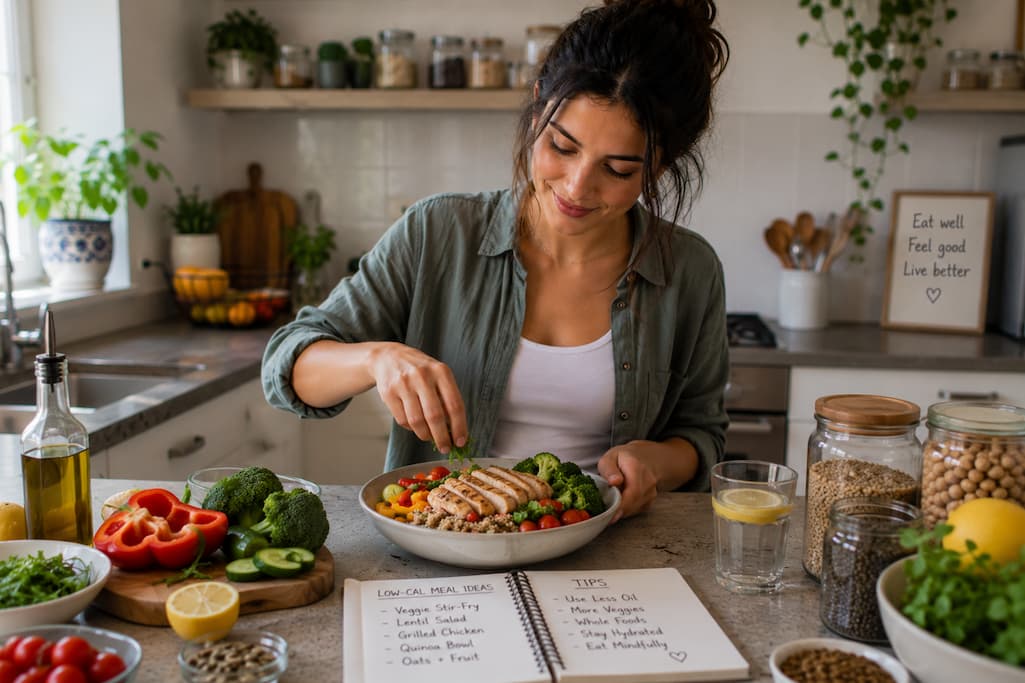
In a world full of fast food, snacks, and a hectic daily life, preparing low-calorie, nutritious meals can be confusing at first. For many, choosing what to eat is a challenge, not because there is a shortage of food, but because it is difficult to cleverly combine everyday ingredients. This basic guide to making low-calorie recipes with common ingredients is intended to help you understand how to easily prepare delicious, nutritious meals using everyday kitchen utensils. You do not need advanced cooking skills or special ingredients to get started; you only need a clear approach and consistent effort. In this article, you will find simple, practical strategies for creating delicious, nutritious meals and developing healthier eating habits.
Table of Contents
ToggleWhy This Problem Happens
Many people find it difficult to prepare low-calorie meals because they rely on ready-made products or always eat the same thing without any preparation. The modern diet is full of large quantities of food, sugary drinks, and processed snacks, making it difficult to understand what a nutritious meal should look like. Another reason is that people often do not know how to combine common ingredients, resulting in fatty but nutrient-poor meals. Furthermore, people underestimate the impact of cooking methods, such as deep-frying or adding extra oil. While these methods do increase the calorie count, they have little influence on nutritional value. Without a clear dietary pattern, people are prone to overeating or making thoughtless, unbalanced meals. *The Simple Guide to Making Low-Calorie Meals with Everyday Ingredients* was written to alleviate these concerns. It teaches you how to use common ingredients smarter and more consciously without changing your lifestyle.
The First Simple Method
The best way to make low-calorie meals is not by dieting, but by focusing on balance. Many people think they must give up certain foods completely, but such an approach makes eating a burden. A better strategy is to keep your meals simple by consciously combining essential nutrients. For example, you can fill a plate with vegetables, add an appropriate amount of protein (such as eggs, lentils, or chicken), and a small amount of carbohydrates to create a naturally light meal. Cooking methods are also important; boiling, grilling, or steaming instead of frying makes a significant difference. With this simple framework, your meals will taste richer and more delicious. “Simple Guide to Making Low-Calorie Meals with Everyday Ingredients” is intended to help you develop natural eating habits so that you no longer feel restricted or overwhelmed when choosing what to eat every day.
Check Crucial Settings / Reasons
Sometimes it’s not what you consume, but how you set up your day-to-day habits. People tend to eat fast, skip meals or eat while being distracted, which might lead to overeating without even knowing it. Another typical problem is the use of too much oil, sugar or high-calorie sauces when cooking, especially when preparing small meals. Portion size also matters a lot, since many people feed themselves more than they need. And nutritious foods can be weighty too when portions are high. Also consider how frequently you snack during the day, especially if such snacks are heavy in calories but low in nutrients. It’s a crucial aspect of the Simple Guide to Building Low-Calorie Meals with Everyday Foods to latch onto these minor behaviours because it demonstrates how small changes in routine may make a large difference in overall eating patterns without complicating your diet.
Upgrade or Improve the System
Getting your eating habits in better shape is not about an overhaul; it’s about little tweaks that stick. One useful approach is to try to incorporate fresher products more regularly, such as seasonal vegetables, fruit, and complete foods that are less processed. These foods tend to have fewer extra ingredients and are more natural in meals. Another benefit is learning to cook in ways that keep the flavour without adding calories. For example, replacing heavy sauces with herbs and spices can make meals more pleasurable and light. It also helps to drink plenty of water during the day, because thirst can sometimes be confused with hunger. The Simple Guide to Building Low-Calorie Meals with Everyday Foods is all about promoting these little changes since they are realistic and easy to stick to. These modifications develop habits over time, organically supporting healthy eating without the need for tight rules or extensive planning.
Remove or Cleanup Unnecessary Things
A crucial step in creating light meals is to eliminate needless frills that don’t offer actual value to your dish. Many common meals are calorie-dense because of hidden additives like additional oil, sweet condiments or significant amounts of processed garnishes. You can make your meals lighter by decreasing these extras without changing the core ingredients. Cutting down on packaged snacks (which are easy to go overboard on but aren’t very filling) will help, too. Instead, by sticking to simple home-cooked meals, you have more control over what goes into your food. Cleaning up your eating habits doesn’t mean abandoning delight; it just means being more attentive about what you add. The Simple Guide to Building Low-Calorie Meals with Everyday Foods is about making your plate simple so that your meals are cleaner, lighter and simpler for your body to handle on a regular basis.
Extra Tips To Help Stop The Problem
The next step is to keep it consistent the easy way once you know how to prepare low-calorie meals. It’s a handy habit to prepare meals ahead of time, even if it’s just a rough plan so you’re not making snap judgements when you’re hungry. Another good suggestion is to keep your kitchen stocked with healthy basics like vegetables, grains and protein sources so that you always have something simple to do. Eating slowly can help you better sense when you’re full and help you avoid overeating. It is also crucial to listen to your body and not eat out of boredom or stress. The Simple Guide to Building Low-Calorie Meals with Everyday Foods is about awareness and balance – not tight control. With these basic habits, you’ll find it simpler to be consistent without feeling like you’re putting any strain or restriction on yourself in your daily routine.
Summary
A low-calorie diet doesn’t have to be complicated or restrictive. With a basic understanding of common ingredients and how to combine them, you can easily prepare delicious and refreshing meals. The core idea of this “Simple Guide to Low-Calorie Meals with Everyday Ingredients” is to help you make smarter use of the ingredients you have in your kitchen. We focus on balance, understanding portion sizes, and simple cooking methods, not on restrictions. Over time, these small adjustments will become habits and part of your lifestyle. Our goal is not perfection, but continuous improvement. As you make informed choices time and again, eating becomes easier, more enjoyable, and aligns better with your daily needs.
FAQs
Q1: What is the basic concept of making low-calorie meals with everyday foods?
The aim is to take materials you probably already have in your home and make balanced meals that seem light, yet still filling. You don’t depend on particular diet items, but instead you concentrate on smartly blending veggies, proteins and carbohydrates. It makes eating more realistic and possible in everyday life.
Q2: What special items should I buy to follow a low-calorie meal plan?
No, you don’t need any special ingredients. Daily foods like rice, vegetables, eggs, lentils and fruits are sufficient to make healthy meals. It’s more about how you put them together, how you prepare them, than it is about rare or expensive things.
Q3: What impact do cooking methods have on the calorie content of meals?
Certain cooking methods might make a meal feel hefty. Deep-fried or oily food adds calories, but boiled or steamed or grilled food is light. By using easy cooking procedures, you may reduce calories without affecting the taste too much.
Q4: Will low-calorie meals still make me feel full and satisfied?
Yes, low-calorie meals can fill you up as long as they are high in fibre, protein and water-rich foods. Vegetables, nutritious grains and lean proteins keep you feeling full longer without feeling too heavy or luxurious.
Q5: Why is portion control vital in daily meals?
Keep a balanced meal and regulate portions to avoid overeating. A diet high in calories might also be caused by eating enough nutritious foods. Knowing how much food you are eating might help you enjoy your cuisine while being aware of your portion size.
Q6: How long does it take to get used to low-calorie eating?
Everyone is different, but most people see changes after a few weeks. You do simple things regularly, and your body and mind adapt naturally. The trick is to be consistent, not rapid. That makes the change more permanent.

Olivia Dawson is a food writer and recipe developer focused on creating clear, practical, and family-friendly cooking content. She specializes in approachable recipes made with everyday ingredients and well-explained methods that support confident cooking. Through Recipes With Olivia, Olivia shares thoughtfully crafted meal ideas designed to be reliable, enjoyable, and easy to recreate in everyday kitchens.