
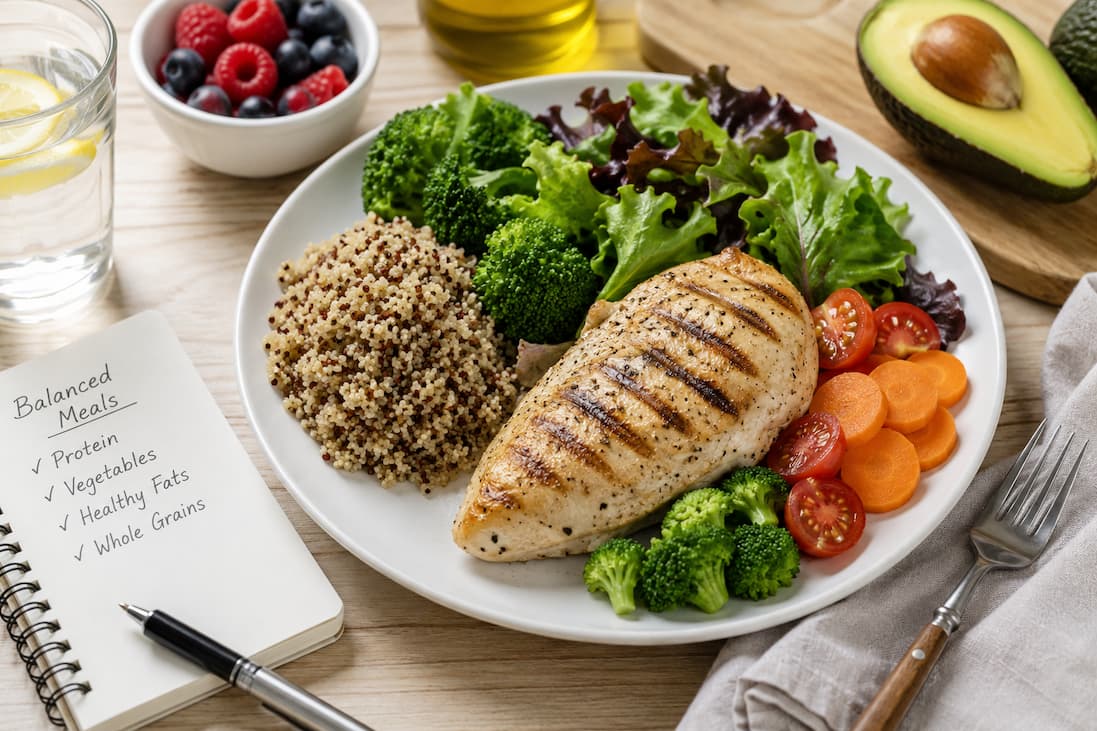
I had fifteen minutes before my next meeting. No time for takeout, no energy for something elaborate. I grabbed what I had: a leftover chicken breast from Sunday’s roast, the sad half-bag of spinach that was one day away from becoming compost, a cold baked sweet potato from the night before, and a drizzle of olive oil from the fancy bottle my sister brought back from Greece. I threw it all on a plate, microwaved the potato, sliced the chicken over the spinach, and sat down at the counter with a fork in one hand and my phone in the other.
Here’s the thing—I didn’t expect much. But thirty minutes later, I realized I wasn’t reaching for my usual 3 p.m. sugar crash snack. I wasn’t fighting to keep my eyes open during the afternoon slump. I felt genuinely, surprisingly energized. My brain was clear. My mood had shifted from “surviving” to “actually okay.” That haphazard plate — half vegetables, some protein, a complex carb, a bit of healthy fat — had done something a granola bar never could. It sustained me.
That Tuesday taught me that balanced eating isn’t about perfection. It’s not about Instagram-worthy smoothie bowls or expensive meal kits. It’s about understanding what your body needs and giving it that in the simplest way possible. And that’s exactly what we’re going to do together in this post. I’m going to walk you through the plate method that changed my relationship with food, share five complete recipes I make on repeat, and show you how to set yourself up for success without spending your entire Sunday in the kitchen. Let’s build plates that make you feel as good as that random Tuesday lunch made me feel.
What Makes a Balanced Plate
Before we dive into the recipes, let’s talk about the framework I use every single time I build a meal. I call it the plate method, and it’s the simplest visual guide I’ve found for creating balanced, nourishing meals without counting calories or measuring every gram.
- Vegetables 50%
- Protein 25%
- Grains 25%
- Non-starchy vegetables
- Lean protein
- Whole grains
Imagine your plate as a circle divided into sections. If you were to draw this by hand (and I have, on napkins, in my recipe notebook, on the back of grocery lists), it would look like a pie chart made by someone who loves vegetables. The largest section — the half-moon that takes up the entire left side of your plate — is filled with non-starchy vegetables. Think leafy greens, broccoli, bell peppers, tomatoes, zucchini, carrots, cauliflower, and snap peas. These are your volume foods, your fiber champions, your vitamin and mineral powerhouses. They fill you up without weighing you down.
The remaining half of your plate is split into two equal quarters. One quarter is dedicated to lean protein — chicken, fish, turkey, eggs, tofu, tempeh, beans, or lentils. Protein is what keeps you satisfied between meals, supports muscle health, and provides the building blocks your body needs to repair and thrive. The other quarter is for whole grains or starchy vegetables—quinoa, brown rice, sweet potatoes, whole grain bread, oats, and farro. These are your sustained energy source, the slow-burning fuel that prevents the blood sugar spikes and crashes that leave you raiding the pantry at 4 p.m.
Then, scattered across the plate or drizzled on top, you add healthy fats—a drizzle of olive oil, a handful of nuts, a quarter of an avocado, or a sprinkle of seeds. Fats help your body absorb the fat-soluble vitamins in your vegetables, add richness and flavor, and contribute to that deep sense of satisfaction that makes a meal feel complete.
What I love about this method is its flexibility. It works whether you’re cooking for one or feeding a family. It works with any cuisine — the Mediterranean bowl I’m about to share follows the same structure as the stir-fry. And it works with whatever you have on hand. The key is the proportion, not the specific ingredients.
Every recipe below is built using this framework. As you read through them, you’ll start to see the pattern: vegetables taking center stage, protein anchoring the meal, whole grains providing steady energy, and healthy fats tying it all together. Once you internalize this visual, you won’t need recipes at all. You’ll be able to open your fridge and build a balanced plate without thinking twice.
5 Complete Balanced Recipes
1. Lemon Herb Chicken with Roasted Vegetables and Quinoa
This is the recipe I make when I want something that feels restaurant-quality but requires minimal hands-on time. The oven does most of the work, and everything comes together on one sheet pan. It’s bright, fresh, and the kind of meal that makes you feel like you have your life together—even if you definitely don’t.
- 2 boneless, skinless chicken breasts (about 6 oz each)
- 2 tablespoons olive oil
- 1 lemon (zest and juice)
- 2 cloves garlic, minced
- 1 teaspoon dried oregano
- ½ teaspoon salt
- ¼ teaspoon black pepper
- 2 cups broccoli florets
- 1 red bell pepper, cut into 1-inch strips
- 1 zucchini, sliced into half-moons
- 1 tablespoon olive oil
- ½ teaspoon salt
- ¼ teaspoon black pepper
- ½ cup dry quinoa
- 1 cup water or low-sodium chicken broth
- Pinch of salt
- Preheat your oven to 425°F (220°C). Line a large baking sheet with parchment paper for easy cleanup.
- In a small bowl, whisk together 2 tablespoons olive oil, the zest and juice of one lemon, minced garlic, dried oregano, salt, and pepper. This is your marinade.
- Place the chicken breasts in a shallow dish or zip-top bag. Pour half the marinade over the chicken, reserving the other half for the vegetables. Let the chicken marinate while you prep everything else—even 10 minutes makes a difference.
- Rinse the quinoa under cold water in a fine-mesh sieve. Combine the quinoa, water or broth, and a pinch of salt in a small saucepan. Bring to a boil, then reduce heat to low, cover, and simmer for 15 minutes. Remove from heat and let it sit, covered, for 5 minutes. Fluff with a fork.
- While the quinoa cooks, toss the broccoli, bell pepper, and zucchini on the prepared baking sheet with 1 tablespoon olive oil, salt, pepper, and the reserved lemon-herb marinade. Spread the vegetables out in a single layer.
- Push the vegetables to one side of the baking sheet. Place the marinated chicken breasts on the other side.
- Roast in the preheated oven for 20 to 25 minutes, until the chicken reaches an internal temperature of 165°F (74°C) and the vegetables are tender with caramelized edges.
- Slice the chicken and divide everything between two plates: half the plate filled with the roasted vegetables, a quarter with sliced chicken, and a quarter with quinoa. Drizzle any pan juices over the top.
2. Mediterranean Chickpea Bowl with Tzatziki
This bowl is what I make when I’m craving something fresh and vibrant but don’t want to turn on the oven. It’s entirely stovetop and comes together in the time it takes to warm some chickpeas and chop a few vegetables. The homemade tzatziki is the star — cool, creamy, and loaded with garlic and dill.
- 1 cup plain Greek yogurt (full-fat or 2%)
- ½ English cucumber, grated and squeezed dry
- 2 cloves garlic, minced
- 1 tablespoon fresh dill, chopped (or 1 teaspoon dried)
- 1 tablespoon lemon juice
- ¼ teaspoon salt
- 1 can (15 oz) chickpeas, drained and rinsed
- 1 tablespoon olive oil
- ½ teaspoon ground cumin
- ½ teaspoon smoked paprika
- ¼ teaspoon salt
- 2 cups mixed greens (spinach, arugula, or romaine)
- 1 cup cherry tomatoes, halved
- ½ cucumber, diced
- ¼ red onion, thinly sliced
- ½ cup cooked quinoa or brown rice (warm or room temperature)
- 2 tablespoons kalamata olives, pitted and sliced
- 1 tablespoon extra virgin olive oil for drizzling
- Make the tzatziki first so the flavors have time to meld. In a small bowl, combine the Greek yogurt, grated and squeezed cucumber, minced garlic, dill, lemon juice, and salt. Stir well and set aside. (Pro tip: Wrap the grated cucumber in a clean kitchen towel and squeeze out as much liquid as possible — this prevents watery tzatziki.)
- Heat 1 tablespoon olive oil in a skillet over medium heat. Add the drained chickpeas, cumin, smoked paprika, and salt. Cook for 8 to 10 minutes, stirring occasionally, until the chickpeas are warmed through and starting to get slightly crispy on the edges.
- While the chickpeas cook, divide the mixed greens between two bowls. Top each with half the cherry tomatoes, diced cucumber, and red onion slices.
- Add a scoop of warm quinoa or brown rice to each bowl.
- Spoon the warm, spiced chickpeas over the greens and grains.
- Top each bowl with sliced kalamata olives and a generous dollop of tzatziki. Drizzle with extra virgin olive oil.
3. Salmon with Sweet Potato and Steamed Broccoli
This is my go-to when I want a meal that feels indulgent but is actually incredibly wholesome. Salmon is rich in omega-3 fatty acids, the sweet potato provides complex carbohydrates and natural sweetness, and steamed broccoli adds that essential green volume. It’s simple, elegant, and comes together faster than you’d think.
- 2 salmon fillets (about 5 oz each), skin on or off
- 1 tablespoon olive oil
- ½ teaspoon salt
- ¼ teaspoon black pepper
- ½ teaspoon garlic powder
- 1 large sweet potato
- 3 cups broccoli florets
- 1 tablespoon butter or olive oil (for the broccoli)
- 1 lemon, cut into wedges
- Optional: fresh parsley for garnish
- Scrub the sweet potato and prick it several times with a fork. Place it on a microwave-safe plate and microwave on high for 6 to 8 minutes, turning halfway through, until it’s tender when pierced with a knife. Alternatively, you can bake it at 400°F for 45 minutes if you have the time, but the microwave method is a weeknight lifesaver.
- While the sweet potato cooks, pat the salmon fillets dry with a paper towel. This is crucial for getting a nice sear. Season both sides with salt, pepper, and garlic powder.
- Heat 1 tablespoon olive oil in a non-stick skillet over medium-high heat. Once the oil is shimmering, place the salmon fillets in the pan, skin-side down if they have skin. Cook for 4 to 5 minutes without moving them—this creates that beautiful golden crust.
- Flip the salmon and cook for another 3 to 4 minutes, until the fish flakes easily with a fork and reaches an internal temperature of 145°F (63°C). Remove from heat and let rest.
- While the salmon cooks, bring about 1 inch of water to a boil in a pot with a steamer basket. Add the broccoli florets, cover, and steam for 4 to 5 minutes until bright green and tender-crisp. Toss with butter or a drizzle of olive oil and a pinch of salt.
- Split the sweet potato in half lengthwise and fluff the flesh with a fork. Divide the sweet potato, steamed broccoli, and salmon between two plates.
- Serve with lemon wedges for squeezing over everything. The acidity brightens the whole plate.
4. Turkey and Vegetable Stir-Fry with Brown Rice
Stir-fries are the ultimate balanced meal vehicle because you can pack an enormous amount of vegetables into a single pan, use whatever protein you have, and have dinner on the table in under 30 minutes. This turkey version is lean and flavorful, and the ginger-garlic sauce ties everything together. I make a double batch of brown rice at the beginning of the week just for this recipe.
- 3 tablespoons low-sodium soy sauce
- 1 tablespoon rice vinegar
- 1 teaspoon sesame oil
- 1 teaspoon honey or maple syrup
- 1 teaspoon cornstarch
- 2 cloves garlic, minced
- 1 tablespoon fresh ginger, grated
- 1 lb ground turkey (93% lean)
- 2 tablespoons vegetable or avocado oil, divided
- 1 red bell pepper, thinly sliced
- 1 yellow bell pepper, thinly sliced
- 2 cups snap peas, trimmed
- 1 cup shredded carrots
- 2 cups broccoli florets, cut small
- 3 green onions, sliced (white and green parts separated)
- 1½ cups cooked brown rice (warm)
- 1 tablespoon sesame seeds for garnish
- Whisk together all the sauce ingredients in a small bowl: soy sauce, rice vinegar, sesame oil, honey, cornstarch, garlic, and ginger. Set aside. The cornstarch will help the sauce thicken and coat everything beautifully.
- Heat 1 tablespoon oil in a large skillet or wok over medium-high heat. Add the ground turkey and the white parts of the green onions. Cook, breaking up the meat with a wooden spoon, until the turkey is browned and cooked through, about 5 to 6 minutes. Transfer to a plate and set aside.
- Add the remaining 1 tablespoon oil to the same pan. Add the broccoli first — it takes the longest to cook — and stir-fry for 2 minutes.
- Add the bell peppers, snap peas, and carrots. Stir-fry for another 3 to 4 minutes until the vegetables are tender-crisp. You want them to retain some bite and bright color.
- Return the cooked turkey to the pan. Give the sauce a quick stir (the cornstarch settles) and pour it over everything. Toss constantly for 1 to 2 minutes until the sauce thickens and glazes the turkey and vegetables.
- Remove from heat and stir in the green parts of the green onions.
- Divide the brown rice among three bowls and top with the stir-fry. Sprinkle with sesame seeds.
5. Lentil and Vegetable Soup with Whole Grain Bread
There is nothing — and I mean nothing — more comforting than a big pot of soup simmering on the stove while rain hits the windows. This lentil soup is my ultimate comfort food that happens to be incredibly nutritious. Lentils provide plant-based protein and fiber, the vegetables add volume and vitamins, and a slice of crusty whole-grain bread on the side makes it feel like a complete, hug-in-a-bowl meal. Plus, it makes enough for leftovers, which is always a win.
- 1 cup dried green or brown lentils, rinsed and picked over
- 1 tablespoon olive oil
- 1 large onion, diced
- 2 carrots, diced
- 2 celery stalks, diced
- 3 cloves garlic, minced
- 1 teaspoon ground cumin
- ½ teaspoon smoked paprika
- ½ teaspoon dried thyme
- 6 cups low-sodium vegetable broth
- 1 can (14.5 oz) diced tomatoes, undrained
- 2 cups chopped kale or spinach
- 1 tablespoon lemon juice
- Salt and black pepper to taste
- 4 slices whole grain bread, for serving
- Optional: grated Parmesan or nutritional yeast for topping
- Heat the olive oil in a large pot or Dutch oven over medium heat. Add the diced onion, carrots, and celery. Cook for 5 minutes, stirring occasionally, until the vegetables start to soften and the onion is translucent. This is your flavor base — don’t rush it.
- Add the minced garlic, cumin, smoked paprika, and thyme. Cook for 1 minute until fragrant. You’ll know it’s ready when your kitchen smells incredible.
- Add the rinsed lentils, vegetable broth, and diced tomatoes with their juices. Stir everything together and bring to a boil.
- Once boiling, reduce the heat to low, cover partially, and simmer for 25 to 30 minutes until the lentils are tender but not mushy. Stir occasionally and add a splash more broth if the soup gets too thick.
- Stir in the chopped kale or spinach and let it wilt into the soup for 2 to 3 minutes.
- Remove from heat and stir in the lemon juice. Taste and adjust seasoning with salt and pepper.
- Ladle into bowls and serve with a slice of toasted whole-grain bread on the side. If you’re feeling fancy, grate a little Parmesan over the top or sprinkle with nutritional yeast for a dairy-free cheesy flavor.
Meal Prep Tips: How to Prep 3 Balanced Meals on Sunday
I know what you’re thinking: “Olivia, these recipes sound great, but who has time to cook like this every night?” I hear you. Between work, family, errands, and the general chaos of being a human in the world, cooking from scratch every evening can feel impossible. That’s where a strategic Sunday prep session comes in.
Here’s my realistic, no-stress approach to prepping three balanced meals for the week ahead. I say three because I find that’s the sweet spot—enough to get you through the busiest half of the week without overwhelming your fridge or your Sunday afternoon.
Start with Grains
Cook a big batch of quinoa and brown rice together. I make 2 cups dry quinoa and 1.5 cups dry brown rice. Let cool completely before storing in airtight containers.
Prep Proteins
Marinate chicken for Tuesday, brown ground turkey with aromatics, and rinse chickpeas. Make tzatziki ahead—it tastes better after a day!
Wash & Chop Veggies
Wash and chop all broccoli, slice bell peppers, and dice onions. Store in separate containers lined with paper towels to absorb moisture.
Make One Full Meal
Cook the lentil soup on Sunday—it reheats beautifully and tastes even better the next day. Divide into containers for easy lunches.
Start with your grains. Cook a big batch of quinoa and brown rice together in one session. I make 2 cups dry quinoa and 1.5 cups dry brown rice, which gives me enough for all three recipes above with some to spare. Let them cool completely before storing in airtight containers in the fridge. They’ll keep for 5 days and reheat beautifully in the microwave with a damp paper towel over the top.
Prep your proteins. For the Lemon Herb Chicken, marinate the chicken on Sunday and either cook it then or store it in the marinade until Tuesday. For the Turkey Stir-Fry, brown the ground turkey with the aromatics and store it in a container—then on stir-fry night, you just need to reheat it and toss it with fresh vegetables. For the Mediterranean Bowl, rinse and drain your chickpeas, and make the tzatziki on Sunday. It actually tastes better after a day in the fridge.
Wash and chop your vegetables. This is the task that saves the most time during the week. Wash and chop all the broccoli you’ll need, slice your bell peppers, dice your onions, and spiralize or chop any other vegetables. Store them in separate containers lined with paper towels to absorb moisture. When Wednesday rolls around and you’re exhausted, having pre-chopped vegetables is the difference between ordering pizza and making the stir-fry.
Make one complete meal ahead. I usually make the lentil soup on Sunday because it reheats so well and tastes even better the next day. Divide it into individual containers for easy grab-and-go lunches, or keep it in one big pot for family dinners.
Set yourself up for assembly, not cooking. The goal of meal prep isn’t to have every meal completely finished. It’s to remove the friction that leads to poor choices when you’re tired. If your grains are cooked, your protein is prepped, and your vegetables are chopped, you can assemble a balanced plate in 10 minutes flat — even on the busiest night.
— Olivia’s Sunday Prep Philosophy
Start With Just One Recipe
If you’ve made it this far, you now have everything you need to build balanced, energizing meals that actually fit into real life. Five complete recipes. A simple framework for filling your plate. A realistic meal prep strategy that doesn’t require your entire weekend. But here’s what I want you to remember most: you don’t need to overhaul your entire diet overnight. You don’t need to make all five recipes this week. You don’t need to have a perfectly organized fridge or a color-coded meal plan.
Start with one recipe. Just one. Make the lemon herb chicken on a Tuesday when you have 35 minutes. Notice how you feel afterward — the steady energy, the satisfaction, the absence of that familiar crash. Let that feeling be your motivation to try the next one.
Balanced eating isn’t a destination. It’s a series of small, intentional choices that add up to something bigger. And every time you choose to fill half your plate with vegetables, add a quality protein, include a whole grain, and drizzle on some healthy fat, you’re choosing to support your body in the most fundamental way possible.
I’m right here in the kitchen with you, cheering you on. Now go make that first plate—and let me know how it goes.

Olivia Dawson is a food writer and recipe developer focused on creating clear, practical, and family-friendly cooking content. She specializes in approachable recipes made with everyday ingredients and well-explained methods that support confident cooking. Through Recipes With Olivia, Olivia shares thoughtfully crafted meal ideas designed to be reliable, enjoyable, and easy to recreate in everyday kitchens.