
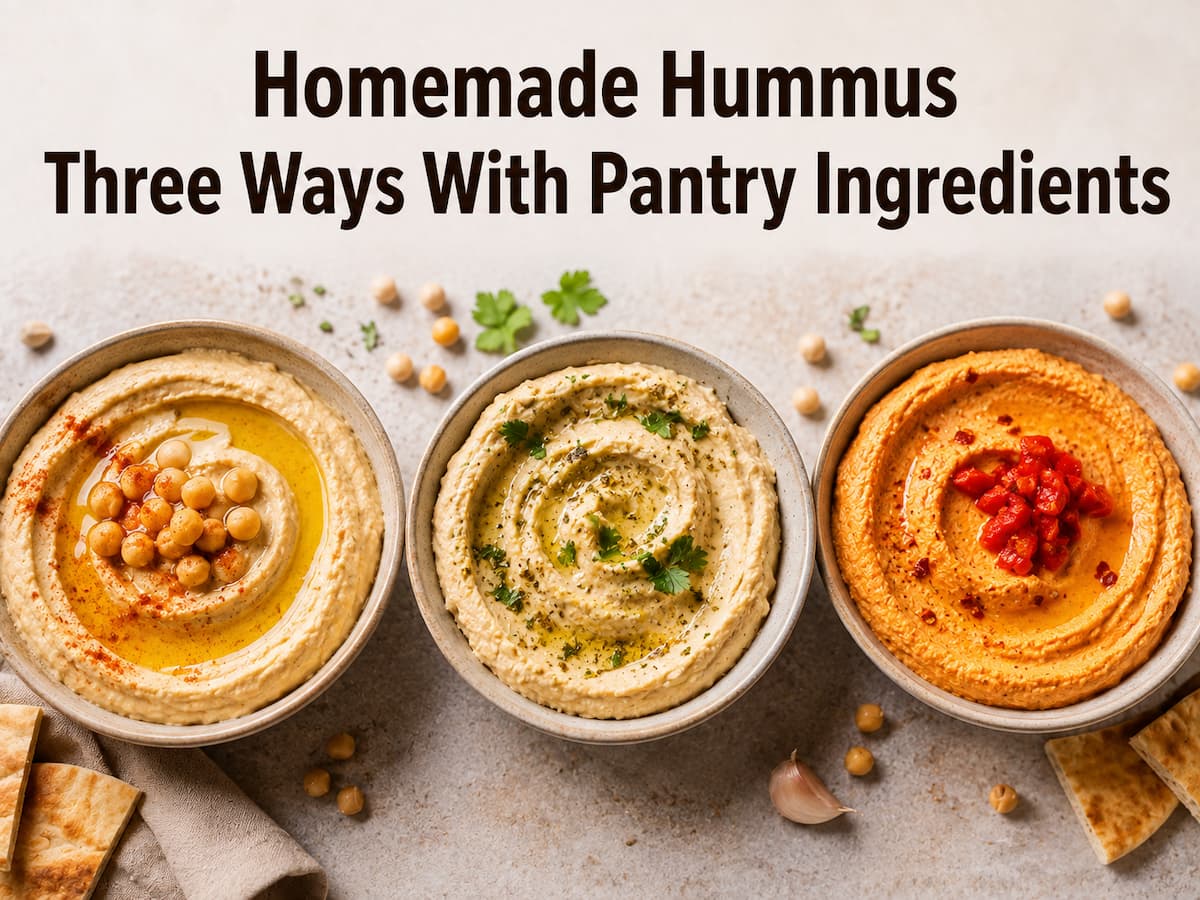
There are days when the refrigerator looks almost empty, yet a few pantry staples can still come together into something surprisingly satisfying. Homemade hummus is one of those recipes that rarely asks for a special shopping trip. A can of chickpeas, a little garlic, olive oil, and a squeeze of lemon can become a creamy spread that works for lunches, snacks, or even quick dinners.
Making hummus at home also gives you complete control over the texture and flavor. Some people love it thick enough to scoop with vegetables, while others prefer it silky enough to spread onto wraps or drizzle onto grain bowls. Small adjustments make a noticeable difference, and after preparing hummus a few times, you’ll quickly discover your own favorite balance. This guide includes three pantry-friendly versions: a classic hummus, a roasted red pepper variation, and a smoky paprika hummus. Each starts with the same simple base, making it easy to prepare several flavors in one afternoon.
Why Homemade Hummus Often Tastes Better Than Store-Bought
Freshly blended hummus has a brightness that’s difficult to find in packaged versions. Lemon juice still tastes vibrant, garlic hasn’t mellowed too much, and the olive oil contributes fresh flavor instead of simply adding richness. Texture is another reason many home cooks prefer making their own. A food processor lets you decide exactly how smooth or rustic the final dip should be. You’ll usually notice that freshly blended hummus seems slightly loose at first. After resting in the refrigerator for about an hour, it naturally thickens as the chickpeas absorb moisture. That simple resting period is one of the easiest ways to improve homemade hummus.
Classic Pantry Hummus
Ingredients
- 1 can (15 ounces) chickpeas, drained and rinsed
- ¼ cup tahini
- 2 tablespoons fresh lemon juice
- 2 tablespoons extra-virgin olive oil
- 1 small garlic clove
- ½ teaspoon ground cumin
- ½ teaspoon salt
- 2 to 4 tablespoons cold water
Optional Garnishes
- Olive oil
- Paprika
- Chopped parsley
- Whole chickpeas
- Sesame seeds
The Secret Behind Creamier Hummus
Many recipes skip an important detail: adding cold water while blending. Cold water helps emulsify the tahini with the olive oil and lemon juice before the chickpeas fully combine. Instead of becoming heavy, the mixture gradually turns lighter and fluffier. Another trick is blending the tahini, lemon juice, olive oil, and garlic together first. After about a minute, the mixture becomes noticeably paler before the chickpeas are added. That extra minute produces a smoother final texture with very little additional effort.
Step-by-Step Method
- Add the tahini, lemon juice, olive oil, garlic, cumin, and salt to a food processor.
- Blend for about one minute until creamy.
- Add half of the chickpeas and blend again.
- Add the remaining chickpeas.
- While blending continuously, slowly pour in cold water one tablespoon at a time until the hummus reaches your preferred consistency.
- Scrape the sides of the processor once or twice during blending.
- Taste and adjust with additional salt or lemon juice if needed.
- Let the hummus chill for at least 30 minutes before serving.
Variation One: Roasted Red Pepper Hummus
Roasted peppers add natural sweetness without making the hummus overly rich. Jarred roasted peppers work beautifully and are usually available year-round.
Additional Ingredients
- ½ cup drained roasted red peppers
- Extra- teaspoon olive oil
- Small pinch of smoked paprika
Simply add the peppers while blending the chickpeas. If the peppers contain extra liquid, reduce the added water slightly until you reach the desired consistency. The finished hummus develops a beautiful orange color with a gentle sweetness that pairs especially well with pita chips or cucumber slices.
Variation Two: Smoky Paprika Hummus
This version keeps the ingredient list incredibly simple while creating noticeably deeper flavor.
Additional Ingredients
- 1 teaspoon smoked paprika
- Pinch cayenne (optional)
- Extra- virgin olive oil
Blend the smoked paprika directly into the classic recipe. You’ll notice the aroma changes immediately as the paprika mixes with the olive oil. The flavor becomes richer after resting overnight, making this version especially good for meal prep.
Pantry Ingredient Swaps That Actually Work
Sometimes one missing ingredient shouldn’t stop you from making hummus.
| If You’re Out Of | Try This Instead |
|---|---|
| Tahini | Unsweetened sunflower seed butter or natural peanut butter (small amount) |
| Lemon juice | Lime juice |
| Olive oil | Avocado oil or omit entirely. |
| Ground cumin | Ground coriander or leave out |
| Fresh garlic | Small pinch of garlic powder |
While tahini contributes the signature nutty flavor, hummus can still be delicious without it. The texture changes slightly, but it remains creamy and satisfying.
Before You Blend: Small Details That Matter
Drain canned chickpeas well. Too much canning liquid can make hummus watery. If your food processor struggles with thicker mixtures, add water gradually instead of all at once. Avoid adding extra olive oil simply to thin the hummus. Water loosens the mixture without making it greasy. If you have a few extra minutes, warming the chickpeas slightly before blending often produces an even smoother texture. Some cooks also remove the chickpea skins. While it creates exceptionally silky hummus, many people find the difference too small to justify the extra time for everyday cooking.
How to Tell When the Texture Is Just Right
Good hummus shouldn’t resemble mashed potatoes, nor should it pour like soup. When you drag a spoon through the bowl, the hummus should leave soft ridges that slowly settle. If it appears grainy, keep blending. Food processors often need several minutes longer than expected before the mixture becomes completely smooth. Patience usually rewards you with noticeably creamier hummus.
Easy Ways to Serve Each Flavor
The classic version pairs well with warm pita bread, carrot sticks, celery, cherry tomatoes, crackers, and grilled chicken. Roasted red pepper hummus makes an excellent sandwich spread and adds flavor to wraps filled with roasted vegetables. Smoky paprika hummus works beautifully alongside grilled vegetables, baked potatoes, or grain bowls. A drizzle of olive oil and a light sprinkle of paprika right before serving instantly make homemade hummus look restaurant-worthy.
Keeping Leftovers Fresh
Transfer hummus into an airtight container. Smooth the surface with the back of a spoon and drizzle a thin layer of olive oil across the top before sealing. Store in the refrigerator for up to 5 days. The flavors often become even more balanced after the first day. If the hummus thickens during storage, stir in one tablespoon of cold water instead of extra oil.
Can You Freeze It?
Yes, portion the hummus into freezer-safe containers, leaving a little space for expansion. Freeze for up to 3 months. Thaw overnight in the refrigerator. After thawing, stir well and add a splash of water or lemon juice if needed to restore the creamy consistency.
A Quick Look at Nutrition
Exact nutrition depends on the amount of olive oil and tahini used, but homemade hummus generally provides:
- Plant-based protein from chickpeas
- Dietary fiber
- Healthy unsaturated fats from olive oil and tahini
- Vitamins and minerals naturally found in legumes and sesame seeds
Serving hummus with fresh vegetables, whole-grain crackers, or whole-wheat pita creates a balanced snack that combines fiber, healthy fats, and complex carbohydrates.
FAQs
1. Why is my hummus grainy?
It usually needs more blending time. Adding cold water gradually while blending also helps create a smoother texture.
2. Do I have to peel the chickpeas?
No. Peeling produces an extra-silky hummus, but most home cooks find a powerful food processor and longer blending time provide excellent results without the extra work.
3. Can I make hummus without tahini?
Yes. The flavor will be different, but sunflower seed butter or even a small amount of natural peanut butter can provide a similar creamy consistency.
4. Why did my hummus become too thick?
Chickpeas continue absorbing moisture after blending. Simply stir in a tablespoon or two of cold water before serving until the texture loosens.
5. Which variation is best for beginners?
The classic recipe is the easiest place to start because it helps you understand the base texture. Once you’re comfortable with that version, roasted red pepper and smoky paprika variations require only one or two extra ingredients while offering noticeably different flavors.

Olivia Dawson is a food writer and recipe developer focused on creating clear, practical, and family-friendly cooking content. She specializes in approachable recipes made with everyday ingredients and well-explained methods that support confident cooking. Through Recipes With Olivia, Olivia shares thoughtfully crafted meal ideas designed to be reliable, enjoyable, and easy to recreate in everyday kitchens.