
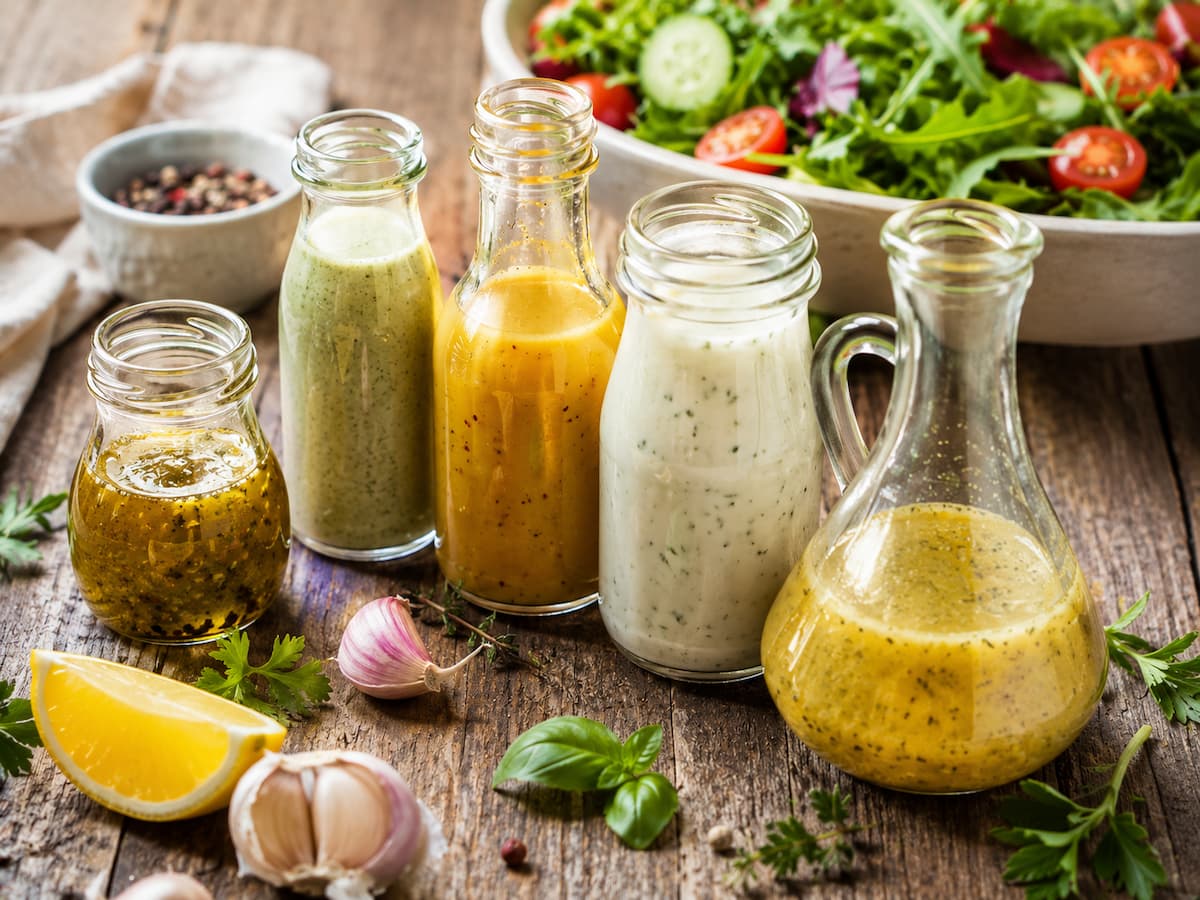
Walk through the condiment aisle of almost any grocery store and you’ll find shelves lined with salad dressings in every flavor imaginable. Ranch, Caesar, balsamic vinaigrette, honey mustard, and Italian—the options seem endless. Yet once you’ve made a few dressings at home, it’s easy to understand why so many cooks stop buying bottled versions altogether. Homemade salad dressings have a freshness that’s difficult to duplicate in a bottle. The citrus tastes brighter, the herbs are more fragrant, and the flavors can be adjusted to suit exactly what you’re serving. Instead of wondering why a dressing tastes overly sweet or unusually salty, you’re in complete control of every ingredient that goes into the bowl.
Perhaps the biggest surprise is how little time they require. Most can be whisked together in less than five minutes using ingredients that already live in many kitchens. A small jar, a whisk, or even a fork is often all that’s needed. The recipes in this guide aren’t meant to replace every bottled dressing in your refrigerator overnight. Instead, they’re designed to give you reliable foundations that you can adapt over time. Once you understand how each ingredient affects flavor and texture, creating your own combinations becomes second nature.
What Makes Homemade Dressings Stand Out?
Freshness is the first thing most people notice. When lemon juice is squeezed moments before serving or herbs are chopped just before mixing, their aromas remain vibrant in a way that bottled products often can’t match after months on a shelf. Another advantage is balance. Commercial dressings are typically developed to remain stable for long storage, which often means additional sugar, sodium, preservatives, stabilizers, or thickening agents. Homemade versions don’t need to satisfy those requirements. They only need to taste good today.
That freedom allows you to make small adjustments based on the meal. If tomatoes are especially sweet, you might use a little more vinegar. If serving peppery arugula, adding a touch more honey can soften the bite. Rather than following a fixed formula every time, homemade dressings encourage tasting as you go—a habit that naturally improves your cooking.
Understanding the Basic Formula
Although there are countless dressing recipes, many begin with the same simple framework. A balanced dressing usually contains four elements:
| Component | Purpose |
|---|---|
| Fat | Creates body and richness |
| Acid | Adds brightness and balance |
| Seasoning | Enhances overall flavor |
| Emulsifier or sweetener | Helps ingredients blend smoothly |
- Oil is the fat.
- Vinegar or citrus provides acidity.
- Salt, pepper, garlic, herbs, and spices build flavor.
- Mustard, honey, yogurt, or mayonnaise often help hold everything together.
Once you understand these four parts, inventing new dressings becomes much less intimidating.
Choosing Oils That Complement Your Salad
Not every oil behaves the same way.
- Extra virgin olive oil has a fruity, slightly peppery character that pairs beautifully with leafy greens, tomatoes, beans, roasted vegetables, and Mediterranean-inspired salads.
- Avocado oil offers a milder flavor that allows delicate ingredients to stand out.
- Neutral oils like sunflower or light olive oil work well when you want herbs, citrus, or spices to become the main focus.
- Toasted sesame oil deserves special mention because only a small amount delivers an intense nutty aroma. It’s best used as part of a dressing rather than the entire oil component.
One practical observation is that stronger oils aren’t automatically better. If a salad contains mild ingredients like cucumber and lettuce, an overly bold oil can dominate every bite.
Acidity Does More Than Add Tang
Vinegar and citrus aren’t simply there to make a dressing taste sharp. Acid brightens flavors, balances richness, and helps vegetables taste fresher. Each type contributes something slightly different. Lemon juice feels clean and refreshing. Lime juice pairs naturally with herbs, avocado, and spicy dishes. Apple cider vinegar has a gentle fruitiness. Red wine vinegar brings boldness that suits tomatoes and grilled vegetables. White wine vinegar tastes lighter, while balsamic vinegar contributes sweetness alongside acidity. You’ll usually notice that switching the acid changes the personality of a dressing more dramatically than changing the oil.
Small Ingredients That Make a Big Difference
Some of the most important ingredients appear in the smallest amounts.
- A teaspoon of Dijon mustard helps oil and vinegar stay blended while adding subtle complexity.
- Fresh garlic delivers sharpness that mellows as the dressing rests.
- Honey rounds out acidic flavors without making the dressing obviously sweet.
- Fresh herbs contribute brightness that dried herbs can’t fully replicate.
- Even freshly ground black pepper tastes noticeably livelier than pepper that’s been sitting in a shaker for months.
These ingredients rarely dominate the dressing individually, but together they create depth that makes homemade versions feel more vibrant.
Recipe 1: Classic Lemon Herb Vinaigrette
This dressing works with almost everything.
Ingredients
- ¼ cup extra virgin olive oil
- 2 tablespoons fresh lemon juice
- 1 teaspoon Dijon mustard
- 1 teaspoon honey
- 1 small garlic clove, finely grated
- Salt
- Freshly ground black pepper
- 1 tablespoon chopped parsley
Instructions
- Whisk the lemon juice, mustard, honey, garlic, salt, and pepper together until smooth.
- Slowly drizzle in the olive oil while whisking continuously.
- Stir in the parsley just before serving.
- The dressing should appear glossy and lightly thickened rather than separated.
Best With
Mixed greens, grilled chicken, cucumber salads, roasted asparagus, quinoa salads, and chickpeas.
Recipe 2: Creamy Greek Yogurt Ranch
Many bottled ranch dressings rely heavily on mayonnaise. Greek yogurt creates a lighter texture while maintaining plenty of creaminess.
Ingredients
- ¾ cup plain Greek yogurt
- 2 tablespoons milk
- 1 tablespoon lemon juice
- 1 teaspoon Dijon mustard
- 1 teaspoon onion powder
- ½ teaspoon garlic powder
- Chopped dill
- Chopped chives
- Salt
- Black pepper
Instructions
- Combine everything in a bowl until completely smooth.
- Taste before serving.
- If the dressing feels too thick, stir in another splash of milk.
- Allow it to rest in the refrigerator for at least fifteen minutes so the herbs have time to flavor the yogurt.
Best With
Garden salads, raw vegetables, wraps, baked potatoes, grilled chicken, and roasted vegetables.
Recipe 3: Honey Mustard Dressing
Sweet, tangy, and surprisingly versatile.
Ingredients
- 3 tablespoons olive oil
- 2 tablespoons Dijon mustard
- 1 tablespoon honey
- 1 tablespoon apple cider vinegar
- Salt
- Pepper
Instructions
- Whisk everything together until smooth.
- The dressing naturally becomes slightly thicker as the mustard emulsifies with the oil.
- If serving with delicate greens, you may wish to thin it with a teaspoon of water.
Best With
Spinach salads, grilled chicken, roasted sweet potatoes, apples, pecans, and grain bowls.
Recipe 4: Fresh Balsamic Vinaigrette
Bottled balsamic dressing often leans heavily on sweetness. Making it yourself lets the vinegar remain the star.
Ingredients
- ¼ cup olive oil
- 2 tablespoons balsamic vinegar
- 1 teaspoon Dijon mustard
- 1 teaspoon honey
- Salt
- Pepper
Instructions
- Whisk until smooth and glossy.
- Taste the dressing after mixing.
- If the vinegar feels particularly bold, add another teaspoon of olive oil rather than additional honey.
- That preserves the balance without making the dressing sugary.
Best With
Tomatoes, mozzarella, roasted vegetables, strawberries, spinach, mushrooms, and grilled steak salads.
Recipe 5: Sesame Ginger Dressing
Bright, savory, and ideal for Asian-inspired salads.
Ingredients
- 2 tablespoons neutral oil
- 1 tablespoon toasted sesame oil
- 2 tablespoons rice vinegar
- 1 teaspoon soy sauce
- 1 teaspoon honey
- 1 teaspoon freshly grated ginger
- 1 garlic clove, grated
Instructions
- Whisk all ingredients together until blended.
- Because sesame oil has a naturally bold flavor, a little goes a long way.
- Taste before adding extra soy sauce.
Best With
Cabbage slaw, noodle salads, carrots, cucumbers, edamame, grilled shrimp, and grilled salmon.
Comparing These Five Dressings
Each dressing brings its own personality to the table.
| Dressing | Flavor Profile | Best Salads |
|---|---|---|
| Lemon Herb | Bright and fresh | Mixed greens, chicken |
| Greek Yogurt Ranch | Creamy and herb-forward | Garden salads, vegetables |
| Honey Mustard | Sweet and tangy | Spinach, grain bowls |
| Balsamic Vinaigrette | Rich with balanced acidity | Tomato, mozzarella, roasted vegetables |
| Sesame Ginger | Nutty and savory | Asian-style salads, cabbage slaw |
Rather than choosing one favorite, many home cooks keep ingredients for several of these dressings on hand. A simple change in dressing can completely transform the same bowl of greens, making everyday salads feel fresh without changing the main ingredients. One practical habit worth adopting is making only what you’ll use over the next few days. Fresh herbs, citrus, and garlic are at their best shortly after mixing, and small batches encourage experimentation. As you become more comfortable adjusting oil, acid, and seasoning, you’ll likely find yourself creating dressings that suit your own meals better than anything available on a supermarket shelf.
Recipe 6: Creamy Avocado Lime Dressing
If you’re looking for a dressing that’s naturally creamy without relying on heavy amounts of mayonnaise, avocado is an excellent choice. Its buttery texture blends beautifully with bright citrus, creating a dressing that feels rich while allowing fresh vegetables to remain the focus.
Ingredients
- 1 ripe avocado
- 2 tablespoons fresh lime juice
- 2 tablespoons olive oil
- 2 tablespoons water (plus more if needed)
- 1 small garlic clove
- 2 tablespoons chopped cilantro
- Salt
- Black pepper
Instructions
- Combine all ingredients in a blender or food processor.
- Blend until completely smooth, stopping once or twice to scrape down the sides.
- If the dressing seems too thick, add water a tablespoon at a time until it reaches your preferred consistency.
- Because avocado naturally thickens after chilling, you may want to stir in a splash of water before serving leftovers.
Best With
Taco salads, grilled chicken, black beans, roasted corn, tomatoes, and mixed greens.
Recipe 7: Orange Poppy Seed Dressing
A fresh orange brings a natural sweetness that feels lighter than adding extra sugar. Poppy seeds add subtle crunch and visual appeal without changing the flavor significantly.
Ingredients
- ¼ cup fresh orange juice
- 2 tablespoons olive oil
- 1 tablespoon apple cider vinegar
- 1 teaspoon honey
- 1 teaspoon Dijon mustard
- 1 teaspoon poppy seeds
- Pinch of salt
Instructions
- Whisk the orange juice, vinegar, mustard, honey, and salt together.
- Slowly drizzle in the olive oil while whisking continuously.
- Stir in the poppy seeds at the end.
- Let the dressing sit for about ten minutes before serving so the flavors have time to come together.
Best With
Spinach, strawberries, blueberries, mandarin oranges, walnuts, grilled chicken, and goat cheese.
Recipe 8: Garlic Parmesan Dressing
This dressing has enough body to coat hearty greens while remaining lighter than many bottled creamy dressings.
Ingredients
- ¼ cup Greek yogurt
- 2 tablespoons olive oil
- 2 tablespoons grated Parmesan cheese
- 1 tablespoon lemon juice
- 1 garlic clove, finely grated
- Salt
- Freshly ground black pepper
Instructions
- Whisk everything together until smooth.
- Taste before serving.
- Depending on the saltiness of your Parmesan, you may need only a small pinch of additional salt.
Best With
Romaine lettuce, grilled chicken, roasted broccoli, pasta salad, croutons, and cherry tomatoes.
Matching the Dressing to the Salad
A good dressing should complement the ingredients rather than overpower them. Delicate salads made with butter lettuce, cucumbers, or herbs generally pair best with lighter vinaigrettes that allow the vegetables to remain the center of attention. Heartier salads featuring kale, cabbage, roasted vegetables, or grains benefit from slightly thicker dressings that cling to every bite. Fruit salads often work beautifully with citrus-based dressings because the acidity enhances natural sweetness without masking it. Creamy dressings are especially satisfying alongside grilled meats, roasted potatoes, or vegetables with bold flavors. Rather than choosing your favorite dressing first, consider what the salad needs. Sometimes a bright lemon vinaigrette is exactly right, while other meals call for something richer and more substantial.
Why Dressings Sometimes Separate
One question that surprises many home cooks is why homemade dressings separate after sitting for a while. The answer is simple. Oil and water-based ingredients naturally want to separate. Commercial dressings often contain stabilizers that keep them blended for weeks or even months. Homemade versions rely on emulsifiers such as Dijon mustard, mayonnaise, yogurt, or honey to help keep everything together. Even with these ingredients, some separation is perfectly normal. A quick shake in a jar or a few seconds with a whisk usually brings everything back together. In fact, seeing a dressing separate slightly is often a sign that it contains fewer stabilizers and more fresh ingredients.
Simple Ways to Improve Flavor
Small adjustments can transform an ordinary dressing into one you’ll want to make again. Taste after mixing, then taste again once the dressing has rested for ten or fifteen minutes. Garlic softens, herbs release their aroma, and the balance often changes slightly. If a vinaigrette tastes too sharp, add a little more oil rather than extra sweetener. If it feels flat, another squeeze of lemon or splash of vinegar usually wakes up the flavors. Fresh herbs should be added near the end whenever possible. Their aroma fades more quickly than dried herbs, so adding them just before serving helps preserve their brightness. Freshly cracked black pepper also contributes noticeably more flavor than pre-ground pepper that’s been sitting in the pantry for months.
Common Mistakes That Can Affect Homemade Dressings
Most homemade dressings are forgiving, but a few habits can make a noticeable difference.
- Using poor-quality oil is one of the biggest issues. Since oil is often the largest ingredient, its flavor becomes very noticeable.
- Adding too much vinegar at once can overwhelm the other ingredients. It’s easier to increase acidity gradually than to reduce it afterward.
- Skipping salt is another common mistake. Even a simple vinaigrette usually tastes much more balanced after a small pinch is added.
- Many people also forget to whisk thoroughly. Proper mixing creates a smoother texture and helps distribute seasonings evenly.
- Finally, avoid adding delicate herbs too far in advance if you’re preparing dressing for several days. While the dressing remains safe, herbs can gradually lose their vibrant color and fresh flavor.
Preparing Dressings Ahead of Time
One advantage of homemade dressings is that many actually improve after resting for a short period. Allowing the ingredients to sit together for twenty to thirty minutes gives garlic, herbs, mustard, and citrus time to blend into a more balanced flavor. For meal prep, storing dressings in small glass jars works particularly well. The jars make shaking easy, and they’re convenient for transporting lunches. Creamy yogurt-based dressings are generally best enjoyed within three to four days. Oil-and-vinegar dressings often keep well for up to one week when refrigerated. Because olive oil naturally becomes cloudy when chilled, don’t be surprised if the dressing thickens in the refrigerator. Let it stand at room temperature for ten to fifteen minutes before serving, then shake well.
A Quick Guide to Storage
| Dressing Type | Refrigerator Storage |
|---|---|
| Lemon Herb Vinaigrette | Up to 1 week |
| Honey Mustard | Up to 1 week |
| Balsamic Vinaigrette | Up to 1 week |
| Sesame Ginger | 5–7 days |
| Greek Yogurt Ranch | 3–4 days |
| Garlic Parmesan | 3–4 days |
| Avocado Lime | 1–2 days |
| Orange Poppy Seed | 4–5 days |
Always store dressings in clean, airtight containers and give them a good shake or stir before each use.
A Practical Nutrition Perspective
You can control exactly what goes into your dish with homemade salad dressings. You have the option to modify the amount of oil, cut down on the additional sweeteners, or select the ingredients based on your dietary needs without preservatives or artificial flavorings. Olive oil is loaded with heart-healthy unsaturated fats, and fresh citrus, herbs, garlic and vinegar enhance taste without adding a lot of calories. Creamy dressings prepared with Greek yogurt are usually higher in protein than mayonnaise-based variants but the nutrients will be different according on what you use. Instead than striving to make every dressing as low in fat as possible, think balance. Salads can be made more delightful by the use of a moderate amount of tasty dressing and this can stimulate the eating of a larger variety of vegetables.
FAQs
1. Why does home-made dressing taste so much stronger than bottled?
Fresh ingredients — like lemon juice, garlic and herbs — taste brighter because they haven’t been lying on a shelf for ages.
2. How do you create salad dressing without mustard?
Yes. Mustard helps vinaigrettes emulsify, but you may replace it with a bit of honey, mayonnaise or Greek yogurt, depending on the recipe.
3. Is it best to shake or whisk dressings?
“Both are good methods. A jar with a tight-fitting cover works well for vinaigrettes, although a whisk is frequently simpler for heavier dressings.
4. Homemade Salad Dressing—Can You Freeze It?
Most vinaigrettes don’t store well, and creamy dressings tend to split when thawed. The greatest texture is usually fresh batches.
5. Why does my olive oil look cloudy?
Olive oil will solidify naturally in the refrigerator. Shake thoroughly before serving and allow the dressing to gently warm up.
6. How do you cut the acidity in a dressing?
Depending on the type of the dressing, add a little extra oil, a little drizzle of honey or a spoonful of yogurt.

Olivia Dawson is a food writer and recipe developer focused on creating clear, practical, and family-friendly cooking content. She specializes in approachable recipes made with everyday ingredients and well-explained methods that support confident cooking. Through Recipes With Olivia, Olivia shares thoughtfully crafted meal ideas designed to be reliable, enjoyable, and easy to recreate in everyday kitchens.