
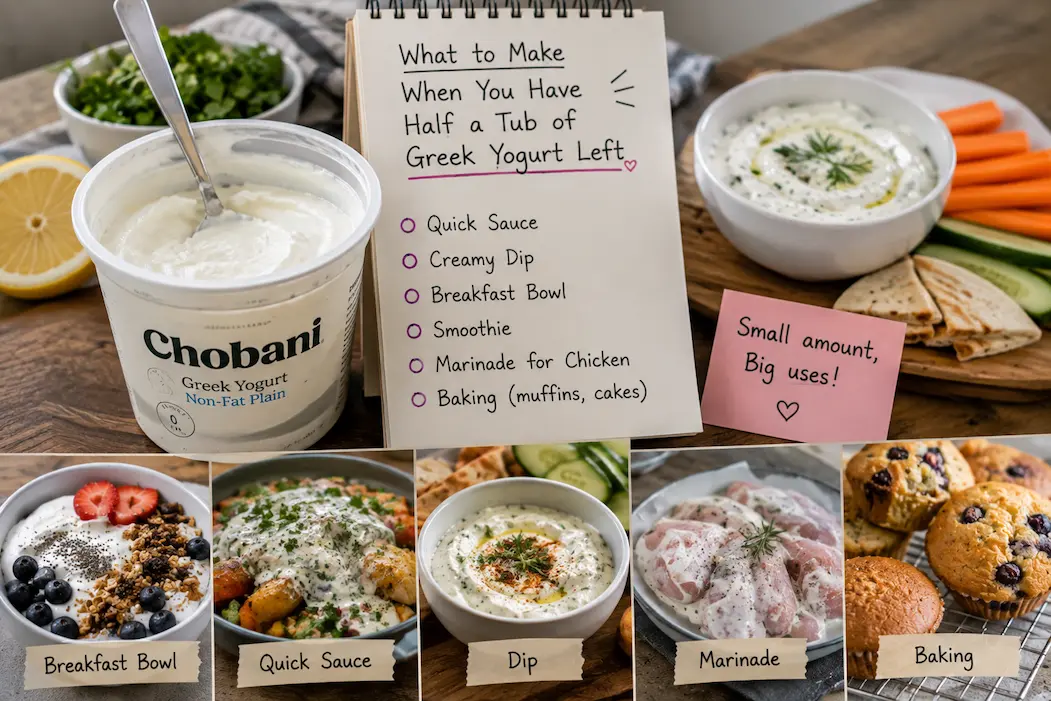
Finding half a tub of Greek yogurt in the refrigerator is one of those small kitchen problems that is easy to ignore until the date gets close. It may not be enough for the full recipe you bought it for, but it’s too useful to throw away. Greek yogurt can move between sweet and savory foods surprisingly well, which makes a leftover container more versatile than it first appears.
The trick is not to search for one complicated recipe that uses exactly the amount sitting in your refrigerator. Instead, consider the yogurt to be a ready-made ingredient that can improve something you are already planning to eat. A spoonful can add creaminess to a sauce, make a dip more substantial, soften a baked mixture, or turn a simple breakfast into something more filling. Once you start treating it this way, that half-full container becomes much easier to use.
The ideas below are designed around ordinary home cooking rather than specialty ingredients. Some take only a few minutes, while others work when you have enough yogurt to make something you can store and eat later.
Start by Checking What You Actually Have
Before deciding what to make, look at the yogurt itself. If it has been opened, check the date, storage conditions, smell, texture, and appearance rather than assuming it is fine just because the printed date hasn’t passed. Yogurt can also separate in the refrigerator, and a small amount of liquid on top is not automatically a problem. Stirring can bring the texture back together, but unusual discoloration, mold, an unpleasant smell, or other clear signs of spoilage are reasons to discard it.
The next useful question is how much is left. A few tablespoons can be handled very differently from a cup or more. You do not need to measure it precisely, but knowing whether you have enough for a sauce, several breakfasts, or a larger recipe prevents the common mistake of choosing a recipe first and discovering halfway through that the remaining yogurt is not enough.
A half tub also does not need to be used in one sitting. If the yogurt is still fresh, you can use some today and incorporate the rest into another meal later in the week. This is often more practical than forcing every leftover ingredient into one recipe.
A Quick Savory Option: Turn It into a Sauce
Greek yogurt makes an ideal base for a cold sauce because it already has a thick consistency and a mild tang. Stir it with a little lemon juice, garlic, salt, pepper, and whatever fresh or dried herbs you have available. A small splash of water can loosen it if the mixture is too thick.
That basic combination can go beside roasted vegetables, grilled chicken, potatoes, sandwiches, wraps, or grain bowls. You can change the character of the sauce simply by changing the seasoning. Cumin and paprika make it warmer, dill and lemon make it fresher, while chopped cucumber can turn it into something closer to a quick yogurt-cucumber sauce.
The useful part is that there is no need to follow a rigid recipe. If you only have four tablespoons of yogurt, make four tablespoons of sauce. If you have a larger amount, prepare enough for several meals and keep it refrigerated in a covered container.
A Simple Yogurt Sauce Formula
| What you have | What to add | Good with |
|---|---|---|
| Greek yogurt + lemon | Garlic, salt, pepper | Chicken, potatoes, vegetables |
| Greek yogurt + herbs | Lemon or vinegar | Salads, wraps, grain bowls |
| Greek yogurt + cucumber | Dill, garlic, salt | Flatbreads, roasted foods |
| Greek yogurt + spices | Lemon or lime | Beans, chicken, roasted vegetables |
| Greek yogurt + mustard | Pepper and herbs | Sandwiches, wraps, cooked vegetables |
This method is also a useful way to replace heavier creamy sauces in everyday meals without making the food feel like a “diet” version of something.
Make a Dip When You Have Only a Little Left
You do not need a large container of yogurt to make a useful dip. Even a few spoonfuls can be combined with ingredients already sitting in the refrigerator or pantry.
For a simple version, mix Greek yogurt with a little grated or minced garlic, salt, black pepper, and chopped herbs. For a different direction, add paprika and cumin. A small spoonful of tahini can make the dip richer and nuttier if you have it. A little lemon juice can brighten the mixture when it tastes too flat. This works particularly well when you are already preparing vegetables, crackers, pita, toast, or a simple snack plate. Rather than making a separate elaborate appetizer, the yogurt becomes the creamy element that ties several ordinary foods together.
One thing worth remembering is that strong seasonings become more noticeable as a dip sits. Start lightly, let it rest for a few minutes, and taste again before adding more salt or spice.
Give Breakfast a Different Texture
If your remaining yogurt is closer to a cup, breakfast is one of the easiest places to use it. You can layer it with fruit, oats, nuts, seeds, or a small amount of granola, but there is no requirement to build a picture-perfect yogurt bowl.
A more useful approach is to treat Greek yogurt as one component of breakfast. Add it to oatmeal after cooking to make the texture creamier, spoon it over warm fruit, or combine it with mashed banana and oats for a quick breakfast mixture. If you normally eat toast and fruit in the morning, a few spoonfuls of yogurt can add another component without requiring an entirely new meal.
For a colder option, mix yogurt with chopped fruit and a little cinnamon, then refrigerate it until the flavors come together. If the mixture is too thick, a small splash of milk can loosen it. Fruit can add sweetness without needing much added sugar if the yogurt is too tart.
Turn It into a Quick Breakfast Sauce
There is another less obvious use for Greek yogurt: putting it on foods that are normally served with butter, syrup, or a heavier topping.
Try spooning it over pancakes, waffles, baked oatmeal, French toast, or warm fruit. You can mix the yogurt with cinnamon and mashed berries or add a little honey if you want a sweeter topping. The important thing is to add the yogurt after cooking rather than exposing it to unnecessary high heat.
This is particularly helpful when you have only a small amount left. Two or three tablespoons can be enough to change the texture of an otherwise ordinary breakfast. It also gives you a way to use the yogurt without making an entire recipe specifically for it. That matters when the container is approaching the end of its useful life and you are trying to avoid buying additional ingredients.
Use It in a Marinade for Chicken
Greek yogurt can also play a useful role in a marinade. Combine it with lemon juice, garlic, salt, pepper, and spices, then coat chicken before cooking. The yogurt creates a thick coating that helps the seasonings cling to the surface.
You do not need to make an elaborate marinade. The point is to use what you have rather than turning a leftover ingredient into a shopping project. Paprika, cumin, oregano, chili powder, or dried herbs can all take the mixture in different directions. Because marinades come into contact with raw meat, handle them carefully and discard any marinade that has touched raw chicken unless it is thoroughly cooked as part of a separate preparation. Refrigerate the chicken while it marinates and follow safe cooking practices when you prepare it.
This recipe is one of the better choices when you have a relatively large amount of yogurt left and already planned chicken for dinner.
Add It to a Baked Recipe
Greek yogurt can be useful in baking because it contributes moisture and acidity. Depending on the recipe, it can appear in cakes, muffins, quick breads, pancakes, and other baked foods.
The important distinction is between using yogurt in a recipe designed for yogurt and randomly replacing it with another ingredient. Baking depends on ratios, so substituting yogurt for oil, milk, sour cream, or another ingredient without adjusting the rest of the recipe can change the texture considerably.
If you already have a reliable yogurt-based baking recipe, this is an excellent way to use a larger amount. If you do not, it is better to choose a recipe specifically written around Greek yogurt than to experiment with a favorite cake formula when you are trying to avoid wasting ingredients. Greek yogurt can also make some baked goods feel softer and more substantial, but it does not automatically make every dessert healthier. The rest of the ingredient list still matters.
Make a Savory Breakfast with Eggs and Yogurt
Greek yogurt does not have to stay in the sweet breakfast category. A small amount can become part of a savory breakfast plate.
Try serving scrambled or fried eggs with a spoonful of seasoned yogurt, toast, and whatever vegetables are available. You can also spread a thin layer of yogurt on toast and top it with an egg, pepper, herbs, or roasted vegetables. The yogurt provides a cool, tangy contrast to warm foods. It is a particularly useful idea when you have too little yogurt to make a full dip but enough to add a noticeable finishing element.
This kind of meal is also easy to adjust based on what is already available. There is no need to prepare a separate complicated breakfast just because you have leftover yogurt.
Mix It into a Simple Salad Dressing
If you usually make vinaigrettes with oil and vinegar, Greek yogurt gives you another option when you want something creamy.
Start with yogurt, lemon juice or vinegar, a little mustard, salt, pepper, and enough water to reach the consistency you like. Add herbs if you have them. For a sweeter dressing, a small amount of honey can balance the acidity.
A yogurt-based dressing works particularly well on chopped vegetables, slaw, grain salads, chicken salads, and simple green salads. It can also become a sandwich spread if you make it thicker. One advantage is that you can make a very small batch. A few tablespoons of yogurt are enough for a single meal, which means you do not have to create another container of leftovers just to use the first one.
Freeze It When You Genuinely Cannot Use It in Time
Sometimes the problem is not a lack of ideas. You simply know you will not eat the remaining yogurt before it needs to be used.
Freezing can extend its usefulness, although the texture may change after thawing. Greek yogurt can become somewhat grainy or separated because freezing affects its water structure. That makes thawed yogurt less appealing for eating plain, but it can still work well in smoothies, some cooked preparations, or recipes where texture is less important.
Freeze it in portions rather than putting the entire container in the freezer. Small amounts are easier to use later, especially if you regularly make smoothies or cooked dishes that can accommodate yogurt. For food-safety reasons, keep refrigerated and frozen foods within appropriate storage conditions, and when in doubt about whether an opened dairy product has been stored safely, it is better to discard it than try to rescue it.
What If You Only Have Two or Three Spoonfuls?
This is where people often overthink the problem.
You do not need a recipe.
Use a spoonful as a topping for fruit or oatmeal. Stir it into a sauce. Mix it with mustard for a sandwich spread. Add it to a smoothie. Put it beside roasted vegetables. Combine it with herbs and use it as a dip for whatever you are already eating.
The goal is not to make the yogurt the star of the meal. It is simply another ingredient. This mindset can save more food than collecting dozens of “leftover yogurt recipes.” Most ingredients become easier to use when you stop expecting every leftover portion to correspond perfectly to a named dish.
How to Choose the Best Option
The amount of yogurt you have is actually a useful starting point.
| Approximate amount | Practical use |
|---|---|
| 1–3 tablespoons | Topping, sandwich spread, small dip, sauce |
| ¼ cup | Dressing, dip, breakfast topping |
| ½ cup | Sauce, dip, breakfast bowl, marinade |
| ¾–1 cup | Larger sauce, breakfast preparation, baking |
| More than 1 cup | Baking, marinade, several servings of sauce or dip |
You should also consider what needs using next. If vegetables are about to go soft, make a yogurt dip or sauce for them. If chicken is already on your meal plan, use the yogurt as a marinade. If breakfast ingredients are running low, turn it into a topping or breakfast bowl. If you have baking ingredients that need using, a yogurt-based baked recipe may make more sense.
That small change in thinking makes meal planning more efficient: instead of asking, “What can I make with Greek yogurt?” ask, “What am I already going to eat that could use Greek yogurt?”
A Few Mistakes Worth Avoiding
The biggest mistake is buying several new ingredients simply to use one leftover ingredient. If the yogurt is supposed to help reduce food waste, a recipe that requires an expensive or rarely used collection of ingredients defeats the purpose.
Another common mistake is assuming that Greek yogurt behaves exactly like every other dairy ingredient. Its thickness, acidity, and protein content can affect recipes differently. A substitution that works beautifully in one preparation may produce an unexpectedly dense or watery result in another. It is also easy to forget that flavored Greek yogurt is different from plain Greek yogurt. Vanilla or fruit-flavored yogurt can work in sweet preparations but usually will not be appropriate for savory sauces or marinades. Plain yogurt gives you much more flexibility if you regularly use leftovers this way.
Finally, do not feel obligated to finish a container simply because you found a recipe for it. Food should not be forced past the point where it is safe or enjoyable to eat.
The Easiest Strategy for Next Time
If you frequently find yourself with half-used containers of Greek yogurt, change the way you buy and use it rather than repeatedly solving the same problem. Before opening a new container, think about at least two uses for it. For example, you could use yogurt for breakfast during the first few days, and then turn it into a sauce for dinner. Another portion can be reserved for baking or a dip.
Buying the size that matches your habits can also help. A large container may be economical when you eat yogurt regularly, while smaller containers can make more sense if you only use it occasionally. The cheapest price per ounce is not necessarily the cheapest choice if half the container ends up unused.
A simple “use it twice” habit works particularly well here: when you buy an ingredient for one recipe, decide where the remaining portion will go before putting it in the refrigerator. That turns leftovers from an afterthought into part of the original meal plan.
Conclusion
Half a tub of Greek yogurt is not really a leftover problem. It is a flexible ingredient that happens to be sitting between meals.
Use a small amount to finish breakfast, turn a moderate amount into a sauce or dip, use a larger portion in a marinade or suitable baking recipe, or freeze portions when you genuinely cannot use it soon. You do not need to create an impressive new dish every time an ingredient remains in the refrigerator.
The most useful kitchen habit is simply learning to connect what you already have with what you are already planning to eat. Greek yogurt happens to be particularly good at that because it can move from breakfast to dinner, from sweet to savory, and from a main ingredient to a simple finishing touch without requiring much work.
Frequently Asked Questions
Can I use Greek yogurt instead of sour cream?
In some recipes and toppings, plain Greek yogurt can work well as an alternative to sour cream because both are thick and tangy. However, they do not behave identically in every cooked or baked recipe. For important recipes, use a version that has specifically been tested with Greek yogurt rather than assuming the substitution will always work.
What can I make with just a few tablespoons of Greek yogurt?
You have plenty of options. Use it as a topping for oatmeal or fruit, mix it with herbs and spices for a small dip, combine it with mustard for a sandwich spread, stir it into a dressing, or serve it alongside eggs and toast.
Can leftover Greek yogurt be frozen?
It can be frozen, but the texture may change after thawing and become somewhat separated or grainy. It is generally more useful after freezing in smoothies or recipes where the original creamy texture is not essential.

Olivia Dawson is a food writer and recipe developer focused on creating clear, practical, and family-friendly cooking content. She specializes in approachable recipes made with everyday ingredients and well-explained methods that support confident cooking. Through Recipes With Olivia, Olivia shares thoughtfully crafted meal ideas designed to be reliable, enjoyable, and easy to recreate in everyday kitchens.