
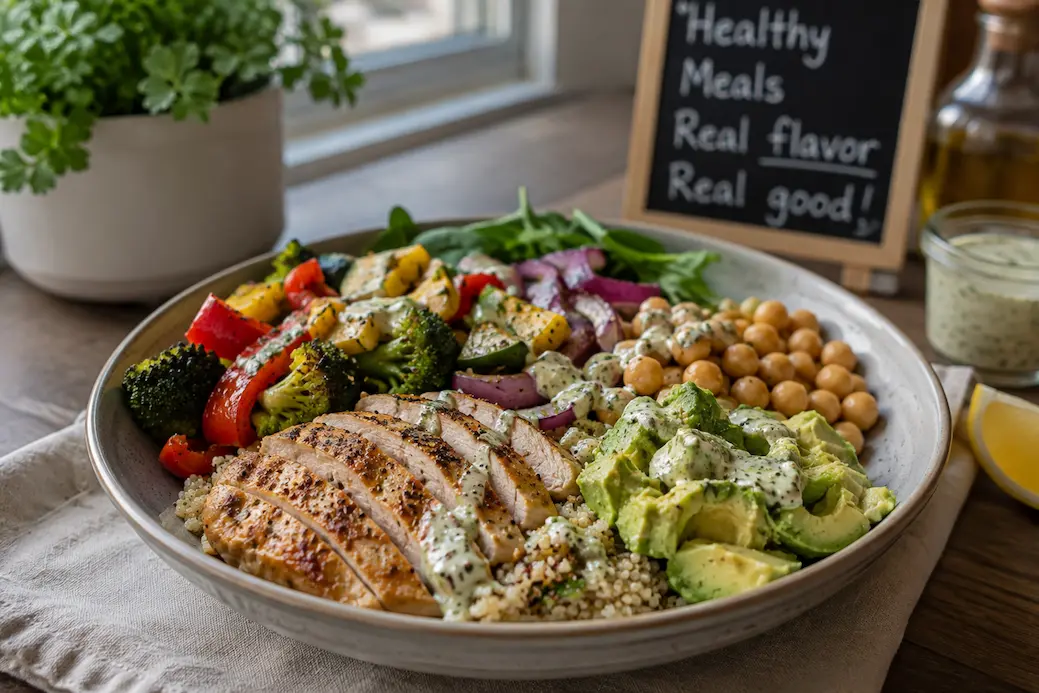
There is a particular kind of disappointment that happens when a meal looks healthy on paper but feels like a compromise once you sit down to eat it. The vegetables are there, the lean protein is there, and perhaps the whole grain is there too, but the finished plate is dry, bland, overly soft, or simply missing the qualities that make food enjoyable.
The problem is often not the ingredients themselves. It is what happens to them during cooking and how they are put together. A bowl of vegetables, grains, and protein can be satisfying when each part has enough seasoning, contrast, moisture, and texture. The same ingredients can feel entirely different when everything is steamed, under-seasoned, and served without anything to tie it together.
Making a healthy meal taste better does not require covering it with heavy sauces or abandoning the foods you wanted to eat in the first place. Small changes can make a much bigger difference: browning vegetables instead of simply boiling them, seasoning in stages, adding something acidic, using a flavorful sauce, and making sure the meal has contrasting textures.
The goal is not to make food taste “healthy.” The goal is to make it taste like delicious food that happens to fit the way you want to eat.
Start with the Cooking Method, Not the Sauce
When a meal tastes dull, the first response is often to add a sauce. Sometimes that works, but the better solution may be changing how the main ingredients are cooked.
Vegetables, for example, develop very different flavors depending on whether they are steamed, roasted, sautéed, grilled, or simply microwaved. Roasting can bring out sweetness and create browned edges. Sautéing can add a little color and deeper flavor. Grilling introduces char. None of these techniques requires a complicated ingredient list.
The same applies to protein. A piece of chicken can taste very different depending on whether it is properly seasoned and browned or simply cooked until done with little attention to the surface. Even a simple seasoning blend can make the result feel more intentional.
Before reaching for additional ingredients, ask whether the food itself has been given enough opportunity to develop flavor.
Seasoning Needs More Than Just Salt
A meal can contain perfectly good ingredients and still taste flat because the seasoning is incomplete.
Salt is important, but it is only one part of the picture. Different ingredients contribute acidity, sweetness, bitterness, heat, aroma, and savory depth. A dish often becomes more interesting when several of these qualities are present in balance.
For example, roasted vegetables with olive oil and salt may taste quite pleasant but adding lemon juice after cooking can give them a completely different character. Garlic and herbs add aroma. Smoked paprika contributes warmth. A little chili can introduce heat.
You do not need all of these at once.
A useful habit is to taste the food before deciding what it needs. If it tastes flat, a little salt may help. When the food tastes heavy or dull, adding acid can brighten it. If it tastes one-dimensional, herbs, spices, or a contrasting topping may provide the missing layer.
Acidity is One of the Easiest Upgrades
Lemon juice and vinegar are particularly useful when a meal tastes like something is missing but you cannot quite identify what.
A small amount of acidity can brighten beans, roasted vegetables, grain bowls, salads, chicken, fish, potatoes, and sauces. It can also make richer flavors feel less heavy.
Try finishing roasted vegetables with lemon juice. Add a splash of vinegar to lentils or beans. Stir lemon zest into a yogurt sauce. Add lime to a bowl containing rice, vegetables, and chicken.
The important word is finish. Acid is often most noticeable when added near the end rather than cooked for a long time.
Start with a small amount, taste, and adjust. Adding too much at once can make an otherwise balanced dish sharply sour.
Give Vegetables Some Color
One reason some “healthy” meals taste underwhelming is that the vegetables have been cooked without developing much flavor.
Steaming has its place, especially when you want a quick side dish, but it is not the only option.
Roasting vegetables at an appropriate temperature can create browned edges and concentrated flavor. Sautéing can do something similar on the stovetop. Grilling can introduce charred areas that provide another layer of flavor.
This does not mean vegetables need to be heavily coated in oil. A modest amount can help with browning and seasoning, while the cooking method does much of the work.
Try cutting vegetables into reasonably sized pieces rather than leaving everything in large, wet chunks. Crowding a roasting pan can also cause vegetables to steam rather than brown. Giving them enough space can make a noticeable difference.
Sometimes the “healthy food” problem is actually a cooking technique problem.
Don’t Make Everything Soft
Texture is easy to overlook when planning a balanced meal.
Imagine a bowl containing cooked rice, steamed zucchini, soft chicken, and a creamy sauce. The flavors might be perfectly acceptable, but every component has a similar soft texture. After several bites, the meal can become monotonous.
Now add toasted seeds, crisp vegetables, roasted chickpeas, sliced cucumber, chopped nuts, or a small amount of something crunchy. The ingredients do not need to be complicated. The contrast itself makes the meal more interesting.
A satisfying plate often benefits from having at least two or three different textures.
Think about:
| If most of the meal is soft… | Consider adding… |
|---|---|
| Soft | Something crisp or toasted |
| Creamy | Something fresh or crunchy |
| Dry | A sauce, dressing, or juicy vegetable |
| Rich | Something acidic or fresh |
| Very tender | A roasted or crisp element |
| Mild | A strongly seasoned topping |
This method is one of the simplest ways to make ordinary ingredients feel less repetitive.
A Good Sauce Can Connect Everything
There is nothing wrong with using a sauce in a healthy meal. The mistake is assuming that “healthy” means every ingredient has to be served plain.
A well-seasoned sauce can connect vegetables, grains, protein, and other components so that the meal tastes like one deliberate dish rather than several unrelated foods placed on a plate.
Greek yogurt can form the base of a creamy herb sauce. Tahini can provide richness and nuttiness. A simple vinaigrette can bring vegetables and grains together. Salsa can add acidity, freshness, and heat. Even a mixture of mustard, lemon juice, herbs, and a little water can be useful.
The trick is to make the sauce part of the meal rather than a disguise for badly cooked food.
If the chicken is dry and the vegetables are bland, adding sauce may help, but improving the cooking and seasoning will usually produce a better result.
Use Spices According to the Meal, Not the Health Label
Spices are another way to move away from the “health food” feeling without adding much complexity.
Cumin, smoked paprika, coriander, curry powder, chili flakes, black pepper, garlic powder, onion powder, cinnamon, oregano, thyme, rosemary, and other seasonings can take the same basic ingredients in entirely different directions.
Chicken, rice, and vegetables do not have to taste the same every time.
One day, season them with cumin, paprika, garlic, and lemon. Another day, use oregano, black pepper, and a tomato-based sauce. Another combination might use curry spices and yogurt.
The ingredients can remain similar while the flavor profile changes.
This is particularly useful for people who prepare components in advance. Instead of making five different meals, you can keep some ingredients relatively neutral and change the seasoning, sauce, or finishing ingredients when assembling each meal.
Don’t Remove All the Fat
Another common mistake is assuming that a healthy meal should contain as little fat as possible.
Fat contributes flavor and mouthfeel, and some ingredients are simply more enjoyable when prepared with a reasonable amount of it. Olive oil, nuts, seeds, avocado, nut butters, and other foods can have a legitimate place in a balanced meal.
The amount matters, but so does the overall meal.
A small amount of flavorful olive oil on roasted vegetables may be more satisfying than a completely dry plate that leaves you reaching for additional toppings afterward. A few toasted nuts can provide both flavor and texture. A modest amount of avocado can change the character of a grain bowl.
The objective is not to make every ingredient fat-free. It is to use ingredients thoughtfully so the meal is enjoyable as well as practical.
Think About Contrast When Building a Bowl
Grain bowls are a useful example of where healthy meals can become repetitive.
A typical bowl might contain a grain, protein, vegetables, and a dressing. That is a useful structure, but it does not automatically produce a great meal.
Think about contrast:
- Base: rice, quinoa, potatoes, barley, or another grain.
- Protein: chicken, beans, lentils, eggs, fish, tofu, or another option.
- Vegetables: something cooked plus something fresh if available.
- Creamy element: yogurt sauce, tahini dressing, avocado, or another suitable component.
- Acid: lemon, lime, vinegar, pickled vegetables, or a tangy dressing.
- Crunch: seeds, nuts, toasted chickpeas, cucumber, cabbage, or another crisp ingredient.
You don’t need every category in every bowl. The framework simply helps identify why a meal may feel incomplete.
Occasionally the missing ingredient is not another vegetable or another source of protein. It is contrast.
Fresh Toppings Can Rescue a Repetitive Meal
Fresh toppings are especially useful when you are eating leftovers.
Chopped herbs, green onions, cucumber, tomatoes, shredded cabbage, lemon zest, pickled onions, or a spoonful of salsa can make a reheated meal feel noticeably different. This method works because freshness provides something that reheating cannot always reproduce.
For example, yesterday’s roasted chicken and rice may taste ordinary when reheated exactly as it was served. Add fresh cucumber, herbs, lemon, and a yogurt sauce, and the same basic ingredients can become a different meal. This is one reason it can be useful to store some toppings separately rather than mixing everything together during meal preparation.
Make the Meal Taste Like Something You Actually Crave
A healthy meal does not have to belong to a separate category called “healthy food.”
If you like tacos, use taco-inspired seasoning and toppings. If you enjoy Mediterranean flavors, build meals around lemon, herbs, yogurt, vegetables, beans, and appropriate grains. If you prefer spicy food, use chili, peppers, salsa, or another source of heat.
The point is not to copy restaurant food perfectly.
Instead, take the flavor profile you already enjoy and apply it to ingredients you want to use more often.
This is often more sustainable than constantly searching for recipes labeled “healthy.” The label does not tell you whether you will actually enjoy the meal.
Don’t Make Every Mal Aggressively “Light”
A meal can become unsatisfying when you make too many changes at once.
You remove the sauce, reduce the seasoning, eliminate the oil, replace the main ingredient, shrink the portion, and add more vegetables—and then wonder why dinner feels disappointing. You do not necessarily need to change everything.
Choose the changes that matter most. If a recipe is already enjoyable, perhaps you only need to add more vegetables or adjust the portion. If it tastes bland, focus on seasoning. If it is dry, address moisture. When it lacks texture, consider adding something crisp.
Healthy eating does not require every meal to be a stripped-down version of its original form.
Use Leftovers Strategically
Leftovers often develop the reputation of being boring because they are reheated without modification.
Instead, give them a second identity.
Roasted vegetables from dinner can become a filling for eggs the next morning. Cooked chicken can become a wrap with fresh vegetables and yogurt sauce. Rice can become the base of a bowl with beans, vegetables, and a different seasoning combination. You do not have to prepare an entirely new dish every day. You only need to change enough of the supporting elements to make the food feel fresh.
This also makes cooking more efficient because one preparation can serve multiple purposes.
A Simple “Why Does This Taste Boring?” Checklist
When a meal tastes disappointing, run through this short list before deciding that the recipe itself is just not working.
- Does it need salt?
- Does it need acidity?
- Is everything the same texture?
- Did the vegetables develop enough color?
- Is the protein dry?
- Is there enough moisture or sauce?
- Could fresh herbs or another topping brighten it?
- Would a different spice combination suit the ingredients better?
- Is there enough contrast between rich, fresh, crisp, soft, savory, or spicy elements?
You may only need to fix one or two things.
Learning to diagnose a bland meal is more useful than memorizing dozens of recipes because the same skill works across different foods.
A Five-Minute Upgrade Before Serving
You can often improve a basic meal without cooking anything else.
Taste it first.
Then choose one flavor adjustment and one texture adjustment.
For example:
Flavor: lemon juice, vinegar, herbs, spices, salsa, or a seasoned sauce.
Texture: toasted seeds, nuts, fresh cucumber, cabbage, roasted chickpeas, or another crunchy ingredient.
This two-step approach prevents the common tendency to keep adding ingredients until the meal becomes complicated.
If the food already tastes good, stop.
More ingredients do not automatically mean more flavor.
What “Healthy” Should Actually Feel Like
A healthy meal should not have to announce itself.
It can be colorful, seasoned, aromatic, crisp, creamy, spicy, warm, fresh, or comforting. It can include foods you genuinely enjoy while still making room for vegetables, protein, whole grains, legumes, fruit, or other foods that fit your eating pattern.
The most useful approach is not to create a separate collection of “healthy food” that you tolerate because you think you should. It is to improve ordinary meals until they are enjoyable enough to become part of your normal routine.
That means paying attention to how food is cooked, seasoned, combined, stored, and served.
When those details are right, the meal stops feeling like a compromise.
Conclusion
Making a healthy meal taste less like “health food” rarely requires a dramatic change. More often, it comes down to a handful of small decisions: cook vegetables in a way that develops flavor, season throughout the process, add acidity when a dish tastes flat, include contrasting textures, use sauces intelligently, and build meals around flavors you already enjoy.
You also do not need to eliminate every ingredient that makes food satisfying. A thoughtful amount of oil, nuts, seeds, avocado, yogurt, cheese, or another flavorful component can help create a meal that you actually want to eat.
The bigger lesson is to stop treating healthy cooking and enjoyable cooking as opposites. Good cooking is about balance, contrast, and technique. Once those pieces are in place, familiar everyday ingredients can taste much more interesting without turning dinner into a complicated project.
Frequently Asked Questions
Why do healthy meals sometimes taste bland?
Healthy meals can taste bland for the same reasons any meal can taste bland: insufficient seasoning, limited contrast, overcooked or underdeveloped ingredients, too little moisture, or a lack of acidity. The solution is usually not to abandon the ingredients but to improve how they are cooked and combined.
How can I make vegetables taste better without covering them in sauce?
Try changing the cooking method. Roasting, sautéing, grilling, or properly seasoning vegetables can create more flavor and texture than simply boiling or steaming them. Lemon juice, herbs, spices, garlic, and a modest amount of oil can also add character without requiring a heavy sauce.
What can I add when a healthy meal tastes too dry?
Start by identifying which component is dry. A yogurt-based sauce, vinaigrette, salsa, tahini dressing, or another appropriate sauce can add moisture. You can also add juicy vegetables or ingredients with a naturally moist texture. Avoid automatically adding large amounts of sauce without first checking whether the main ingredients were overcooked.
How do I make meal-prepped food less boring?
Keep some components separate and change the finishing ingredients. The same cooked chicken, vegetables, and grain can become a bowl, wrap, salad, or different seasoned combination. Fresh herbs, lemon, crunchy toppings, and different sauces can also make reheated components feel less repetitive.
Do I have to avoid fats to make a meal healthy?
Not necessarily. Fat contributes flavor and texture, and foods such as nuts, seeds, avocado, and oils can fit into a balanced eating pattern. The appropriate amount depends on the overall meal and individual dietary needs. Removing every flavorful source of fat is not required simply to make a meal more nutritious.

Olivia Dawson is a food writer and recipe developer focused on creating clear, practical, and family-friendly cooking content. She specializes in approachable recipes made with everyday ingredients and well-explained methods that support confident cooking. Through Recipes With Olivia, Olivia shares thoughtfully crafted meal ideas designed to be reliable, enjoyable, and easy to recreate in everyday kitchens.