
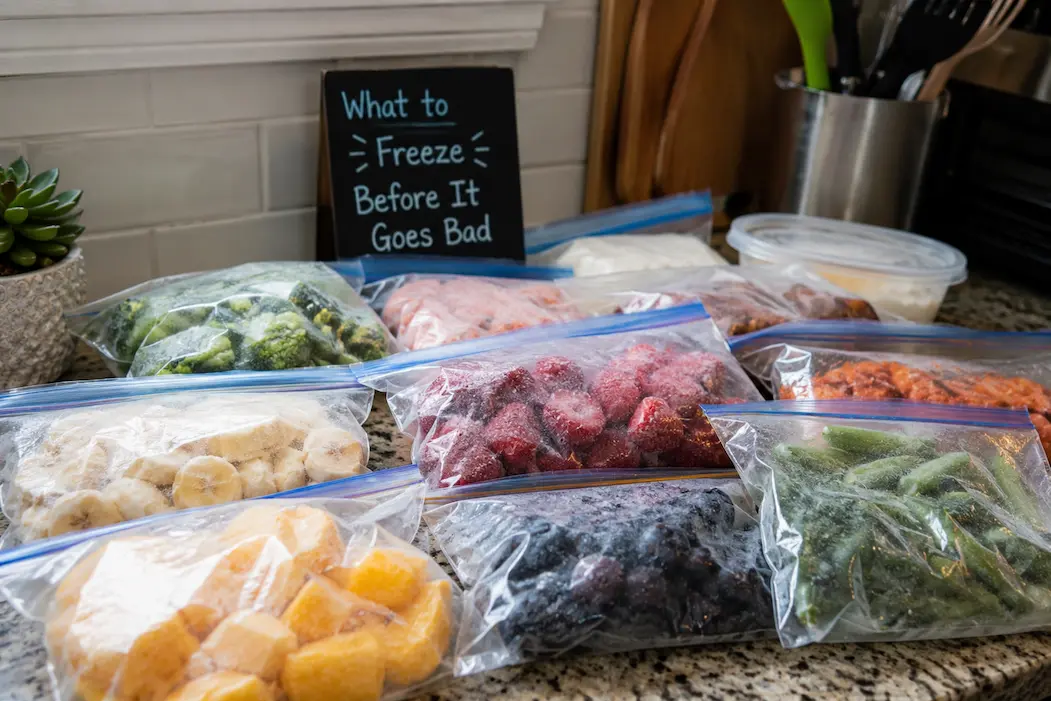
There is usually a point when the refrigerator starts telling you that your plans were a little too ambitious. The berries are softer than expected, the loaf of bread is still mostly untouched, and there is a container of cooked food that you probably will not get around to eating before the next grocery trip. Throwing everything away feels wasteful, but trying to eat it all immediately is not realistic either.
This is where the freezer can be genuinely useful. It gives good food more time, but only if you use it before quality has already declined. Freezing cannot turn spoiled food back into something usable, and not every ingredient comes out of the freezer in the same condition it went in.
The trick is to recognize which foods are worth saving, freeze them in a practical form, and have some idea of how you will use them later. A little preparation now can prevent food from becoming another forgotten container at the back of the freezer.
Freeze Food While It Is Still Worth Saving
The best time to freeze most food is not when it looks terrible. It is when you realize you are unlikely to eat it while it is still at its best.
That distinction is important. If strawberries are fresh today but you know you will not finish them before they become soft, freezing them now makes sense. If those same strawberries are already moldy, freezing them does not solve the problem. The freezer preserves food in roughly the condition it enters in; it does not reverse spoilage.
The same idea applies to cooked meals, bread, herbs, meat, and other ingredients. If something is still good but your schedule has changed, freezing can be a useful way to protect it from becoming waste.
A simple question can help: “Will I realistically use this before its quality declines?” If the answer is no, the freezer may be the better destination.
Start With The Foods That Disappear Quickly
Some foods give you a much smaller window than others.
Fresh berries, ripe bananas, leafy greens, soft herbs, bread, cooked leftovers, and certain fresh dairy products can all become less appealing relatively quickly. If you already know that you will not use them soon, they deserve attention before foods that naturally keep longer.
This does not mean everything needs to be frozen the moment you buy it. The idea is to notice when your original plan is no longer realistic.
For example, perhaps you bought a large container of berries for breakfasts but ended up eating something else all week. Rather than waiting until the berries are past their best, freeze the portion you know you will not finish.
That is a much better use of the freezer than treating it as a last-minute rescue box.
Bread Is One Of The Easiest Things To Freeze
Bread is particularly forgiving when it comes to freezing.
If you rarely finish an entire loaf before it becomes stale, there is little reason to leave the whole thing sitting on the counter. Divide it into useful portions and freeze what you are unlikely to eat soon. Slices can be separated into smaller groups, while rolls and larger pieces can be packaged according to how you normally serve them.
Good packaging matters because unnecessary exposure to air can affect quality. Use freezer-appropriate bags, wraps, or containers and remove as much excess air as practical.
Think about your future routine when portioning it. If you normally make two sandwiches at a time, freezing two-slice portions may be more convenient than freezing the entire loaf together.
The freezer works best when it makes future food easier to use, rather than creating another task.
Ripe Bananas Have More Uses After Freezing
Bananas are another food that can be saved very easily once you realize you have too many.
If several bananas are ripening faster than you can eat them, peel them, cut them into convenient pieces, and freeze them in a suitable container or freezer bag. You can then use them later in smoothies, baking, oatmeal, or other preparations.
The important thing to remember is that thawed bananas will not behave exactly like fresh bananas. They become much softer, which makes them less suitable for eating as you would a fresh banana but perfectly useful in recipes where that softer texture does not matter.
There is also no need to freeze the bananas you expect to eat tomorrow. Save the surplus instead.
That small distinction keeps the freezer from becoming unnecessarily crowded.
Berries Are Worth Freezing Before They Become Mushy
Berries can change quickly, especially when you have bought more than you normally eat.
If they are still fresh but you know you will not finish them, freezing is an easy way to extend their usefulness. Remove any damaged or spoiled fruit first and prepare the berries appropriately for freezing.
Frozen berries are particularly useful in smoothies, oatmeal, yogurt-based breakfasts, sauces, baking, and cooked fruit dishes. They may lose some of their original firmness after thawing, so they are not always a direct substitute for fresh berries in dishes where appearance and texture matter.
That does not make them a poor freezer choice.
It simply means you should decide what the berries are going to become later. If the future plan is a smoothie or baked recipe, a change in texture is rarely a problem.
Fresh Herbs Can Become Useful Instead Of Forgotten
Fresh herbs are easy to waste because recipes often call for a small amount while grocery stores sell a much larger bunch.
If you have parsley, cilantro, dill, or another herb left over and do not expect to use it soon, freezing can preserve its usefulness. Depending on the herb and your future plans, you can chop it and freeze it in small portions or incorporate it into a suitable preparation before freezing.
Frozen herbs generally work better in cooked foods, sauces, soups, eggs, and other dishes than as a replacement for fresh garnish.
This is a good example of why freezing decisions should be based on future use, not simply on whether something technically survives freezing.
A bunch of frozen herbs that you never use is still wasted food. A small portion that is ready to add to next month’s soup is genuinely useful.
Cooked Rice Can Save Time Later
A little too much cooked rice can quickly become an awkward refrigerator resident.
If you have made more than you expect to eat within a suitable refrigerated storage period, freezing some of it can turn that extra cooking into a future shortcut. Divide it into practical portions and use freezer-appropriate containers or bags.
Individual or meal-sized portions are easier to work with than one large frozen block.
Cooked rice can later become part of grain bowls, stir-fries, side dishes, stuffed vegetables, or other meals. Because the rice has already been prepared, it can remove one step from a busy evening.
As with other cooked foods, safe handling matters. Cooked rice should be cooled and stored promptly rather than being left sitting at room temperature for an extended period before you decide what to do with it.
Beans And Lentils Are Excellent Batch-Freezer Foods
If you cook dried beans or lentils in large batches, the freezer can make that effort go much further.
Instead of keeping the entire batch in the refrigerator and hoping you finish it quickly, divide the extra into portions that correspond to future meals. Smaller portions can be useful for one or two servings, while larger containers may make sense for family meals.
Frozen cooked beans and lentils can later be added to soups, salads, grain bowls, wraps, stews, or other dishes.
This is especially helpful when you are trying to make weekday cooking easier. The work happened once, but the finished ingredient can support several future meals.
Freezing therefore becomes more than a food-waste strategy. It can also be a way of storing future cooking time.
Tomato Paste Is Better In Small Portions
Tomato paste is a classic example of an ingredient that gets opened for one recipe and then forgotten.
If you use only a spoonful or two, freezing the remainder in small portions can make much more sense than leaving the opened container in the refrigerator indefinitely.
Portion it according to the quantities you commonly use. Small amounts are easier to add directly to future sauces, soups, stews, and other recipes.
Once frozen, keep the portions together in a clearly labeled freezer-safe container or bag so they do not disappear among larger frozen foods.
The broader lesson applies to many ingredients: freeze leftovers in the quantity you are most likely to use later.
Cheese Can Work, Depending On The Type
Cheese is one of those foods where freezing can be helpful but is not always ideal.
Harder cheeses and shredded cheese are often more practical freezer candidates than delicate cheeses whose appeal depends heavily on their original texture. Some cheese can become crumbly or slightly different after thawing.
That is usually less important when the cheese is going into a cooked dish.
Frozen cheese can be useful for pizza, pasta, casseroles, omelets, baked dishes, and other recipes where it will be melted or incorporated into something else. It may be less appealing when you wanted a smooth, fresh texture for serving on its own.
If you have a large package and know you will not use it in time, freezing part of it can be sensible. If you have only a little left and expect to use it shortly, refrigeration may be simpler.
Milk And Yogurt Require A Texture Check
Milk and yogurt can be frozen, but the result may not be identical to the original product.
Milk can separate after thawing, although it may still work well in cooking, baking, smoothies, and similar uses. Yogurt can also change texture and become less smooth after freezing and thawing.
That does not necessarily make either ingredient useless.
Instead, think about where it is going. If you need yogurt for a smooth topping or creamy breakfast, freezing may be disappointing. If it is going into a smoothie or another preparation where the texture can change without causing a problem, saving it may still be worthwhile.
The key question is simple: “Will the change in texture matter for the way I intend to use it?”
Vegetables Often Need More Preparation
Fresh vegetables are not all equally suitable for freezing.
Some vegetables benefit from preparation such as blanching before freezing, while others can become soft or watery because of their high moisture content. The correct approach depends on the particular vegetable.
This does not mean softer vegetables are automatically wasted.
A vegetable that loses its crispness may still work very well in soup, stew, sauces, cooked grain dishes, omelets, or other recipes where texture is less important.
The mistake is expecting a frozen vegetable to return to exactly the same condition as a fresh one.
Before freezing a large quantity, consider what the vegetable will be used for afterward. If you need crisp cucumber for a salad, freezing is probably not the right solution. If you want vegetables for a cooked dish, the same texture change may not matter nearly as much.
Leafy Greens Can Be Saved For Cooked Meals
Large bags of spinach and other leafy greens are particularly easy to underestimate.
They can look plentiful when purchased but disappear in quality faster than expected. If you know you will not use the remaining greens fresh, freezing can give them another purpose.
Depending on the particular green, preparation such as blanching may be useful before freezing. Once frozen and thawed, leafy greens generally lose the crispness needed for salads.
They can still be useful in cooked dishes, soups, sauces, eggs, pasta, or smoothies.
So rather than asking whether frozen spinach is “as good” as fresh spinach, ask whether you need it to behave like fresh spinach. If you only need the ingredient for a cooked meal, freezing may be a perfectly practical option.
Extra Cooked Meat Can Become Several Future Meals
Cooked chicken, turkey, beef, and other suitable meats can be worth freezing when you have more than you can realistically eat soon.
The most useful approach is to divide the meat into portions that match your future meals. Shredded chicken might be frozen for wraps and bowls, while sliced meat may be more useful for sandwiches or other dishes.
Packaging should protect the food from unnecessary air exposure, and labels are particularly valuable with cooked meat.
Instead of putting a large container into the freezer with no plan, think about what you are likely to make later.
A few small portions can be much more useful than one enormous frozen block because they allow you to take out only what you need.
Soups, Stews, And Sauces Are Freezer Favorites
Large batches of soup, stew, chili, curry, pasta sauce, and similar foods are often excellent candidates for freezing.
If you have made more than the household can comfortably eat, freezing part of the batch can prevent the remaining food from becoming an unwanted refrigerator resident.
Portion size matters here too.
A family-sized container may make sense if you know everyone will eat it together. Smaller portions can be better for lunches or individual meals. Leave appropriate room in freezer containers for expansion and use packaging intended for freezing.
Later, a frozen portion can become the foundation of a meal on a day when cooking from scratch is not realistic.
That is one of the freezer’s greatest practical advantages: today’s extra food can become tomorrow’s easy dinner.
Cooked Vegetables Can Be Saved, But Expect A Texture Change
Extra roasted or cooked vegetables can sometimes be frozen successfully, particularly when you already know they will be used in another cooked preparation.
Their texture may soften after thawing, which makes them less suitable for dishes where you want crisp vegetables. They can still work well in soups, sauces, pasta, omelets, grain bowls, casseroles, and other cooked meals.
You can also freeze vegetable mixtures as components rather than committing them to one finished recipe.
That flexibility matters.
If you freeze a complete dish you no longer enjoy, you have simply moved the unwanted food from one storage area to another. If you freeze useful components, you have more choices when the food comes back out.
Some Foods Are Better Used Now
Not everything that can technically be frozen is worth freezing.
Delicate salad greens, very high-water vegetables, some creamy sauces, and foods that depend on crisp textures can become disappointing after thawing. Fried foods can also lose the crisp quality that made them appealing.
There is nothing wrong with deciding to use an ingredient immediately instead.
For example, if you have a cucumber that will not freeze well, turn it into a salad today. If you have fresh herbs that are still in good condition, make them part of dinner rather than automatically putting them away.
Freezing should preserve useful food, not become the default answer for every leftover ingredient.
Never Use The Freezer To Hide Spoilage
This point deserves its own rule.
Do not freeze food simply because you are unsure whether it is still safe or because you want to postpone making a decision about it.
Food that shows signs of spoilage, has been stored improperly, or has been sitting out under unsafe conditions should not be treated as something the freezer can repair.
The freezer is for good food that you are not going to use soon.
It is not a reset button.
When in doubt about the safety of a particular food, follow established food-safety guidance rather than relying on appearance alone.
Freeze Food In The Amount You Will Actually Use
A freezer can prevent waste and still create waste if everything is frozen in impractical portions.
Imagine freezing an entire kilogram of cooked chicken when most of your future meals only need one or two servings. You may eventually thaw the whole container because you need a small amount, leaving you with another storage problem.
Portioning avoids that situation.
Think about how you normally cook:
- One serving of cooked beans
- Two portions of chicken
- A small amount of tomato paste
- Several slices of bread
- One container of soup for lunch
- A larger container for a family dinner
The exact sizes will depend on your household.
The principle remains the same: freeze food according to future use, not according to today’s leftovers.
Good Labels Prevent Bad Freezer Decisions
A container can look obvious today and completely mysterious a month later.
Labeling takes only a few seconds. Write the name of the food and the date it was frozen. For prepared meals, adding the number of portions can be useful.
For example:
Chicken — 2 portions — Aug. 28
is much more useful than:
Dinner
If several foods look similar, clear labels become even more important.
You can also keep older food toward the front and newer food behind it. This simple rotation makes it easier to use what has been stored longer instead of constantly adding new items to the back.
Don’t Turn The Freezer Into A Waiting Room
One of the most common freezer mistakes is saving food without ever deciding whether you actually want it.
Perhaps you have half a casserole left that nobody particularly enjoyed. You freeze it because throwing it away feels wasteful. Six months later, it is still there.
Nothing has been solved.
Before freezing something, ask yourself whether you would willingly eat it later. If the answer is no, freezing it may simply postpone the decision.
A useful freezer contains food you are looking forward to using, ingredients that save preparation time, and meals that solve future problems.
It should not become a storage area for food you are reluctant to throw away.
Use The Freezer As Part Of Your Meal Planning
Freezing works particularly well when it becomes part of your normal cooking routine.
If you make a large pot of beans, freeze some immediately. If you buy more bread than you can finish, freeze part of it. If you cook extra chicken, decide whether the remaining portions belong in the refrigerator or freezer before putting everything away.
You can also connect this with a fridge-first approach to meal planning.
At the beginning of the week, look at what needs to be eaten soon. Then look at what can be frozen for later. This creates three useful groups: food for immediate meals, food for the next few days, and food intentionally saved for another time.
That is much more effective than waiting until the refrigerator is overflowing and trying to rescue everything at once.
A Quick Decision Guide Before You Freeze Something
When you are unsure whether an ingredient belongs in the freezer, run through these questions:
| Question | If The Answer Is Yes |
|---|---|
| Is the food still in good condition? | Freezing may be appropriate |
| Will I probably not use it soon? | Consider freezing it now |
| Will the texture still work for my future recipe? | Freezing is more practical |
| Can I divide it into useful portions? | Do that before freezing |
| Do I know how I will use it later? | Label it and freeze it |
| Is it already spoiled or questionably stored? | Do not freeze it as a rescue attempt |
This takes less than a minute once you get used to it.
The more often you use the system, the easier these decisions become.
A Small Freezer Habit Can Prevent A Lot Of Waste
You do not need an elaborate freezer inventory or a complicated meal-preparation system.
When something is approaching the point where you know you will not use it in time, make a decision. Eat it, cook it into something else, freeze it appropriately, or discard it if it is no longer safe.
If you choose the freezer, package it properly, portion it sensibly, label it, and put it somewhere you will actually remember.
Then occasionally move older frozen foods toward the front.
That small amount of organization prevents the freezer from becoming a place where food disappears from memory.
Final Takeaway
The freezer is most useful when you treat it as a planning tool rather than a last-minute rescue box.
Bread, ripe bananas, berries, herbs, cooked rice, beans, lentils, suitable meats, soups, sauces, and many other foods can be worth freezing when they are still in good condition and you know you will not use them soon. Other foods may lose too much texture to make freezing worthwhile, particularly when their appeal depends on freshness or crispness.
The best decision comes down to three things: the condition of the food now, what freezing will do to its texture, and whether you have a realistic use for it later.
Portion food according to future meals, protect it with suitable packaging, label it clearly, and rotate older items forward. Most importantly, do not freeze food merely because you feel guilty about throwing it away.
Save the food you genuinely want to eat.
That is what turns a freezer from a place where leftovers disappear into a useful part of an everyday kitchen.
Frequently Asked Questions
What Foods Are Best To Freeze Before They Go Bad?
Bread, ripe bananas, berries, cooked beans, lentils, cooked grains, suitable meats, soups, stews, sauces, and many prepared ingredients can be practical freezer choices. The best option depends on how the food will be used after thawing because freezing can change texture.
Can I Freeze Food That Is Already Spoiling?
No. Freezing does not make spoiled food safe again. Food should be frozen while it is still in good condition and has been handled and stored appropriately. If something shows clear signs of spoilage, freezing it is not an appropriate rescue method.
Can I Freeze Fresh Vegetables?
Many vegetables can be frozen, although some benefit from preparation such as blanching first. Vegetables with high water content may become softer after thawing. Consider how you intend to use them before deciding whether freezing is worthwhile.
Can I Freeze Cooked Rice?
Yes, cooked rice can be frozen in suitable portions when it has been handled and stored safely. Smaller portions are usually more convenient because they can be used for individual meals without requiring you to thaw a large quantity.
Is It Better To Freeze Bread In Slices Or As A Whole Loaf?
It depends on how you use bread. If you normally use a few slices at a time, freezing smaller portions is more convenient. If you expect to use the entire loaf for a future meal, freezing it together may be practical.
Can I Freeze Yogurt?
Yogurt can be frozen, but its texture may change after thawing. It may become less smooth or separate somewhat. Frozen yogurt can still work in smoothies or other preparations where the original texture is not essential.
How Should I Freeze Leftover Meat?
Divide cooked meat into practical portions and package it in freezer-appropriate wrapping or containers. Removing excess air can help protect quality. Label each package with the food and date so you know what you have later.
How Do I Stop My Freezer From Becoming Overcrowded?
Freeze food in useful portions and avoid saving food you are unlikely to eat. Regularly check what is already inside and move older items toward the front. If you repeatedly find forgotten food, freezing smaller quantities and labeling everything more clearly may help.
How Long Can Frozen Food Stay In The Freezer?
Freezing can keep properly handled food safe for extended periods when it remains continuously frozen, but quality gradually declines. Recommended storage times vary by food and storage conditions, so specific food-safety guidance should be followed when you need an exact timeframe.
Does Freezing Prevent Food Waste?
It can reduce food waste when it is used to preserve good food that you would otherwise be unable to eat in time. However, freezing food you do not actually want to eat later only postpones the problem. Portioning, labeling, and having a realistic future use are what make freezing genuinely useful.

Olivia Dawson is a food writer and recipe developer focused on creating clear, practical, and family-friendly cooking content. She specializes in approachable recipes made with everyday ingredients and well-explained methods that support confident cooking. Through Recipes With Olivia, Olivia shares thoughtfully crafted meal ideas designed to be reliable, enjoyable, and easy to recreate in everyday kitchens.