
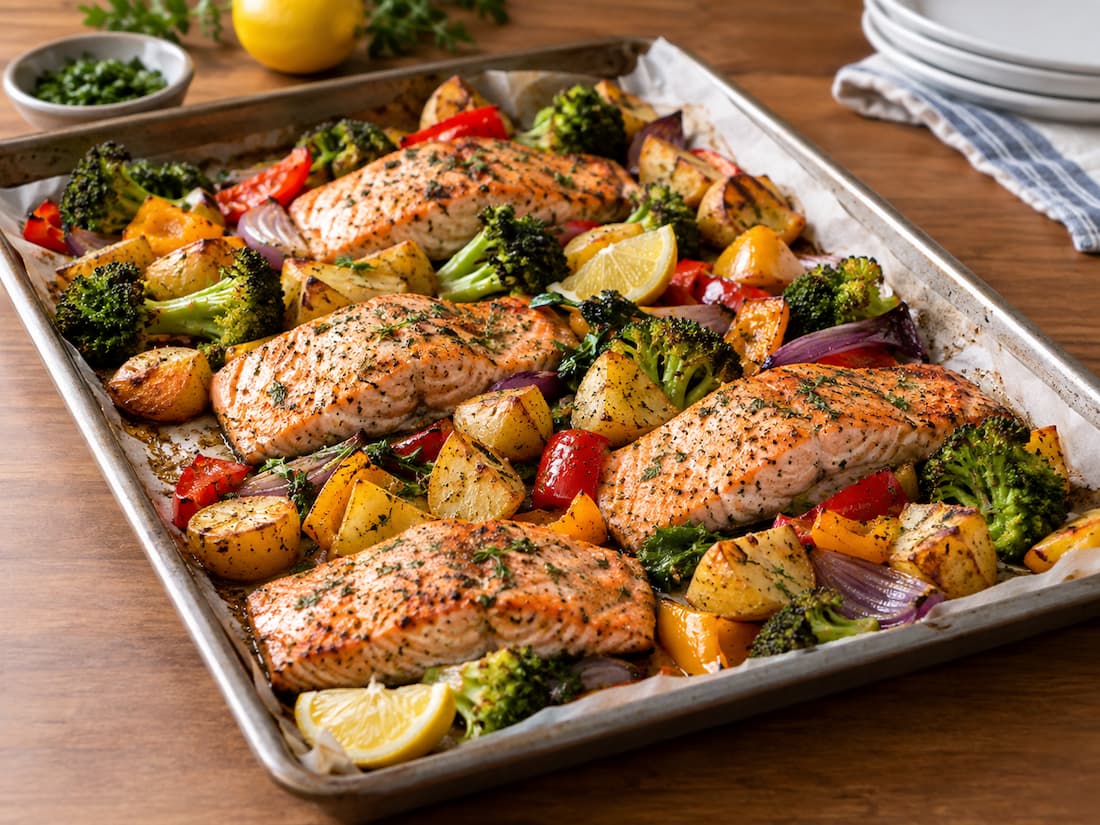
Roasting salmon, potatoes, and vegetables together sounds simple until the timing gets in the way. Potatoes need a longer cooking time to become tender inside, while salmon can dry out if it stays in the oven too long. Vegetables also vary in how quickly they soften and brown. The solution is to use one pan but add the ingredients in stages. Start with the potatoes, give the firmer vegetables a head start, and add the salmon near the end. This approach produces a complete dinner with golden potatoes, tender vegetables, and moist salmon without requiring several cooking pans. This recipe uses baby potatoes, broccoli, and red bell pepper. The potatoes provide a filling base, while the vegetables add colour, texture, and flavour. A simple mixture of olive oil, lemon, garlic, and dried herbs seasons everything without the need for a heavy sauce.
The Menu and Ingredients
The key to this dinner is choosing ingredients that work well with the same oven temperature but need different amounts of time. Baby potatoes are cut into small, even pieces so they have time to soften before the salmon is ready. Broccoli florets are added later because they cook faster than potatoes. Red bell pepper is cut into fairly large pieces so it softens without becoming too limp.
For the salmon, choose two fillets of similar thickness. This makes it easier for both portions to finish cooking at approximately the same time.
Ingredients
For the salmon
- 2 salmon fillets, about 5–6 oz (140–170 g) each
- 1 teaspoon olive oil (5 ml)
- 1 tablespoon fresh lemon juice (15 ml)
- 1 small garlic clove, finely minced
- 1/2 teaspoon dried dill or dried parsley
- 1/4 teaspoon ground black pepper
- 1/8 teaspoon salt, or to taste
- 2 lemon wedges, for serving
For the potatoes and vegetables
- 12 oz baby potatoes (340 g)
- 2 cups broccoli florets (about 180 g)
- 1 medium red bell pepper (about 150 g)
- 1 tablespoon olive oil (15 ml)
- 1/2 teaspoon garlic powder
- 1/2 teaspoon dried oregano
- 1/4 teaspoon paprika
- 1/4 teaspoon ground black pepper
- 1/4 teaspoon salt, or to taste
Equipment
- One large, rimmed baking sheet, approximately 13 x 18 inches (33 x 46 cm)
- Baking parchment, if desired
- Cutting board and knife
- Two small bowls
- Measuring spoons
- Food thermometer
- Spatula or tongs
Use a large baking sheet rather than a small roasting dish. The ingredients need space for hot air to circulate and moisture to escape. If everything is packed tightly together, the vegetables may steam instead of brown.
The Cooking Schedule: What Goes Into the Oven First?
Plan for approximately 40–45 minutes of cooking time, depending on the size of the potatoes, the thickness of the salmon, and your oven. Preparation takes about 15 minutes. The schedule below assumes the oven is fully preheated to 425°F (220°C), or 400°F (200°C) for a fan-assisted oven.
| Elapsed time | What to do | What to look for |
|---|---|---|
| 0 minutes | Put the seasoned potatoes in the oven. | Potatoes begin roasting in a single layer. |
| 15 minutes | Turn the potatoes and add the seasoned bell pepper. | Potatoes should be starting to brown at the edges. |
| 25 minutes | Add the broccoli and turn the other vegetables. | Potatoes are partly tender but may need more time. |
| 30 minutes | Add the seasoned salmon to the open space on the pan. | Leave room around the fillets for heat to circulate. |
| 40 minutes | Begin checking the salmon and vegetables. | Salmon should be approaching safe doneness; potatoes should be nearly tender. |
| 40–45 minutes | Remove each ingredient when it is done. | Salmon reaches 145°F (63°C); potatoes are easily pierced with a fork. |
These times are estimates, not fixed rules. If your salmon is thin, begin checking it earlier. If the potatoes are still firm, let them continue roasting while the salmon is removed once it is safely cooked.
The most important principle is that the cooking schedule should follow the ingredients, not the clock alone.
Complete Recipe: One-Pan Salmon With Roasted Vegetables and Potatoes
- Yield: 2 servings
- Preparation time: 15 minutes
- Cooking time: 25–35 minutes for the staged roasting process, with approximately 40–45 minutes from the start of roasting to serving when using the schedule above
- Total time: Approximately 55–60 minutes, including preparation and oven preheating
- Oven temperature: 425°F (220°C), or 400°F (200°C) for a fan-assisted oven
- Difficulty: Easy
Step 1: Preheat the Oven and Prepare the Pan
Heat the oven to 425°F (220°C). If using a fan-assisted oven, set it to 400°F (200°C).
Line the baking sheet with baking parchment if you want to make cleanup easier. Make sure the parchment is suitable for the oven temperature specified by its manufacturer.
Wash the potatoes and broccoli, then dry them well. Wash the bell pepper, remove the seeds and inner membrane, and cut it into pieces about 1 inch (2.5 cm) wide.
Drying the vegetables is useful because excess surface water can slow browning. Keep the salmon refrigerated while preparing the vegetables, and use a separate clean plate and utensils for the raw fish.
Step 2: Give the Potatoes a Head Start
Cut the baby potatoes into halves or quarters, depending on their size. Aim for pieces roughly 3/4 inch to 1 inch (2–2.5 cm) across. Very small potatoes may only need to be halved, while larger ones need to be quartered.
Place the potatoes on the baking sheet and toss them with 1 tablespoon olive oil, garlic powder, oregano, paprika, black pepper, and salt.
Spread them in a single layer, with one of the cut sides facing down where possible. Roast for 15 minutes.
The potatoes need this initial period because their firm centres take longer to cook than the fish. Keeping the pieces similar in size helps them finish together. If some pieces are much larger than others, the smaller ones may become dry or overly browned before the larger pieces soften.
Step 3: Add the Red Bell Pepper.
After 15 minutes, remove the pan carefully. Turn the potatoes with a spatula and arrange the red bell pepper pieces around them.
Return the pan to the oven for another 10 minutes.
The bell pepper is added before the broccoli because it can tolerate a longer roasting period. The pieces should begin to soften and develop lightly browned edges while the potatoes continue cooking.
At this stage, the potatoes do not need to be completely tender. They should have started to brown and should be easier to pierce than when they first went into the oven.
Step 4: Add the Broccoli
After the potatoes and bell pepper have been roasted for a total of 25 minutes, add the broccoli florets.
Cut very large florets into smaller pieces so they cook evenly, but avoid making them so small that they burn quickly. Aim for florets of similar size, around 1–1 1/2 inches (2.5–4 cm) across.
Turn the potatoes and bell pepper, then arrange the broccoli in the remaining spaces. If the broccoli looks dry, toss it with a small amount of the existing oil and seasoning on the pan rather than adding a large amount of extra oil.
Return the pan to the oven for about 5 minutes while you prepare the salmon.
The broccoli will continue cooking after the salmon is added. Its florets should become bright green and tender with lightly browned tips, rather than dark, dry, or mushy.
Step 5: Season the Salmon
Pat the salmon fillets dry with paper towels. Dry surfaces help the fish roast rather than release excess moisture onto the pan.
In a small bowl, combine 1 teaspoon olive oil, lemon juice, minced garlic, dried dill or parsley, black pepper, and salt. Brush or spoon the mixture over both fillets.
Move the vegetables slightly to create two open spaces on the baking sheet. Place the salmon in those spaces, skin-side down if the fillets have skin.
Avoid placing the fish directly on top of the vegetables. Keeping the ingredients in separate areas makes it easier to check each one and prevents the salmon juices from soaking the roasted potatoes.
Return the pan to the oven for approximately 10–15 minutes, depending on the thickness of the fillets. Start checking thin fillets after about 8 minutes.
Step 6: Check Each Ingredient Before Serving
Salmon should reach an internal temperature of 145°F (63°C) at its thickest part, following the general US food-safety recommendation. Insert a food thermometer into the thickest section of each fillet, avoiding the pan and any large bones.
The flesh should look opaque and separate into flakes when gently pressed with a fork. These visual signs can help you judge texture, but they should not replace the thermometer reading.
If the salmon reaches 145°F before the potatoes are tender, transfer the fish to a clean plate and cover it loosely while the vegetables finish roasting. Do not leave the fish in the oven simply to make every ingredient finish at the same moment.
Test the potatoes by inserting a fork or small knife into the largest piece. It should slide through the centre without encountering a hard, crunchy section. The outside should be lightly browned, and the inside should be soft.
Check the broccoli with the tip of a knife. It should be tender enough to pierce without falling apart. The bell pepper should be softened but still hold its shape.
Remove each ingredient when it is ready. Let the salmon rest for a few minutes, then serve it with the roasted vegetables and potatoes and a lemon wedge.
Why the Cutting Size Matters
A successful one-pan dinner depends as much on preparation as it does on oven temperature. Potatoes are the densest ingredient in this recipe, so they need the earliest start. Cutting them into evenly sized pieces gives heat a shorter distance to travel toward the centre. If you prefer larger potato chunks, expect to roast them longer before adding the other ingredients. Broccoli has a different problem. Its florets contain many small surfaces that brown quickly, especially at high oven temperatures. Adding them too early can leave the tips burnt before the stems are tender. Similar-sized florets make it easier to achieve a consistent result.
Bell pepper falls between the two. It softens faster than potatoes but usually tolerates a longer roast than broccoli florets. Pieces that are too thin may collapse, while very large pieces can remain firm when the other vegetables are ready. Finally, leave visible gaps between the ingredients. A single layer helps moisture escape and supports browning. If the vegetables cover the entire pan in a deep pile, they are more likely to steam, and the cooking schedule may become less predictable.
Preparing Salmon for Reliable Results
Salmon fillets do not all cook at the same speed. A thin tail-end portion may finish several minutes before a thick center-cut piece, even when both weigh the same. Choose fillets of similar thickness whenever possible. Before seasoning, check for any pin bones by running clean fingers gently over the flesh and removing any bones you find with clean tweezers. The lemon, garlic, and herbs provide flavor without requiring a separate sauce. Fresh lemon juice adds acidity, while dill or parsley complements the fish without overpowering it. If you prefer a milder garlic flavor, use a little less minced garlic or substitute a small pinch of garlic powder.
Avoid pouring the seasoning mixture over the fish long before cooking. A brief preparation period is enough for this recipe, and keeping the salmon refrigerated until it is ready for the oven helps maintain safe handling. When checking temperature, test each fillet separately. Do not assume that the thinner piece and thicker piece are done at the same time. If the salmon has skin, insert the thermometer from the side into the thickest flesh so the reading does not come from the skin or the hot pan.
When the Timing Changes
- Thicker salmon fillets: Fillets around 1 1/2 inches (4 cm) thick may need several additional minutes. Keep the potatoes and vegetables roasting as needed, and check the salmon’s internal temperature rather than relying only on the schedule.
- Larger potato pieces: Pieces larger than 1 inch (2.5 cm) across may need an extra 5–15 minutes or more, depending on their size. Give them a longer head start before adding the bell pepper. If necessary, remove the cooked salmon while the potatoes finish.
- A crowded pan: If the ingredients touch in a dense pile, they release moisture into a smaller space and may soften instead of brown. Use a larger baking sheet or two pans if needed. If you want to keep the recipe to one pan, reduce the vegetable quantities slightly rather than stacking the ingredients.
- An oven that runs cool or hot: Oven thermostats can vary. If the potatoes are barely browning after their first 15 minutes, they may need more time before the next ingredient is added. If the broccoli is browning too quickly, move it away from the hottest area of the pan and check it sooner.
- Uneven fillets: If one fillet is thinner, check it first and remove it as soon as it reaches the safe temperature. The thicker piece can remain in the oven while the vegetables finish.
Serving and Portion Guidance
Divide the potatoes and vegetables between two plates, then add one salmon fillet to each. The recipe is designed to provide a complete meal with a source of protein, vegetables, and a starchy side in one serving. For a balanced plate, keep the salmon and vegetables as the main focus and adjust the amount of potatoes to suit your appetite and needs. You can increase the broccoli or bell pepper if you want more vegetables without making the recipe more complicated.
The recipe uses a measured amount of olive oil for both the fish and vegetables. You can reduce it slightly if desired, but a small amount helps the ingredients brown and carry the seasoning. Avoid treating any single meal as a guarantee of weight loss; overall eating patterns and portion needs differ from person to person. If you want additional flavor at the table, serve with fresh lemon juice, chopped parsley, or a little black pepper. A spoonful of plain yogurt mixed with lemon and herbs can also work as an optional accompaniment, although it is not required for the recipe.
Vegetable Substitutions That Fit the Schedule
You can replace the vegetables without changing the basic staged-roasting method, provided you choose vegetables with similar cooking needs.
- Cauliflower instead of broccoli: Use florets of a similar size and add them at the same time as the broccoli. Large, dense florets may need a few extra minutes.
- Green beans instead of broccoli: Trim the ends and add whole or halved beans during the final 10–15 minutes. Very thin beans may finish sooner.
- Zucchini instead of bell pepper: Cut it into thick half-moons and add it with the broccoli rather than at the earlier bell pepper stage. Smaller pieces can soften quickly.
- Carrots instead of bell pepper: Cut them into thin diagonal slices or small sticks. Thick carrot chunks take longer and may need to join the potatoes earlier.
- Asparagus instead of broccoli: Use medium-thickness spears and add them during the final 8–12 minutes, checking for tenderness before they become limp.
Keep the potatoes as the first ingredient in the oven unless you replace them with another vegetable that cooks just as slowly. Each substitution changes the timing slightly, so judge doneness by texture rather than assuming every ingredient will finish at the same minute.
Storing and Reheating Leftovers
Refrigerate leftover salmon, potatoes, and vegetables in a shallow, airtight container within two hours of cooking. Store the food at 40°F (4°C) or below and use it within three to four days. For best texture, store the salmon separately from the vegetables if you expect to reheat them differently. This is not essential, but it makes it easier to warm the potatoes without overcooking the fish.
To reheat the full meal in the oven, place the potatoes and vegetables on a baking sheet and warm them at 350°F (175°C) until hot. Add the salmon later in the process, loosely covered with foil to help prevent it from drying out. Heat leftovers to 165°F (74°C) throughout, using a food thermometer to check the temperature. A microwave is also practical for a single serving. Place the food in a microwave-safe dish, cover loosely, and heat in short intervals, turning or rearranging the vegetables between intervals. Check that the entire portion reaches 165°F (74°C). The potatoes may lose some crispness, but the meal will still be convenient.
Discard leftovers that have been left at room temperature for more than two hours, or more than one hour when the temperature is above 90°F (32°C). Do not rely on smell or appearance alone to decide whether improperly stored food is safe. This staged one-pan method makes a salmon dinner easier to coordinate. By giving the potatoes a head start, adding vegetables according to their cooking needs, and checking the salmon separately, you can prepare a satisfying meal with fewer dishes and more control over the final texture.

Olivia Dawson is a food writer and recipe developer focused on creating clear, practical, and family-friendly cooking content. She specializes in approachable recipes made with everyday ingredients and well-explained methods that support confident cooking. Through Recipes With Olivia, Olivia shares thoughtfully crafted meal ideas designed to be reliable, enjoyable, and easy to recreate in everyday kitchens.