
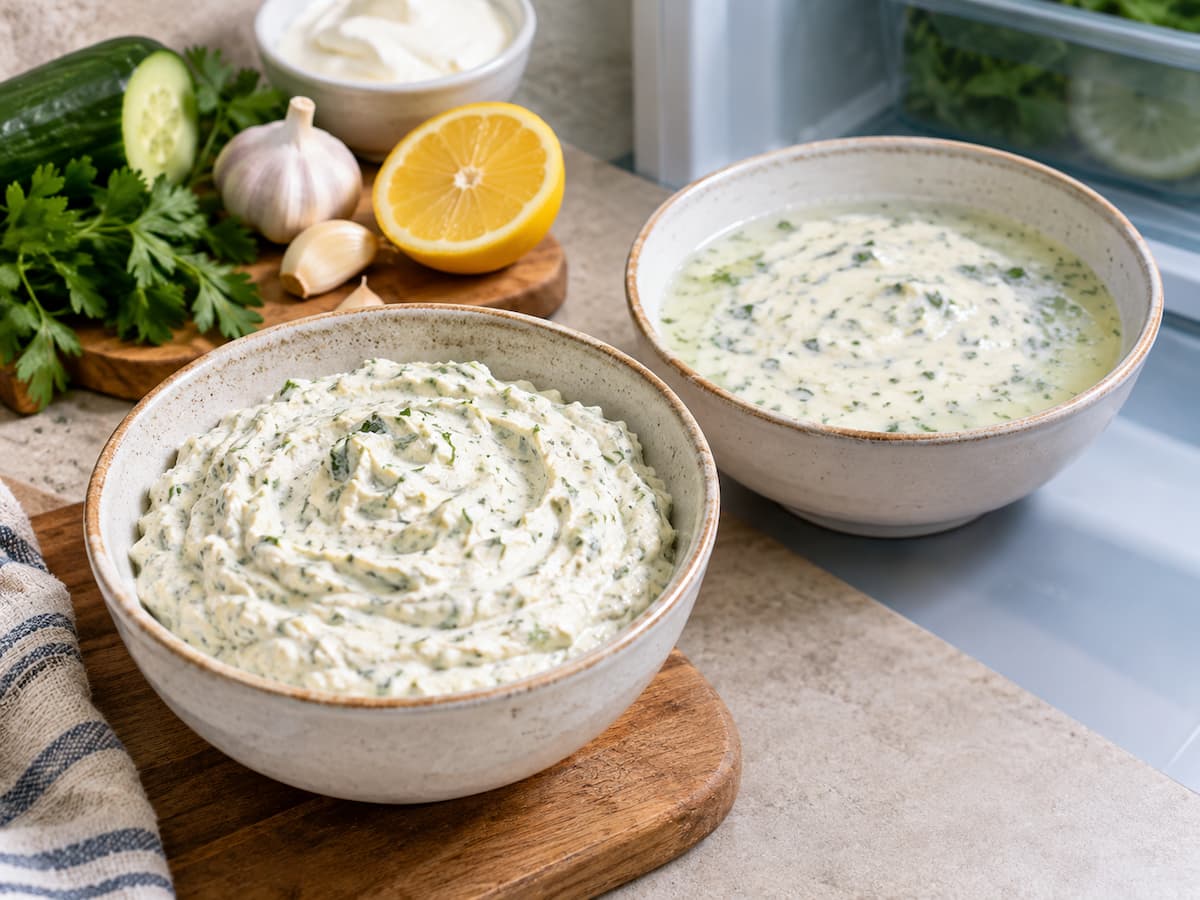
A homemade dip can look thick and creamy when you first make it, then seem strangely loose after a few hours in the refrigerator. Sometimes there is a small puddle of liquid on top. Other times the entire dip becomes thinner, even though nothing was added to it. This is usually not a sign that the dip was mixed incorrectly. Refrigeration can change how water, dairy, vegetables, salt, and other ingredients interact. Some dips naturally release moisture as they sit, while others become watery because an ingredient was too wet, vegetables were not drained well, or the mixture was seasoned in a way that pulled water out of its ingredients. The useful question is not simply how to make a dip thicker. It is where the extra liquid came from and why the mixture could no longer hold it. Once you understand that, watery dips become much easier to prevent and fix.
What “Watery” Really Means In A Dip
There are two slightly different problems that are often treated as the same thing.
- The first is surface separation. A little liquid collects on top while the dip underneath is still reasonably thick. This can happen naturally as a mixture sits. Stirring may bring the liquid back into the dip.
- The second is actual thinning. The whole mixture becomes noticeably looser, sometimes with a texture that is much thinner than it was when freshly prepared. This usually means the ingredients have released enough water to change the structure of the dip.
The distinction matters because the solution is different. If a small amount of liquid has separated, stirring may be enough. If a vegetable has released a large amount of water into a yoghurt-based dip, simply stirring will not remove the underlying cause.
Why Refrigeration Can Make A Dip Seem Watery
Refrigeration does not simply “dry out” or “thicken” food. Different ingredients respond to cold storage in different ways. A dip is often a mixture of ingredients that hold water in different ways. Dairy products contain water along with proteins and fats. Vegetables contain water inside their cells. Herbs and other fresh ingredients can contribute moisture. Salt can draw water from plant tissues. Acids can also affect the texture of certain ingredients.
While the dip rests, these ingredients continue interacting. A freshly mixed dip may temporarily look uniform because the liquid is distributed throughout the mixture. After several hours, some of that liquid can move out of the ingredients that were holding it and collect elsewhere. This is why a dip can change even when the container remains sealed in the refrigerator. The important point is that refrigeration itself is often only part of the story. The original ingredient choices and preparation method determine how much separation is likely to occur.
High-Water Ingredients Are A Common Culprit
Fresh vegetables can contain a surprising amount of water, and chopping them makes that moisture easier to release. Cucumber is a classic example. If chopped cucumber goes directly into a creamy dip, its cells are damaged during cutting. As the mixture sits, moisture can move out of the cucumber and into the surrounding dip. Tomatoes, zucchini, onions, and some fresh herbs can behave similarly, although the amount of released liquid varies. The problem becomes more noticeable when the vegetables are:
- Very juicy
- Finely chopped
- Grated
- Added in large amounts
- Mixed with salt before draining
- Stored for several hours
This step does not mean these ingredients should be avoided. It means their water content needs to be considered when building the dip. For example, a cucumber-based dip may need a different preparation approach from a simple herb-and-yoghurt dip. The cucumber contributes much more free moisture, so draining it before mixing can make a substantial difference.
Salt Can Pull Water Out Of Vegetables
Salt does more than make a dip taste seasoned. When salt comes into contact with vegetables, it can encourage water to move out of their tissues. This is one reason salting vegetables can produce visible liquid after a short period. That can be useful in some cooking situations, but it can work against you in a dip.
Imagine finely chopped cucumber mixed with salt and then added to yoghurt. The cucumber may continue releasing moisture after the dip has been mixed. At first, the yoghurt can absorb or hold some of that liquid. After several hours, enough water may accumulate to make the dip noticeably thinner. This is one reason it can be helpful to drain particularly watery vegetables before they become part of the dip, especially when the dip needs to remain thick during refrigeration. It is also worth thinking about when the seasoning is added. Salting a vegetable well before it goes into the dip can produce a different result from seasoning the finished mixture.
Yoghurt Is Not Always The Same From One Container To Another
Yoghurt-based dips can vary considerably in texture. Some yoghurts are naturally thick and hold their structure well. Others contain more free liquid and may become loose when mixed with additional ingredients. Even within the same general type of yoghurt, stirring can change its texture. A thick yoghurt that sits undisturbed may look quite firm, but vigorous mixing can make it smoother and more fluid.
This is not necessarily a problem. It simply means that the starting texture matters. If the yoghurt already looks loose before anything else is added, adding juicy vegetables, acidic ingredients, or other moisture-rich foods can push the final dip even further toward a thin consistency. For a dip that needs to stay thick, starting with a yoghurt that is naturally dense gives you more room for ingredients that release moisture later.
Sour Cream, Cream Cheese, And Other Dairy Bases Behave Differently
Not every creamy dip should be expected to react the same way in the refrigerator. Cream cheese has a dense structure that can give a dip a firmer body. Sour cream has a different texture and water distribution. Yoghurt can range from very thick to quite loose depending on the product. When these ingredients are combined, their individual textures influence the final mixture.
For example, replacing part of a thick dairy base with a much thinner one can make a dip appear fine immediately after mixing but less stable during storage. This is why a substitution that seems harmless by volume can still change the finished texture. Two ingredients may both be described as “creamy”, but they do not necessarily contain or hold water in the same way. If you are changing an ingredient in a dip, the Ingredient Swap Decision Tool can be useful for thinking through substitutions before making them.
Acid Can Change The Texture Too
Lemon juice, vinegar, and other acidic ingredients are common in dips because they brighten the flavour. But adding a significant amount of liquid acid also adds water. That may seem obvious, but the more important issue is that acid also affects dairy proteins and the overall texture of the mixture. A small amount of lemon juice may be exactly what a dip needs. Adding considerably more because the first taste seemed bland can create a thinner mixture without solving the actual seasoning problem. This is especially easy to do when correcting a dip. If a refrigerated dip tastes flat, adding more lemon juice is not always the best first response. The flavour may need salt, herbs, spices, or another ingredient rather than more liquid. Taste and texture should be adjusted separately when possible.
Herbs Can Add More Moisture Than Expected
Fresh herbs are another small source of water. A handful of herbs may not seem important compared with a cup of yoghurt or another dairy base. However, freshly washed herbs can carry surface moisture, and chopped leaves can release some of their own moisture into a mixture. This does not usually turn a dip watery by itself. The bigger issue is when several moisture-producing ingredients are combined. For example, a dip containing yoghurt, grated cucumber, chopped onion, fresh herbs, lemon juice, and salt has many possible sources of additional liquid. Each contribution may seem minor, but together they can noticeably change the texture during storage. Drying fresh herbs well after washing is a simple step that can help avoid adding unnecessary water.
Why Some Dips Separate Even When You Did Everything Right
Sometimes, separation is simply part of the dip’s nature. A mixture can contain ingredients that do not permanently bind together into one stable structure. Over time, gravity and the movement of water can cause some separation. This is common with dips containing several different phases, such as dairy, oil, vegetables, and other liquid ingredients. The presence of a little liquid does not automatically mean the dip has failed. If the dip smells normal, looks normal apart from separation, has been refrigerated appropriately, and the ingredients are known to be suitable for storage, gently stirring can often restore a more uniform texture. The key is to distinguish normal physical separation from signs of spoilage.
The Preparation Step That Makes The Biggest Difference
When a dip contains watery vegetables, preparation before mixing is often more important than trying to rescue the dip afterward. Grated cucumber is a particularly useful example. After grating, it can be drained or squeezed to remove some free moisture before mixing with the dairy base. The same basic idea can apply to other vegetables, depending on the recipe.
The goal is not to remove every drop of water. Vegetables need some of their natural moisture to contribute the texture and flavour you want. The goal is to remove enough loose liquid that the dip’s main base can still hold the remaining moisture. This principle is also why finely chopping a very juicy ingredient can sometimes create more trouble than using larger pieces. Smaller pieces expose more damaged tissue and distribute the moisture throughout the mixture.
Mixing Can Change The Starting Texture
It is easy to overlook the mixing technique, as stirring seems harmless. A thick dairy ingredient can become noticeably softer after vigorous whisking or stirring. This does not mean you have damaged it, but it can make the mixture seem thinner than before. Adding several liquid ingredients while aggressively mixing can make the effect more obvious. For many dips, gentle mixing is enough. You want the ingredients distributed evenly without turning every component into a completely smooth, loose mixture. This matters particularly when the recipe depends on a thick dairy base for its body.
Adding Liquid Gradually Gives You More Control
When a recipe includes lemon juice, vinegar, milk, water, or another liquid, adding it gradually is usually easier to control than pouring in the full amount immediately. The reason is simple: ingredients do not all absorb or hold liquid at the same rate. A dip that looks too thick immediately after mixing may loosen as it rests. If you add extra liquid before giving the mixture time to settle, you can end up with a dip that is much thinner later. A useful habit is to mix the main ingredients first, then add liquid in small amounts while checking the consistency. The finished dip should be judged not only by how it looks in the mixing bowl but also by how you expect it to behave after chilling.
Chilling Can Reveal A Problem That Was Already There
Sometimes the refrigerator gets blamed for a texture problem that actually began before the dip was stored. A dip may already contain more liquid than its structure can comfortably hold. Immediately after mixing, that liquid can remain distributed throughout the mixture. The longer the dip sits, the more visible the excess becomes. This is particularly common when several wet ingredients are combined without adjusting the amount of the main thick ingredient. For example, adding a juicy vegetable to a dip without reducing or draining anything else effectively changes the balance of the recipe. The original ratio may have been designed around ingredients that release less moisture. Refrigeration simply gives the mixture time to show the result.
Why Stirring Sometimes Fixes It—and Sometimes Doesn’t
Stirring is a useful first step when a small amount of liquid has separated. If the dip becomes smooth again after gentle stirring, the separation may have been relatively minor. The ingredients can redistribute the liquid without needing anything else. But stirring cannot remove water that has been released into the mixture. If a grated vegetable has contributed a substantial amount of moisture, stirring simply redistributes that moisture more evenly. The dip may look uniform for a moment but remain thinner than intended. That is why repeatedly stirring a watery dip is not always the answer. If the mixture is genuinely too thin, the solution is usually to address the balance of ingredients rather than simply mixing it harder.
How To Rescue A Dip That Has Already Turned Watery
The best correction depends on why the dip became thin. Start by gently stirring it. If the liquid is only lightly separated, this step may be enough. If there is clearly a pool of liquid on the surface, you can carefully remove some of it rather than mixing all of it back in. This is particularly useful when the liquid is visibly separate from the thicker portion.
For a dip that is uniformly too thin, adding more of the original thick base may be more appropriate. The exact choice depends on the recipe. More yoghurt, cream cheese, or another primary thick ingredient can restore body, but adding a large amount at once may change the flavour. Another option is to allow the mixture to drain when the ingredients and recipe make that practical. This works better for some dairy-based mixtures than others.
Avoid automatically adding flour or other dry ingredients simply because they absorb liquid. A thickener can alter the texture and flavour considerably, and not every dip is designed to accommodate one.
When You Should Not Try To Save The Dip
- Texture alone does not tell you whether a refrigerated dip is safe to eat.
- A dip that has separated slightly can still be normal. However, unusual odour, unexpected discolouration, visible mould, or other clear signs of spoilage are different issues.
- Temperature and storage time also matter. Perishable dips should be handled and refrigerated according to appropriate food-safety practices rather than judged only by appearance.
- If something looks or smells clearly wrong, thickening it or stirring it does not make it safe.
- The goal when fixing watery texture is to correct a quality problem—not to disguise signs that the food may have spoilt.
A Better Way To Build A Dip For Refrigeration
If you know a dip will be made several hours before serving, think about its ingredients as a small system rather than as isolated components. Start with the main base. Ask whether it is naturally thick or already fairly loose. Then consider the ingredients that contribute water. Fresh vegetables, citrus juice, vinegar, and wet herbs can all affect the final consistency.
Next, consider salt and preparation. A salted vegetable may release more liquid while the dip rests, so draining it first can be useful.
Finally, consider how the dip will be served. A dip that needs to be thick enough for crackers or sliced vegetables may require a different consistency from one intended to spoon over another food. This approach is more reliable than simply adding a thickener at the end because it addresses the reason the texture changes in the first place.
A Simple Example: Cucumber Yoghurt Dip
Consider a basic cucumber-yoghurt dip. You start with thick yoghurt and add grated cucumber, lemon juice, salt, and herbs. Immediately after mixing, it looks creamy and spoonable. Several hours later, liquid appears around the edges. There are several possible reasons. The cucumber may have released water after being grated. Salt may have encouraged additional moisture to leave the cucumber. The lemon juice added another source of liquid. The yoghurt itself may have been relatively loose.
All of these ingredients are acceptable. The issue is their combined effect. If the cucumber had been drained before mixing, the yoghurt was reasonably thick, and the liquid seasoning was added carefully, the dip would have less free moisture to manage. This example illustrates an important cooking principle: a watery result often comes from the interaction of several normal ingredients rather than one “bad” ingredient.
When A Slightly Loose Dip Is Actually Useful
Not every dip needs to be extremely thick. A softer dip can be easier to spread on sandwiches, spoon over vegetables, or use as a sauce. In some cases, a little separation is expected and does not affect the intended use. The mistake is assuming that every refrigerated dip should have exactly the same texture it had when freshly mixed. Think about the job the dip needs to perform. If it must sit beside crackers without spreading across the plate, firmness matters. If it will be spooned over roasted vegetables, a looser texture may be perfectly practical. Texture is part of the recipe’s purpose, not simply a measure of success or failure.
How To Prevent Watery Dips Without Overcomplicating Them
You do not need a long list of special techniques to improve the stability of most homemade dips. Pay attention to the wet ingredients before mixing. Drain vegetables that are especially juicy. Dry-washed herbs. Add liquid seasonings gradually. Avoid correcting flavour with large amounts of liquid all at once. Start with a thick base when a firm dip is the goal.
Most importantly, give the mixture some time before deciding that its consistency is wrong. A dip can change during chilling, so the texture immediately after preparation is not always the final texture. If you regularly make snacks for several people, the Balanced Snack Builder can also help you decide what to serve alongside a dip, particularly when you want to build a snack around the dip rather than treat it as the entire snack.
Conclusion
A watery homemade dip is often less mysterious than it looks. Refrigeration gives ingredients time to release, redistribute, and separate moisture that was not obvious when the dip was freshly mixed. The most useful approach is to look at the whole mixture: the water content of the vegetables, the thickness of the dairy base, the amount of liquid seasoning, the effect of salt, and how the ingredients were prepared.
When a dip is meant to stay thick, controlling excess moisture before refrigeration is usually easier than trying to repair it afterward. And when a little liquid does appear, first decide whether it is simple separation or a genuine change in the dip’s overall texture. That small distinction can save a good dip from being unnecessarily thrown away—or unnecessarily thickened when all it needed was a gentle stir.
FAQs
1. Why Does My Dip Get Watery Overnight?
The most common reason is moisture released by one or more ingredients while the dip rests. Watery vegetables, loose dairy bases, liquid seasonings, and salt can all contribute. Overnight storage simply gives those ingredients more time to interact and separate.
2. Can I Stir A Watery Dip Back Together?
Sometimes. If a small amount of liquid has separated on the surface, gentle stirring may restore the original texture. If the entire dip has become thin because an ingredient released a lot of water, stirring will not remove that moisture.
3. Should I Drain Vegetables Before Adding Them To A Dip?
For particularly watery vegetables, draining can make a significant difference. Grated or finely chopped cucumber is a common example. You generally do not need to remove every bit of moisture; the goal is to control excess free liquid.
4. Does Salt Make A Dip Watery?
Salt itself is not simply a “watery dip ingredient”, but it can encourage vegetables to release moisture. This matters when salted, juicy vegetables are mixed into a dip and then left to sit for several hours.
5. Why Was My Dip Thick Before Refrigeration But Thin Later?
The ingredients may have contained liquid that was initially distributed throughout the mixture. During refrigeration, that moisture can move out of vegetables or separate from the main base. The dip can therefore look thicker immediately after mixing than it does after several hours.
6. Can I Make A Dip Thicker After It Becomes Watery?
Often, yes, depending on the ingredients. First determine whether liquid has merely separated or whether the whole mixture is too thin. You may be able to remove separated liquid, drain the mixture when appropriate, or add more of its original thick base. The best fix depends on what caused the thinning.

Olivia Dawson is a food writer and recipe developer focused on creating clear, practical, and family-friendly cooking content. She specializes in approachable recipes made with everyday ingredients and well-explained methods that support confident cooking. Through Recipes With Olivia, Olivia shares thoughtfully crafted meal ideas designed to be reliable, enjoyable, and easy to recreate in everyday kitchens.