
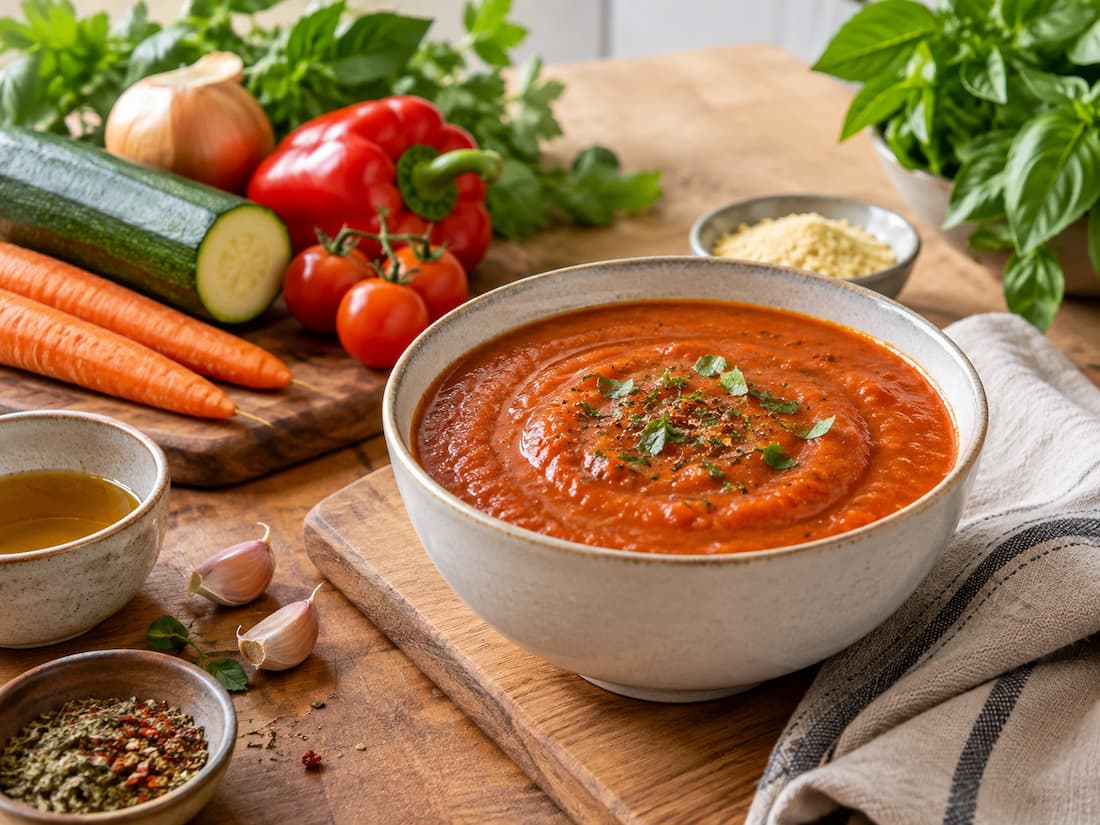
A vegetable-based sauce can be full of excellent ingredients and still taste thin, flat, or watery. The problem is usually not that vegetables lack flavour. More often, the sauce has not developed enough depth, concentration, body, or balance. This matters when you want a sauce that feels satisfying without relying on large amounts of cream, butter, cheese, or other rich ingredients. Simply blending more vegetables does not always solve the problem. In some cases, it makes the sauce even thinner. The better approach is to understand what makes a sauce taste rich in the first place. Browning vegetables, concentrating moisture, using enough seasoning, adding a small amount of fat, and finishing with acidity can all change the result. The ingredients can remain relatively simple while the finished sauce develops much more character.
What Makes A Sauce Taste Rich?
“Rich” does not necessarily mean heavy. A sauce can feel rich because it has several layers of flavour and a pleasant texture.
There are a few different qualities that contribute to this impression.
- Concentration makes vegetable flavours more noticeable. If vegetables contain a lot of water and that water is not reduced, the finished sauce can taste diluted.
- Browning adds deeper, roasted flavors. Vegetables that develop some color during cooking can contribute flavors that are difficult to get from vegetables that are only simmered.
- The body affects how the sauce feels in the mouth. A sauce that clings lightly to pasta, grains, or vegetables can seem more substantial than a thin liquid, even when the ingredients are similar.
- Fat carries flavour and changes texture. You do not necessarily need much of it, but completely removing fat can make some sauces taste less rounded.
- Salt and acidity help the other flavours become clearer. A sauce can contain plenty of vegetables but still taste dull if it is under-seasoned or lacks a contrasting acidic note.
The important point is that richness comes from a combination of factors rather than one magic ingredient.
Start With Vegetables That Can Build Flavour
Not every vegetable contributes the same kind of flavour to a sauce. Onions, carrots, bell peppers, mushrooms, tomatoes, squash, cauliflower, eggplant, and roasted garlic can all work well, but they behave differently during cooking.
Onions can become sweet and deeply savoury when cooked long enough. Carrots bring natural sweetness and body. Tomatoes provide acidity as well as savoury depth. Mushrooms can contribute a strong savoury character, while roasted peppers bring sweetness and a slightly smoky flavour. The choice of vegetable also affects how much water ends up in the sauce.
For example, a sauce made mostly from a high-moisture vegetable may need more reduction after blending. A sauce containing roasted squash or cooked carrots may naturally have a thicker texture. This does not mean watery vegetables should be avoided. It simply means their moisture needs to be considered as part of the cooking process.
Brown Vegetables Before Blending Them
One of the easiest ways to make a vegetable sauce taste deeper is to develop colour before turning the vegetables into a sauce. When vegetables are cooked until they develop browned edges or roasted surfaces, their flavour changes. Instead of tasting only fresh, sweet, or vegetal, they can develop toasted and savoury notes. This is particularly useful for onions, mushrooms, peppers, eggplant, cauliflower, carrots, and squash.
You do not need to burn the vegetables. The goal is controlled browning. If vegetables are crowded tightly in a pan, they can release moisture faster than it can evaporate. The vegetables may then soften and steam instead of developing much colour. Giving them enough space can make a noticeable difference.
For oven roasting, spread the vegetables in a reasonably even layer rather than piling them into a deep mound. For stovetop cooking, allow moisture to cook away before expecting substantial browning.
Watch The Colour, Not Just The Clock
Cooking times vary with vegetable size, moisture, pan material, oven performance, and quantity. Instead of relying on an exact time, look for visual cues. Vegetables should be tender enough for blending, with some browned or caramelised-looking areas where appropriate. If they become very dark and bitter, the heat has gone too far.
This is one reason a recipe can give a cooking time while still producing different results in different kitchens. The vegetables themselves provide better information than the clock alone.
Cook Off Excess Water
A surprisingly common reason vegetable sauces taste weak is excess water. Water is not inherently bad, but too much of it spreads the flavour over a larger volume. A sauce may look plentiful while tasting less concentrated than expected. There are two useful stages for controlling moisture.
The first is before blending. Roasting or sautéing vegetables allows some of their water to evaporate while their flavour becomes more concentrated. The second is after blending. If the puree is still thinner than you want, simmering it gently in an uncovered pan can remove additional water.
Stir occasionally, particularly as the sauce thickens. A thicker puree can catch on the bottom of the pan more easily than a watery sauce. This approach is often more effective than simply adding more vegetables. Adding another large quantity of vegetables can increase both flavour and water, leaving you with an even larger amount of sauce that still needs concentration.
Use A Small Amount Of Fat For Roundness
Fat is useful in vegetable sauces because it can soften sharp flavours and contribute to a smoother mouthfeel. That does not mean a sauce needs to become cream-based. A modest amount of olive oil, butter, or another suitable cooking fat can be enough to change the character of a sauce. The appropriate choice depends on the flavour you are building.
For example, olive oil can fit naturally into roasted tomato, pepper, carrot, or Mediterranean-style sauces. A small amount of butter may suit a sweeter squash or mushroom sauce.
The timing can also matter. Fat used during cooking helps vegetables brown and can carry the flavours of ingredients such as garlic and spices. A small amount added near the end can contribute to a smoother finish. There is no universal amount that makes a sauce “rich”. Too much fat can cover the vegetable flavour rather than improve it.
Build Savoury Depth Without Making the Sauce Heavy
Vegetables can provide plenty of flavour, but some combinations benefit from another savoury element. This can come from ingredients such as mushrooms, tomato paste, roasted garlic, onions, herbs, spices, or a small amount of a strongly flavoured condiment. Tomato paste is particularly useful when a tomato or vegetable sauce needs more concentrated savoury flavour. It can be cooked briefly in the pan before liquid is added, which develops a deeper flavour than simply stirring it into a finished sauce.
Mushrooms can also be useful, especially when they are cooked until their moisture has reduced and their surfaces begin to brown. Roasted garlic behaves differently from raw garlic. Roasting softens its sharpness and creates a sweeter, milder flavour that can blend smoothly into a sauce. The goal is not to add every flavourful ingredient available. Choose one or two elements that complement the main vegetable. A carrot-based sauce, for example, may need a savoury counterpoint because carrots are naturally sweet. A tomato-based sauce may need less added sweetness because tomatoes already provide a different flavour profile.
Season The Sauce In Layers
A sauce can taste flat even when the main ingredients are flavourful simply because the seasoning is not balanced. Salt is particularly important because it affects how clearly other flavours are perceived. But adding salt all at once at the end is not always the easiest way to season a sauce. When vegetables are cooked, seasoning them during the process can help distribute flavour more evenly. The final sauce should still be tasted and adjusted after blending and reduction because concentration changes the seasoning level. This is especially important if the sauce is going to be served with pasta, rice, grains, or another relatively mild food. The sauce needs enough flavour to remain noticeable when combined with the rest of the meal. Seasoning should be adjusted gradually. Once excess salt has been added, it is much harder to correct.
Use Acidity to Wake Up Flat Flavours
Sometimes a vegetable sauce is not actually missing richness. It is missing contrast. A small amount of acidic food can make a sauce taste brighter and more defined. Depending on the recipe, this might come from lemon juice, vinegar, tomatoes, or another naturally acidic ingredient.
Acidity is particularly useful when a sauce contains naturally sweet vegetables such as carrots, roasted peppers, or squash. The key is restraint. A large amount of acid can dominate the sauce and make it taste sharp rather than balanced. Add a little, stir well, and taste again. The goal is not for the sauce to taste obviously sour. Instead, the flavours should seem clearer and less dull. This is also why adding more salt is not always the answer to a bland sauce. If the seasoning is already adequate, a small adjustment in acidity may solve the problem more effectively.
Make The Texture Work For You
Texture has a major effect on how substantial a sauce feels. A thin vegetable puree can taste more like a broth or cooking liquid. A thicker puree clings to food and creates a fuller mouthfeel. There are several ways to create body without relying heavily on cream.
1. Blend Thoroughly
The amount of blending affects the final texture. Some vegetables become naturally smooth when fully cooked and blended, while fibrous vegetables may remain slightly coarse.
A blender or food processor can produce different textures depending on the equipment and the amount of liquid used.
Avoid adding a large amount of liquid at the beginning simply to make blending easier. Add enough to get the vegetables moving, then adjust as needed.
It is generally easier to thin a thick sauce than to rescue an overly watery one.
2. Use Naturally Starchy Vegetables
Potatoes, sweet potatoes, winter squash, and some other vegetables can provide body when cooked and blended.
They can be useful when the sauce needs more thickness without introducing a large amount of dairy.
However, starchy ingredients can also change the character of the sauce. A potato-based sauce will not behave or taste exactly like a roasted pepper sauce, so use them when their flavour makes sense with the rest of the dish.
3. Reduce After Blending
If the flavour is right but the texture is too loose, reduction is often the simplest solution.
Simmer the sauce uncovered over moderate heat and stir periodically. As water evaporates, the sauce becomes more concentrated and thicker.
Taste again after reducing because salt and other seasonings also become more concentrated.
Do Not Forget The Cooking Liquid
Vegetable sauces often become more difficult to balance when too much liquid is added at once. If you are blending cooked vegetables, consider using some of the vegetable cooking liquid only when needed. It can help create a smooth texture, but adding it gradually gives you much more control.
For pasta sauces, a small amount of pasta cooking water can sometimes help a sauce coat the pasta more evenly. Because it contains starch released from the pasta, it behaves differently from plain water. The important principle is simple: liquid should solve a texture problem, not automatically become part of the recipe in a large quantity.
Choose Herbs And Spices For The Vegetable
Herbs and spices can make a vegetable sauce taste more complete without making it heavier. But the choice should support the main ingredient rather than compete with it. Roasted tomato sauces can work with herbs such as basil or oregano. Carrot-based sauces may suit cumin, ginger, thyme, or other warm or earthy flavours depending on the dish. Squash can work with herbs and spices that complement its natural sweetness.
Dried spices often benefit from brief cooking in fat or alongside the vegetables because this helps their flavours develop. Fresh herbs are often better added later, especially when you want their fresher aroma to remain noticeable. You do not need a long spice list. A sauce with three well-balanced flavour elements can be more useful than one containing ten seasonings that are difficult to distinguish.
What About Cheese, Nuts, Or Dairy?
If your goal is to avoid heavy ingredients, that does not necessarily mean every richer ingredient has to disappear. Small quantities can sometimes be used for flavour rather than as the main source of body. A little grated hard cheese can add salty, savoury depth to certain vegetable sauces. Ground nuts or seeds can provide body and a different kind of richness. Yoghurt can create creaminess in sauces where its tangy flavour fits, although it needs to be handled carefully because high heat can affect its texture.
These ingredients are optional. A vegetable sauce does not need them to have good flavour. The more important question is what the sauce actually lacks. If it tastes watery, reduce it. If it tastes flat, check seasoning and acidity. If it lacks savoury depth, consider browning or a concentrated savoury ingredient. If it feels thin, work on texture. Adding cream to every problem can hide the underlying issue without actually solving it.
Common Mistakes That Make Vegetable Sauces Taste Thin
Several small decisions can work against a flavourful sauce.
- Boiling everything in lots of water: This can produce tender vegetables, but the cooking liquid may carry away some flavour and leave the vegetables less concentrated.
- Blending before developing flavour: A smooth puree is not automatically a flavourful puree. If the vegetables were barely cooked, the sauce may lack the deeper notes created through roasting or browning.
- Adding too much stock or water: Extra liquid is easy to add but harder to remove. Start conservatively and loosen the sauce only when necessary.
- Skipping the final taste: A sauce can change significantly after blending and reducing. Taste it at the stage when you actually plan to serve it.
- Using only salt to fix blandness: Blandness can come from several things. Salt may help, but sometimes the missing element is acidity, browning, or savoury depth.
- Overcooking garlic: Garlic can become harsh or bitter if it is cooked too aggressively. Gentle cooking or roasting can produce a more rounded flavour.
- Expecting vegetables to taste the same year-round: Fresh produce varies in sweetness, water content, and intensity. A sauce may need slightly different seasoning or reduction depending on the ingredients.
A Simple Way To Diagnose A Weak Sauce
Instead of adding ingredients at random, first identify the problem.
- If the sauce tastes watery, reduce it before adding more seasoning.
- If it tastes dull, check the salt level and consider a small amount of acid.
- If it tastes sweet but lacks depth, add a savoury element or use more browned ingredients.
- If it tastes harsh, it may need more cooking, dilution, fat, or balance depending on the ingredient causing the problem.
- If it tastes flavourful but feels thin, focus on reduction or ingredients that naturally provide body.
- If it tastes good on its own but disappears when served with pasta or grains, the sauce may need stronger seasoning or a slightly thicker consistency.
This diagnostic approach is more reliable than following a fixed list of additions because the same vegetable sauce can fail for completely different reasons.
A Practical Vegetable Sauce Formula
You can use the following structure when creating a sauce from vegetables already in your kitchen:
- Choose a main vegetable: Pick one or two vegetables that will define the sauce.
- Develop flavour: Roast or sauté them until they are fully tender and, where appropriate, browned.
- Add supporting flavours: Use ingredients such as onion, garlic, tomato paste, herbs, spices, or mushrooms when they suit the main vegetable.
- Blend with limited liquid: Add enough liquid for the desired consistency rather than automatically adding a large amount.
- Adjust the body: Reduce the sauce if it is too loose, or use a naturally thick ingredient if the flavour combination calls for it.
- Balance the seasoning: Taste for salt, acidity, sweetness, and savoury depth.
- Finish with a small amount of fat if useful: This can round out the texture and flavour without turning the sauce into a heavy dish.
This structure leaves plenty of room for different cuisines and ingredients while keeping the cooking logic consistent.
How To Use A Vegetable Sauce Beyond Pasta
A well-balanced vegetable sauce does not have to be limited to pasta. It can work as a base for grains, a topping for roasted vegetables, a component of a bowl, or a sauce for beans and other simple foods.
This is particularly useful when you need to use up vegetables soon. Instead of trying to turn every leftover vegetable into a separate side dish, compatible vegetables can sometimes be cooked together and transformed into one sauce.
If you are deciding what to make from ingredients already in your refrigerator, the Fridge-to-Meal Planner can help organise available ingredients into a meal idea.
For vegetables that are approaching the point where you need to use them, the Use-It-Before-It-Goes-Bad Planner can also be useful for making a practical use-up decision.
Storing And Reheating Vegetable Sauces
Vegetable sauces can often be prepared ahead, but their texture may change after refrigeration. A sauce can thicken as it cools because its starches and vegetable solids become less fluid. This does not necessarily mean something went wrong. When reheating, warm the sauce gently and add a small amount of liquid if necessary. Stir well before deciding that it needs more water.
You may also find that the flavour tastes slightly different when cold compared with when hot. Taste the sauce after reheating and adjust seasoning only after it has reached serving temperature. For food safety, cool and store cooked food promptly using appropriate refrigeration practices, and reheat leftovers thoroughly before serving.
If a stored sauce develops an unusual smell, visible mould, or other clear signs of spoilage, discard it rather than trying to correct the flavour.
Conclusion
A vegetable-based sauce does not need a large amount of cream, butter, or cheese to feel satisfying. The bigger difference usually comes from what happens to the vegetables before and after blending. Give vegetables enough time to develop flavour, control their moisture, build a little savoury depth, and adjust salt and acidity carefully. Then use texture as another tool: reduce a watery sauce, blend for smoothness, and add liquid gradually rather than all at once.
When a sauce tastes weak, the most useful question is not “What rich ingredient should I add? “It is “What is missing?” Once you identify whether the problem is concentration, browning, seasoning, acidity, or body, the sauce becomes much easier to correct.
FAQs
1. Can Vegetable Sauce Be Rich Without Cream?
Yes. Cream is only one way to create richness. Roasting or browning vegetables, reducing excess water, building savoury depth, balancing acidity, and using a modest amount of fat can all contribute to a fuller sauce.
2. Why Does My Vegetable Sauce Taste Watery?
The vegetables may have released a lot of moisture, or too much stock or water may have been added. Try reducing the sauce uncovered over moderate heat. If the flavour is also weak, concentration through cooking may improve both the texture and taste.
3. Should I Roast Vegetables Before Making A Sauce?
Roasting is useful when you want deeper, sweeter, or more developed vegetable flavours. It is not required for every sauce, though. Sautéing or gently cooking vegetables can be more appropriate when you want a fresher flavour or when the recipe depends on other cooking methods.
4. How Can I Thicken A Vegetable Sauce Without Cream?
First consider reducing it to remove excess water. You can also use naturally thick vegetables such as squash or sweet potato, depending on the flavour you want. Blending the vegetables thoroughly can also strengthen the perceived body.
5. Why Does My Sauce Taste Flat Even After Adding Salt?
Salt may not be the missing element. The sauce could need acidity, browning, savoury depth, or a small amount of fat. Add changes gradually, tasting between adjustments, rather than adding several ingredients at once.
6. Can I Freeze Vegetable-Based Sauces?
Many vegetable-based sauces can be frozen, although the texture may change after thawing. Sauces with high water content can separate somewhat, so stir thoroughly while reheating. If necessary, blend the sauce again or reduce it slightly to restore a smoother consistency.

Olivia Dawson is a food writer and recipe developer focused on creating clear, practical, and family-friendly cooking content. She specializes in approachable recipes made with everyday ingredients and well-explained methods that support confident cooking. Through Recipes With Olivia, Olivia shares thoughtfully crafted meal ideas designed to be reliable, enjoyable, and easy to recreate in everyday kitchens.