
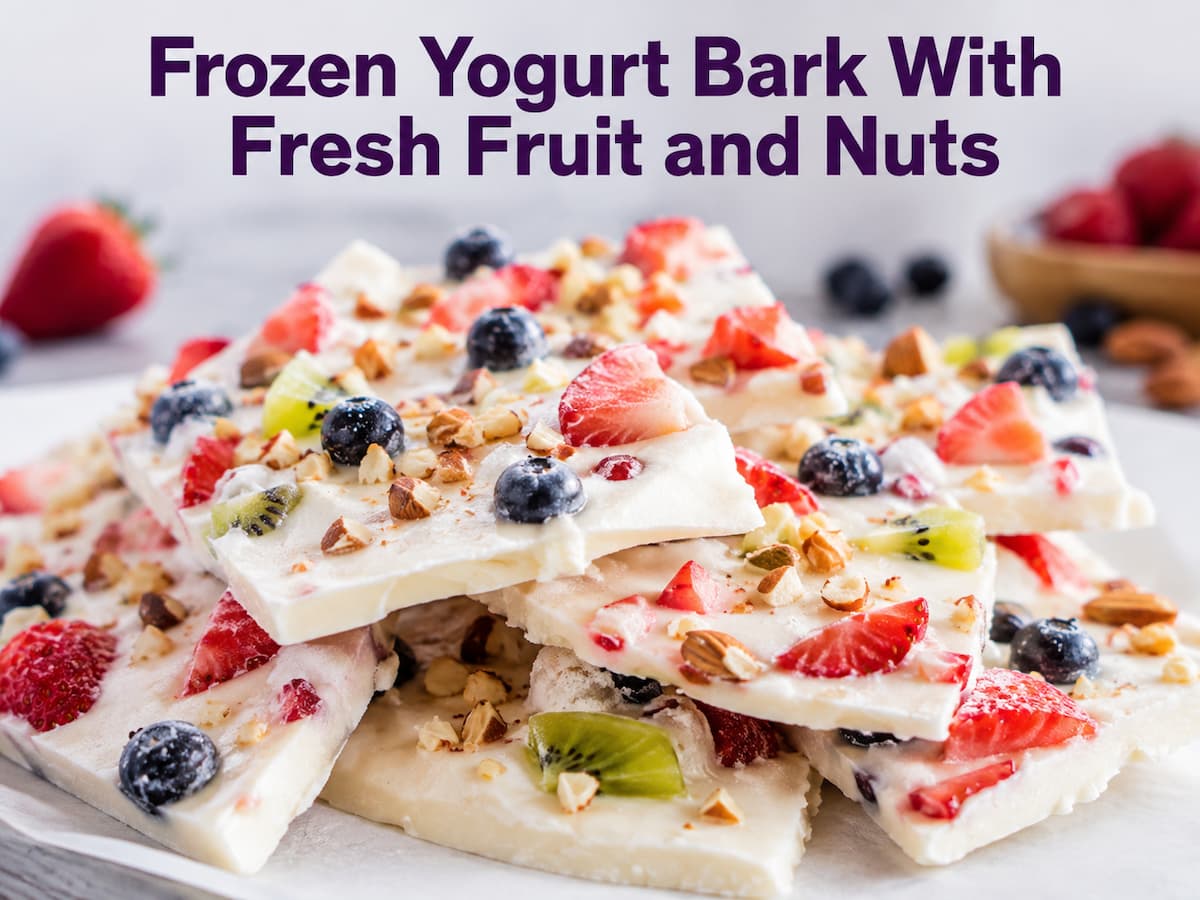
There are desserts that require careful timing, special equipment, and plenty of patience. Frozen yogurt bark isn’t one of them. It’s the kind of recipe that quietly becomes part of your regular routine because it’s so easy to adapt. One week it might feature strawberries and almonds, the next it could be topped with mango, pistachios, or whatever fruit happens to be at its peak.
What makes this recipe especially appealing is the contrast in every bite. The yogurt freezes into a creamy base, the fruit stays bright and juicy, and the nuts add just enough crunch to keep things interesting. The result feels refreshing rather than overly rich, making it equally suitable for a summer afternoon snack or a light dessert after dinner. One thing you’ll notice after making it a few times is that simplicity works in its favor. Packing the surface with too many toppings can actually make the bark difficult to slice and eat. A balanced layer of fruit and nuts allows the creamy yogurt to remain the star while every ingredient has room to stand out.
What Makes This Frozen Treat Worth Repeating
Frozen desserts often fall into two categories: they’re either loaded with sugar or they require an ice cream maker and several preparation steps. Frozen yogurt bark sits comfortably in the middle. It comes together in minutes, freezes while you get on with your day, and can be portioned into pieces whenever you need a quick snack. The yogurt provides a smooth foundation that pairs naturally with fresh fruit. Nuts contribute texture without making the dessert feel heavy, and a drizzle of honey or maple syrup can be adjusted according to your taste.
Another reason this recipe works well is its flexibility. If peaches are in season, use peaches. If berries look especially fresh at the market, those become the highlight. Even leftover fruit from the refrigerator can find a new purpose here. The bark also stores well in the freezer, so instead of making individual frozen treats throughout the week, one batch can provide several servings ready to enjoy whenever the craving strikes.
Choosing the Right Yogurt Matters More Than You Think
Not all yogurt freezes the same way. Greek yogurt is usually the best choice because its thicker consistency contains less excess moisture. That extra thickness helps the bark freeze with a creamy texture instead of becoming overly icy. Regular plain yogurt can certainly be used, but it often contains more liquid. The finished bark may freeze harder and develop tiny ice crystals, especially after several days in the freezer. If using flavored yogurt, keep in mind that many varieties are already sweetened. Taste it first before adding additional honey or maple syrup.
Full-fat Greek yogurt tends to produce the smoothest texture. Lower-fat versions still work well but may freeze slightly firmer. A common beginner mistake is choosing yogurt that has separated in the container. Simply stirring it thoroughly before spreading creates a much smoother finished bark.
Ingredients
- 2 cups plain Greek yogurt
- 2 to 3 tablespoons honey or maple syrup (adjust to taste)
- 1 teaspoon vanilla extract
- 1 cup fresh strawberries, sliced
- ½ cup blueberries
- ½ cup raspberries
- ¼ cup chopped almonds
- ¼ cup chopped pistachios
- 1 tablespoon chia seeds (optional)
- 1 tablespoon unsweetened shredded coconut (optional)
- Fresh mint leaves for garnish (optional)
A Closer Look at the Ingredients
Every ingredient contributes something different, even though the recipe looks wonderfully simple. Greek yogurt forms the creamy base. Its mild tanginess balances the sweetness from fruit without becoming overpowering. Honey blends smoothly into yogurt and adds floral notes that pair beautifully with berries. Maple syrup creates a slightly deeper flavor with hints of caramel.
Fresh strawberries bring bursts of sweetness, while blueberries remain pleasantly firm after freezing. Raspberries become slightly softer but provide bright, tart pockets throughout each piece. Almonds contribute a clean crunch, whereas pistachios add both texture and a subtle buttery flavor that works especially well with yogurt. Chia seeds and coconut are optional, but they introduce extra texture without overwhelming the dessert.
Fresh Fruit Gives Better Results Than You Might Think
Although frozen fruit sounds convenient, fresh fruit usually produces a better-looking bark. Frozen berries release moisture as they thaw, which can create small icy patches on the yogurt surface. Fresh fruit keeps the presentation cleaner and helps maintain the creamy texture.
If frozen fruit is your only option, thaw it completely first and gently pat it dry with paper towels before adding it to the yogurt. You’ll usually notice that smaller fruit pieces freeze more evenly than large slices. Cutting strawberries into thin slices rather than chunky pieces makes the bark easier to break into portions later.
Equipment That Makes Preparation Easier
No specialized kitchen tools are necessary. You’ll need:
- A medium mixing bowl
- A spatula or spoon
- Measuring cups
- A baking tray or shallow pan
- Parchment paper
- A knife for chopping fruit and nuts
Using parchment paper is highly recommended because the bark lifts away cleanly once frozen. Without it, removing the bark from the tray can be surprisingly difficult.
Step-by-Step Instructions
1. Prepare the Tray
Line a baking tray, baking dish, or freezer-safe pan with parchment paper. Choose a container that allows the yogurt to spread into a layer about ¼ to ½ inch thick. Thicker layers remain creamier, while thinner layers freeze faster and break more easily.
2. Mix the Yogurt Base
In a medium bowl, combine the Greek yogurt, honey, and vanilla extract. Stir until completely smooth. Taste the mixture before moving on. Remember that frozen desserts taste slightly less sweet than refrigerated ones because cold temperatures reduce the perception of sweetness. If the yogurt tastes only mildly sweet now, it’ll likely taste just right once frozen.
3. Spread the Yogurt
Pour the yogurt mixture onto the prepared tray. Use a spatula to spread it into an even rectangle or oval. Take a little time here. Uneven thickness means some sections freeze much harder than others. The edges don’t need to be perfectly straight. Rustic shapes often look more inviting once broken into irregular pieces.
4. Arrange the Fruit
Scatter the strawberries, blueberries, and raspberries evenly across the surface. Rather than piling fruit into the center, distribute it so every future piece includes several colorful bites. Press each piece gently into the yogurt instead of simply placing it on top. This small step helps prevent fruit from falling off after freezing.
5. Add the Nuts
Sprinkle chopped almonds and pistachios evenly across the bark. Finish with chia seeds or shredded coconut if using. Avoid pressing the nuts too deeply into the yogurt. Leaving part of each nut exposed creates a more attractive texture and gives every bite a satisfying crunch.
6. Freeze Until Firm
Transfer the tray carefully to the freezer. Freeze for 3 to 4 hours, or until the yogurt feels completely firm. If your freezer is packed with other items, freezing may take a little longer. Avoid covering the bark tightly while it’s still soft. Plastic wrap touching the yogurt surface can leave unwanted marks and disturb the toppings.
How You’ll Know It’s Ready
The bark should feel solid when lightly pressed. The yogurt surface loses its glossy appearance and develops a matte finish. Fruit remains colorful but feels firmly attached to the yogurt base. When lifting one corner of the parchment paper, the bark should peel away cleanly without bending. If the center still feels flexible, allow another 20 to 30 minutes of freezing.
The Texture Changes During Freezing
One of the most interesting things about frozen yogurt bark is how the texture evolves. During the first hour, the yogurt thickens considerably but remains scoopable. By the second or third hour, it starts becoming sliceable, though still somewhat soft. After fully freezing, the bark becomes firm enough to snap into pieces while maintaining a creamy bite once left at room temperature for two or three minutes.
You’ll often notice that the fruit freezes slightly softer than the yogurt itself. Berries retain tiny pockets of natural juice, creating pleasant bursts of flavor that contrast with the smooth frozen base. This balance between creamy yogurt, juicy fruit, and crunchy nuts is exactly what gives frozen yogurt bark its appeal. The combination feels refreshing rather than heavy, making it a dessert that tastes satisfying without relying on elaborate ingredients or techniques.
Breaking and Serving the Bark Without Making a Mess
Once the bark is completely frozen, remove the tray from the freezer and let it rest on the counter for about 2 to 4 minutes. It may not seem like much time, but it makes a noticeable difference. The yogurt softens just enough that it breaks cleanly instead of shattering into tiny fragments. Lift the parchment paper from the tray and place the bark on a cutting board. You have two options at this point. You can cut neat squares with a large knife or simply break it into rustic pieces by hand. The second method is often the easiest and gives the dessert its signature homemade appearance.
Don’t worry if every piece looks different. Uneven shapes are part of the charm, and they also make it easier for everyone to grab a portion that suits their appetite. If you’re serving the bark at a gathering, arrange the pieces on a chilled serving platter rather than stacking them. Because yogurt begins softening fairly quickly at room temperature, a single layer keeps everything looking fresh for longer.
Pairing Flavors That Naturally Complement One Another
One of the reasons frozen yogurt bark rarely becomes boring is that the base stays the same while the toppings can change with the seasons. Instead of following a strict formula, think about balancing sweetness, tartness, and crunch. Here’s a collection of combinations that consistently work well:
| Fruit | Nuts | Extra Flavor |
|---|---|---|
| Strawberries | Almonds | Vanilla and shredded coconut |
| Blueberries | Pecans | Lemon zest |
| Mango | Pistachios | Toasted coconut |
| Peaches | Walnuts | Cinnamon |
| Cherries | Almonds | Dark chocolate shavings |
| Kiwi | Cashews | Lime zest |
| Blackberries | Hazelnuts | Honey drizzle |
| Pineapple | Macadamia nuts | Coconut flakes |
You’ll usually find that using two or three fruits creates a more balanced flavor than using five or six. Too many different fruits can compete with one another instead of working together.
A Few Small Adjustments for Every Season
This recipe naturally changes throughout the year depending on what’s available. Spring often brings excellent strawberries, making them an easy choice for a bright, colorful bark. Summer opens the door to peaches, nectarines, blueberries, raspberries, blackberries, and cherries. These fruits are naturally sweeter at their peak, meaning you may even reduce the honey slightly.
Autumn pairs beautifully with sliced pears, apples that have been lightly sautéed with cinnamon, or even roasted figs. Winter doesn’t have to mean giving up on frozen yogurt bark. Citrus segments, pomegranate seeds, kiwi, and chopped dried fruits can create a surprisingly vibrant dessert when fresh berries are harder to find. Rather than searching for every ingredient listed in a recipe, it’s often more rewarding to work with produce that’s actually in season. Better fruit almost always leads to better bark.
Texture Is All About Balance
Frozen yogurt bark succeeds because every bite contains contrast. The yogurt should feel creamy rather than icy. The fruit should remain juicy without releasing excessive liquid. The nuts should provide enough crunch to break up the smooth texture. If one of these elements dominates, the dessert becomes less enjoyable.
For example, adding an excessive amount of chopped nuts can make each bite feel dry. Likewise, piling on large fruit pieces can make the bark difficult to break and eat. When spreading toppings, aim for even coverage instead of thick clusters. One practical observation many home cooks notice is that smaller berries tend to freeze better than oversized sliced fruit. Blueberries and raspberries generally stay in place, while large strawberry slices sometimes loosen after freezing if they weren’t gently pressed into the yogurt.
If Something Doesn’t Go Quite Right
Even a simple recipe can produce unexpected results, but most issues have easy solutions. If the bark feels extremely hard, it was likely frozen for a long period or made with lower-fat yogurt. Allow it to sit at room temperature for several minutes before serving. If the yogurt develops noticeable ice crystals, excess moisture was probably introduced by watery fruit or thinner yogurt. Choosing Greek yogurt and drying washed fruit thoroughly helps prevent this.
Should the bark become difficult to remove from the tray, the parchment paper may not have fully covered the base. Next time, leave extra paper extending over the edges to make lifting easier. If toppings fall off when breaking the bark, they likely weren’t pressed gently into the yogurt before freezing. Fortunately, none of these issues affect the flavor. They mainly influence texture and presentation.
Making It Ahead for Busy Weeks
Frozen yogurt bark is one of those recipes that quietly earns a permanent place in meal prep. Since it freezes so well, you can prepare an entire tray during the weekend and enjoy portions throughout the week. Some people package individual pieces into small freezer containers for quick snacks, while others keep the entire slab frozen and break off pieces as needed.
If preparing bark for children, slightly smaller portions are often easier to eat before they begin melting. For adults, larger pieces paired with coffee or tea make an unexpectedly satisfying afternoon break. Because the recipe requires almost no last-minute preparation, it’s also a useful dessert to have ready when guests stop by unexpectedly.
Creative Ways to Serve Frozen Yogurt Bark
Although it’s perfectly enjoyable on its own, frozen yogurt bark also fits into several other desserts and snacks. Break a few pieces into a breakfast bowl with granola and fresh fruit. Serve alongside pancakes or waffles instead of traditional whipped cream. Arrange different flavors of bark together on a dessert board with fresh berries and sliced fruit.
Crumble small pieces over smoothie bowls for extra texture. For warm-weather gatherings, place the bark in a chilled bowl surrounded by extra berries and mint leaves. The colorful presentation feels festive despite requiring very little effort. Children often enjoy smaller bark bites tucked into reusable freezer containers for an after-school snack.
A Simple Timeline From Start to Finish
Sometimes it’s helpful to know exactly how long each stage takes.
| Step | Approximate Time |
|---|---|
| Prepare ingredients. | 10 minutes |
| Mix yogurt. | 3 minutes |
| Slice fruit. | 5 minutes |
| Spread and decorate. | 7 minutes |
| Freeze | 3–4 hours |
| Rest before serving. | 2–4 minutes |
The active work is surprisingly short. Most of the total time is simply waiting for the freezer to do its job.
Keeping Leftovers at Their Best
Once frozen, transfer the bark into an airtight freezer-safe container. Separate layers with parchment paper to prevent pieces from sticking together. Store in the freezer for up to 2 months for the best flavor and texture.
Although it remains safe beyond that point if continuously frozen, the yogurt may gradually develop more ice crystals, making the texture less creamy. Avoid repeated thawing and refreezing. Each cycle encourages additional ice formation and can soften the fruit. If you’re preparing bark for several weeks of snacks, dividing it into smaller containers makes it easier to remove only what you need.
A Balanced Nutrition Perspective
Frozen yogurt bark has become popular partly because it uses everyday ingredients rather than relying on heavy creams or large amounts of refined sugar. Greek yogurt contributes protein and calcium, while fresh fruit naturally adds vitamins, minerals, and fiber. Nuts provide healthy fats along with satisfying crunch, making the dessert feel more substantial than fruit alone.
The exact nutritional profile depends on the ingredients you choose. Sweetened yogurt, generous amounts of honey, chocolate chips, or extra nuts will all change the calorie and sugar content. Rather than viewing this recipe as “healthy” or “indulgent,” it’s more useful to think of it as a flexible frozen snack made from recognizable ingredients that can easily be adjusted to suit your preferences.
FAQs
1. Can I use flavored Greek yogurt?
Yes. Greek yogurt comes in vanilla, strawberry, or honey flavors that all work well. Try it before adding any more sweetener because many flavored yogurts are already sweetened.
2. Does the fruit get rock hard?
Most berries remain pleasantly solid rather than rock hard. If the bark sits at room temperature for two or three minutes, that will soften everything wonderfully.
3. Why did my yogurt go frozen?
Usually it is the yogurt that is runny or the fruit that has not been dried properly. Greek yogurt and dry toppings aid with the creaminess.
4. Can kids assist in making this recipe?
Yes. Young assistants can whisk the yogurt, arrange the fruit, and sprinkle nuts or seeds on top. No baking is required, so it’s a fun project for the family to do together.
5. Do I toast the nuts first?
This is optional, but lightly toasted almonds or pistachios will have a more complex flavor and will stay pleasantly crunchy after freezing.
6. Is frozen fruit ever a good idea?
It can be, especially if you don’t have fresh fruit on hand. Just defrost it fully and then pat it dry before incorporating it into the yogurt to get rid of any moisture.
7. Can I create separate parts instead of one big bark?
Sure. Spoon the yogurt mixture into freezer-safe silicone muffin cups or tiny molds and add the toppings. Same great taste, one at a time, ready portions.
A Dessert That Pays Back Simplicity
Some recipes are impressive because they are hard to make. Others are popular because they fit well into the daily routine. Frozen yogurt bark definitely fits the bill for the latter. A bowl of creamy yogurt, a handful of fresh fruit, and a scattering of crunchy nuts can come together to make something bright, refreshing, and fulfilling without hours in the kitchen. A dish that is seasonal, that can be adapted to what you already have in your fridge, and that never gets boring because the toppings can change from batch to batch.
You will probably find that each tray has a personality of its own. Some will choose brilliant berries and citrus, some tropical fruit with toasted coconut, and others delicious peaches with crisp walnuts. That versatility is part of what makes the recipe fun long after the initial batch is gone. Aim for decent ingredients, balanced textures, and easy preparation, not perfection. The result is a frozen delicacy that tastes handmade in the nicest way imaginable, fresh, colorful, and ready when you need a refreshing nibble on a warm day.

Olivia Dawson is a food writer and recipe developer focused on creating clear, practical, and family-friendly cooking content. She specializes in approachable recipes made with everyday ingredients and well-explained methods that support confident cooking. Through Recipes With Olivia, Olivia shares thoughtfully crafted meal ideas designed to be reliable, enjoyable, and easy to recreate in everyday kitchens.