
We have all experienced the exact same heart-sinking moment in the kitchen. You confidently open your refrigerator’s crisper drawer, fully intending to make a healthy green smoothie or a vibrant side salad, only to discover that the expensive bag of fresh spinach you bought just four days ago has transformed into a sad, dark green, slimy mess. Right next to it, a pint of once-plump berries is growing a sweater of fuzzy mold, and on the counter, three bananas have crossed the line from “perfectly ripe” to “completely black.“
Throwing away food doesn’t just feel bad emotionally; it takes a massive toll on your monthly grocery budget. In a world where grocery prices seem to climb higher every single week, letting fresh food rot before you have the chance to eat it is like throwing physical cash directly into your kitchen trash can.
But there is a simple, highly effective solution sitting right there in your kitchen. Your freezer is not just a place to store ice cubes and forgotten boxes of frozen pizza. Think of your freezer as a culinary time machine. It acts as a universal pause button for freshness, halting the aging process of your food and preserving nutrients, textures, and flavors for months.
However, successfully freezing food requires a bit more finesse than simply tossing a plastic grocery bag onto a frosty shelf. If you do it wrong, you end up with a solid, freezer-burned block of ice that is entirely unusable. In this comprehensive home guide, we are going to walk through exactly what everyday foods you should be freezing before they go bad, and the foolproof techniques to ensure they taste just as vibrant when they finally thaw.
Section 1: The Produce Drawer Rescue
Fresh fruits and vegetables are usually the first casualties of a busy week. They have a notoriously short shelf life, but they also freeze beautifully if you follow a few basic prep rules.
1. The Overripe Banana Protocol
Bananas seem to ripen at the speed of light. The moment they start developing deep brown spots, their sugar content is at its absolute peak, making them perfect for baking or sweetening smoothies.
-
The Mistake: Throwing the whole banana, peel and all, straight into the freezer. When frozen, the peel turns pitch black and adheres to the fruit like cement, making it nearly impossible to remove without hacking at it with a knife.
-
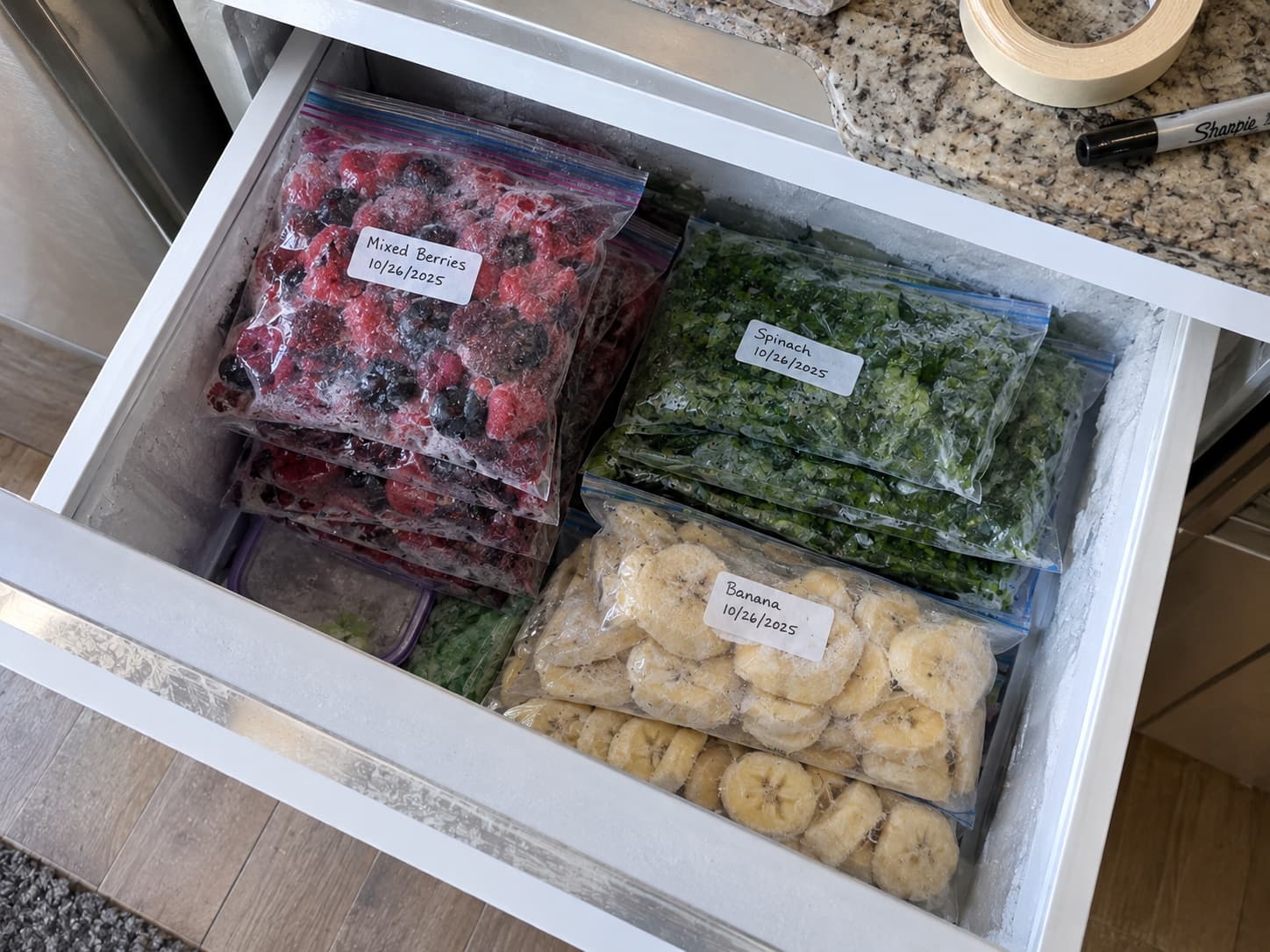
The Fix: Always peel your bananas first! Slice them into thick coin-sized pieces, lay them flat on a piece of parchment paper on a baking sheet, and freeze them for an hour. Once they are solid, transfer the coins into a freezer-safe bag. This prevents them from clumping into one massive frozen banana boulder, allowing you to grab exactly what you need for a morning smoothie.
2. Wilting Spinach and Leafy Greens
When spinach, kale, or Swiss chard starts looking a little sad and droopy, do not throw it away. While frozen greens won’t work for a fresh salad, they are absolutely perfect for blending into smoothies, folding into warm pasta sauces, or baking into a weekend frittata.
-
The Fix: You don’t even need to blanch spinach if you plan to use it quickly. Just pack the wilting leaves tightly into a freezer bag, squeeze out as much air as humanly possible, and toss it in. When you need a handful for a soup or smoothie, you can just crush the frozen leaves directly in the bag and pour them out.
3. Fresh Herbs
Buying a whole bunch of fresh parsley, cilantro, or rosemary for a recipe that only calls for one tablespoon is incredibly frustrating. Fresh herbs wilt and turn to mush in the fridge within days.
-
The Fix (The Ice Cube Trick): Finely chop your leftover fresh herbs. Grab a clean ice cube tray and press a small amount of the chopped herbs into each compartment. Pour a high-quality extra virgin olive oil over the herbs until they are submerged, and freeze. You now have instant, flavor-packed herb-oil cubes that you can drop directly into a hot frying pan to start a soup, stew, or pasta sauce!
4. Berries and Grapes
When berries get slightly soft, they are just days away from spoiling.
-
The Fix: Wash and thoroughly dry the berries (moisture is the enemy of freezing). Use the “Flash Freeze” method: spread them out in a single layer on a plate or baking tray so they aren’t touching, and freeze for two hours. Once they are frozen individually, pour them into a bag. This technique, known in the food industry as IQF (Individually Quick Frozen), ensures you can reach into the bag and grab a handful of loose berries rather than a frozen brick.
Section 2: Rescuing Dairy and Liquid Staples
Many home cooks assume that dairy products are strictly fridge-only items. While the texture of some dairy changes slightly when frozen, they remain perfectly safe and highly functional for cooking and baking.
5. Milk and Heavy Cream
If you are heading out of town for a weekend and have a half-gallon of milk expiring soon, freeze it!
-
The Fix: Liquids expand when they freeze. If you leave milk in a completely full plastic jug, it will burst and create a massive mess. Pour out about two inches of the milk to give it room to expand, seal it tightly, and freeze. When you want to use it, let it thaw slowly in the refrigerator for a day or two. Shake it vigorously before pouring, as the fats sometimes separate during the freezing process.
6. Butter
Butter is one of the most freezer-friendly foods on the planet. Its high fat content means it freezes beautifully without any texture degradation.
-
The Fix: Keep the butter in its original paper wrapper, place the sticks into a zip-top freezer bag to protect them from absorbing other freezer odors (no one wants garlic-flavored butter on their morning toast!), and freeze. You can even grate a stick of frozen butter directly into flour when making pastry dough or biscuits—it yields the flakiest crusts imaginable.
7. Hard and Semi-Hard Cheeses
While soft cheeses like brie or ricotta can become grainy when frozen, hard cheeses like cheddar, mozzarella, and parmesan handle the deep freeze perfectly.
-
The Fix: Never freeze a solid block of cheese; it becomes crumbly and incredibly difficult to slice once thawed. Instead, shred the cheese first. Toss the shredded cheese with a tiny pinch of cornstarch (to prevent sticking), put it in a bag, and squeeze out the air. You can grab handfuls of frozen cheese to scatter directly onto pizzas, casseroles, or tacos!
Section 3: The Pantry and Bakery Savers
Not all foods that go bad live in the refrigerator. Your pantry is hiding several items that benefit enormously from sub-zero temperatures.
8. Bread and Baked Goods
Unless you are eating a whole loaf of fresh bakery bread in two days, it is going to go stale or grow mold on your counter.
-
The Fix: Slice the bread before you freeze it. You can take a single frozen slice of bread and drop it directly into your toaster. It thaws and toasts simultaneously, tasting exactly like it was freshly baked that morning.
9. Nuts and Seeds
Nuts (like walnuts, pecans, and almonds) and seeds (like flax or chia) contain high amounts of natural, healthy oils. When left at room temperature in a pantry for months, these oils oxidize and turn rancid, giving the nuts a harsh, bitter flavor.
-
The Fix: Transfer your expensive bags of nuts and seeds directly into the freezer. The cold halts the oxidation process completely. Because they have very low water content, they don’t freeze solid, meaning you can eat them straight out of the freezer or toss them directly into oatmeal or baking batters.
10. Tomato Paste
Many recipes call for a single tablespoon of tomato paste, leaving you with an awkward, mostly full can that inevitably goes moldy in the back of the fridge.
-
The Fix: Scoop out tablespoon-sized dollops of the leftover paste onto a plate lined with parchment paper. Freeze until solid, then transfer your “tomato paste pucks” into a small bag. Next time you make a chili or pasta sauce, just toss a frozen puck right into the hot pot!
Section 4: The Golden Rules of Freezing (How to Avoid Freezer Burn)
Freezing food is useless if it comes out tasting like an iceberg. To protect your food and your budget, memorize these three golden rules:
-
Air is the Enemy: Freezer burn happens when air touches the surface of your food, drawing the moisture out and leaving dry, grey patches behind. Always use thick, freezer-grade bags, and squeeze out as much air as possible before sealing.
-
Label Everything: You might think you will remember what is inside that frosty, red container in three months. You won’t. Unidentified Frozen Objects (UFOs) end up getting thrown away. Keep a permanent marker and some masking tape on your kitchen counter. Label every bag with the contents and the date it was frozen.
-
Cool Before Freezing: Never put piping hot food directly into the freezer. It will temporarily raise the temperature of the entire freezer, partially thawing the foods around it and causing condensation inside the container (which leads to severe freezer burn). Let cooked foods cool completely in the fridge before transferring them to the deep freeze.
Frequently Asked Questions
Can I freeze food in glass jars?
Yes, but you must be incredibly careful. Liquids expand when they freeze. If you fill a glass jar to the brim and screw the lid on tight, the expanding food will shatter the glass. Always use straight-sided, freezer-safe tempered glass jars, and leave at least two inches of empty space at the top.
Does freezing kill bacteria on food?
No, this is a common misconception. Freezing does not kill bacteria; it merely puts them to sleep. If a piece of meat or a container of leftovers was on the verge of spoiling before you froze it, the bacteria will wake right back up and continue multiplying as soon as the food thaws. Always freeze food while it is still fresh!
How long does frozen food actually last?
From a strict food-safety perspective, food kept at a constant 0°F (-18°C) is safe to eat almost indefinitely. However, from a quality and flavor perspective, most frozen produce and dairy should be consumed within 3 to 6 months. After that, the textures may start to degrade and absorb ambient freezer odors.
Culinary Sources & Food Safety References
The preservation techniques and safety guidelines outlined in this article are based on established culinary best practices and documented food safety standards:
-
USDA Food Safety and Inspection Service (FSIS): Guidelines on the effects of freezing on bacteria, safe thawing methods, and long-term freezer storage protocols.
-
The National Center for Home Food Preservation: Standards regarding the prevention of freezer burn, the expansion of liquids during freezing, and proper packaging techniques.
-
Harold McGee, On Food and Cooking: Scientific insights into the oxidation of fats (such as in nuts and seeds) and how sub-zero temperatures effectively halt the degradation of culinary ingredients.

Olivia Dawson is a food writer and recipe developer focused on creating clear, practical, and family-friendly cooking content. She specializes in approachable recipes made with everyday ingredients and well-explained methods that support confident cooking. Through Recipes With Olivia, Olivia shares thoughtfully crafted meal ideas designed to be reliable, enjoyable, and easy to recreate in everyday kitchens.